
Monday, November 16, 2026Nov 16

UN health agency rejects call to postpone Rio Olympics

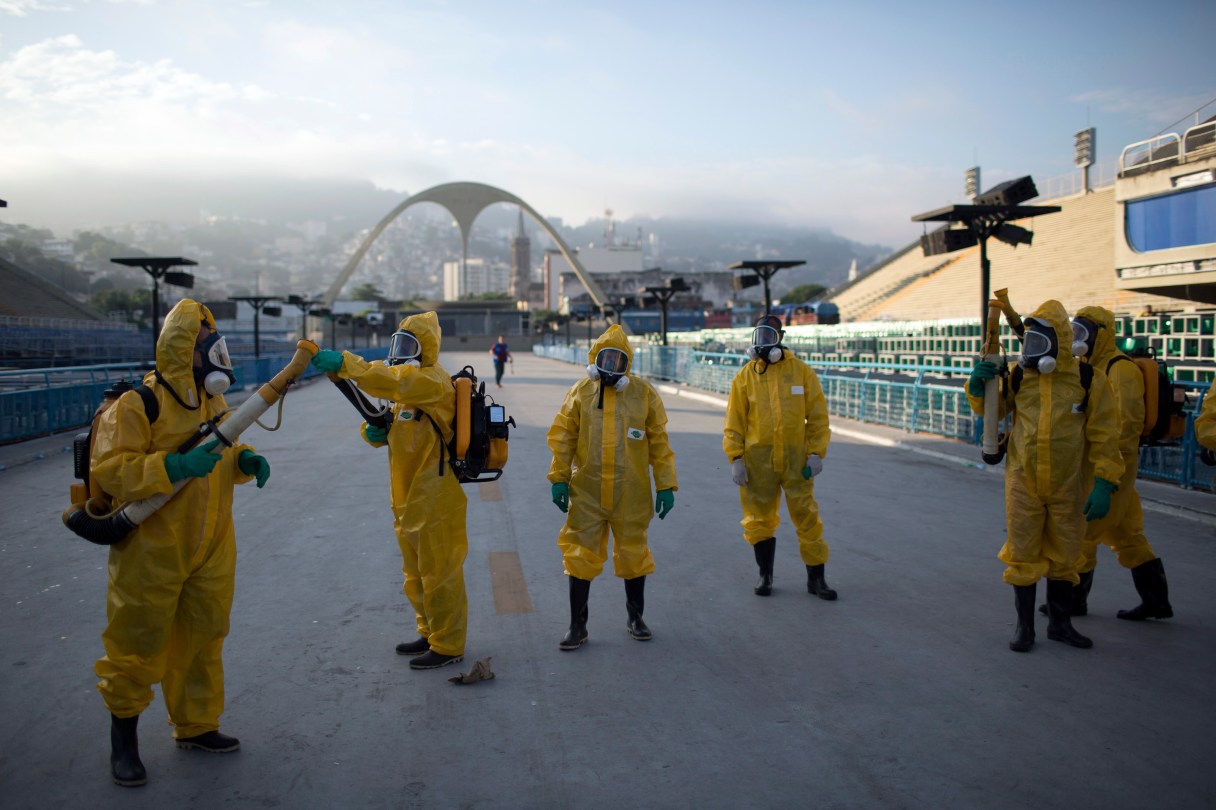
FILE - In this Tuesday, Jan. 26, 2016  file photo, health workers get ready to spray insecticide to combat the Aedes aegypti mosquitoes that transmits the Zika virus, under the bleachers of the Sambadrome in Rio de Janeiro, which will be used for the Archery competition in the 2016 summer games. More than 145 public health experts signed an open letter to the World Health Organization on Friday, May 27, 2016 asking the U.N. health agency to consider whether the Rio de Janeiro Olympics should be postponed or moved because of the ongoing Zika outbreak. The letter calls for the games to be delayed or relocated “in the name of public health.” (AP Photo/Leo Correa, File)
FILE - In this Tuesday, Jan. 26, 2016 file photo, health workers get ready to spray insecticide to combat the Aedes aegypti mosquitoes that transmits the Zika virus, under the bleachers of the Sambadrome in Rio de Janeiro, which will be used for the Archery competition in the 2016 summer games. More than 145 public health experts signed an open letter to the World Health Organization on Friday, May 27, 2016 asking the U.N. health agency to consider whether the Rio de Janeiro Olympics should be postponed or moved because of the ongoing Zika outbreak. The letter calls for the games to be delayed or relocated “in the name of public health.” (AP Photo/Leo Correa, File)

BERLIN (AP) – The World Health Organization says there is “no public health justification” for postponing or canceling the Rio Summer Olympics because of the Zika outbreak in Brazil.

The assessment, in a statement early Saturday, came a day after 150 health experts issued an open letter to the U.N. health agency calling for the games to be delayed or relocated “in the name of public health.”

Friday’s letter cited recent scientific evidence that the Zika virus causes severe birth defects , most notably babies born with abnormally small heads. In adults, it can cause neurological problems, including a rare syndrome that can be fatal or result in temporary paralysis.

The authors also noted that despite increased efforts to wipe out the mosquitoes that spread Zika, the number of infections in Rio de Janeiro have gone up rather than down.

The experts came from more than two dozen countries in fields including public health, bioethics and pediatrics, and included former White House science adviser Dr. Philip Rubin.