
MADRID (AP) – Spain said Wednesday that it is trying to establish what happened to three Spanish freelance journalists who went missing around the embattled northern Syrian city of Aleppo as news emerged that a fourth journalist, a Japanese national, has gone missing in the war-torn country.
Justice Minister Rafael Catala told Spain’s Cadena SER radio the government had no news regarding the three Spaniards and will contact the government in Damascus over the case. He could not say if authorities are treating their disappearance as a kidnapping.
Spanish Foreign Minister Jose Manuel Garcia Margallo urged “maximum discretion” in the case but called for “tranquility,” saying similar situations in the past had ended well for Spain.
With the rise of the Islamic State group, most media organizations have opted to stay away from coverage inside Syria because of the unacceptable risk level. Over the last year, it has become rare for any foreign journalists to go into northern Syria, where a myriad of Islamic groups and the more extremist IS and al-Qaida group rule.
A Spanish journalism association first reported on Tuesday that the three – identified as Antoniu Pampliega, Jose Manuel Lopez and Angel Sastre – were missing since July 13. They had traveled to Syria, presumably together, to report on the country’s long-running civil war.
“An effort has been underway since then to search and locate them,” a statement from their families said.
The three are the latest journalists to become ensnared in the world’s most dangerous assignment for reporters. A fourth journalist, a Japanese freelancer, has also been reported missing in Syria where he was last heard from one month ago.
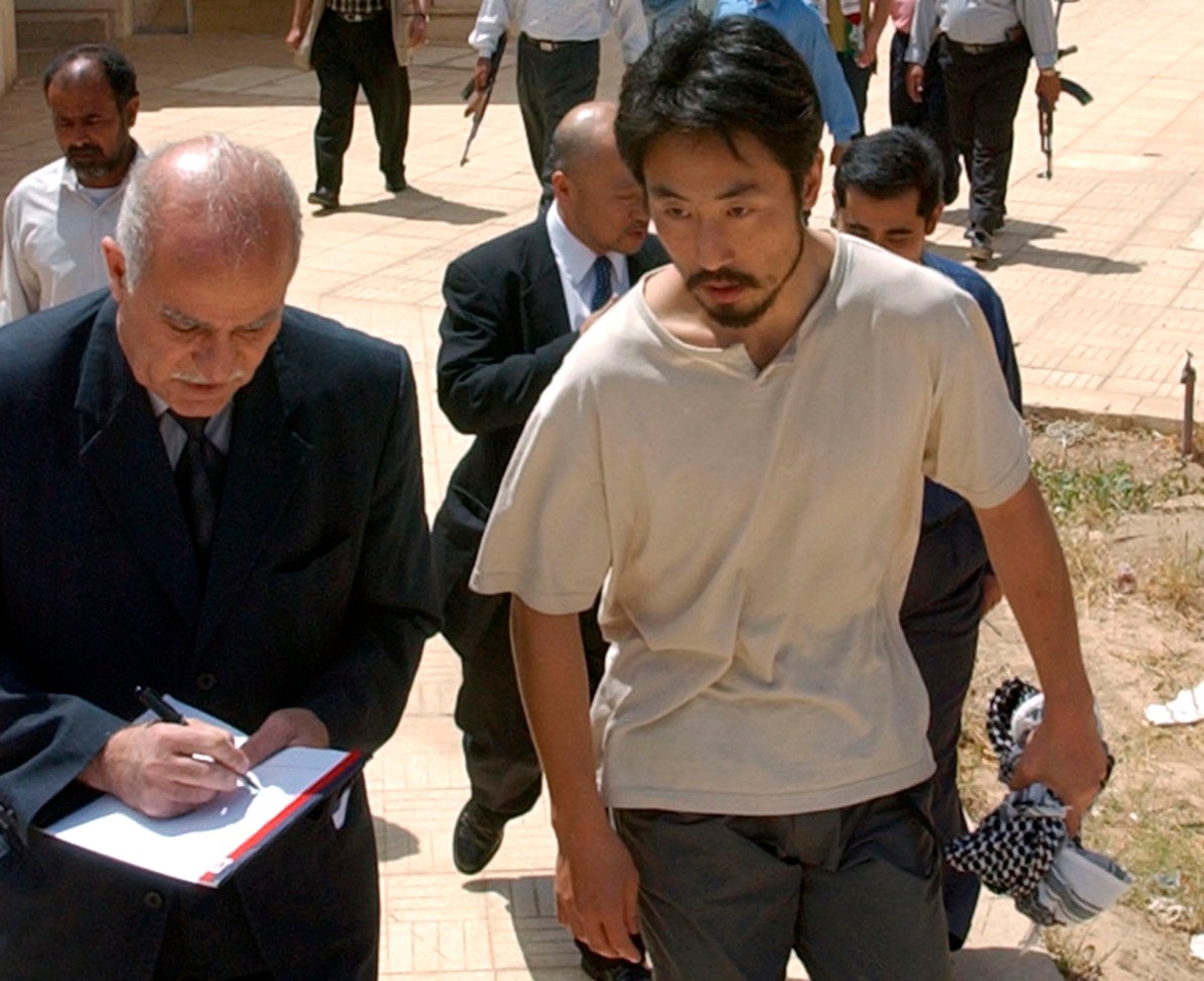
It is not known why Jumpei Yasuda, who has been reporting on the Middle East since 2002, has not been in contact. Yasuda was taken hostage in Iraq in 2004, with three other Japanese, but was freed after Islamic clerics negotiated his release.
Kosuke Tsuneoka, another freelance reporter, said Wednesday that he received a message from Yasuda in Syria on June 23, but has not heard from him since.
“It is not normal that there has been no contact from him at all,” Tsuneoka said in a telephone interview, adding that no one should jump to conclusions about Yasuda’s fate.
The Japanese Foreign Ministry said it was aware of the reports but has no confirmed information on Yasuda.
The three Spanish journalists, who entered Syria separately from Yasuda, were first reported missing Tuesday by a Spanish journalism association.
In another interview late Tuesday, Catala, the Spanish justice minister, said it was necessary “to find out what happened, who is holding these journalists, why, and if the possible captors are looking for a ransom.”
Also in Madrid, Foreign Minister Margallo said Spain’s National Intelligence Center was handling the case and that such cases depended a lot on the movements of other parties involved but added that “all the precedents were good.”
Three Spanish journalists were released in March 2014 after being held hostage by extremists for months in Syria. It is widely believed that their government paid a ransom for their release, although it has not been officially confirmed.
Margallo also told reporters that the government was in constant contact with Spanish embassy in Ankara, Turkey, which handles Syria. Madrid had also contacted U.N. special envoy to Syria Staffan de Mistura, who was scheduled to travel from Beirut to Damascus on Wednesday, and embassies of other countries in the region, he added.
The four-year conflict in Syria has killed more than 220,000 people and has been the most deadly country in the world for journalists for the past few years. At least 84 journalists have been killed since 2011 in Syria, according to the New York-based Committee to Protect Journalists, including at least 12 international correspondents. More than 90 journalists have been abducted in the country since the conflict began and approximately 25 are currently missing, most of them local, it said.
“The disappearance of these four journalists underscores that Syria remains an extremely risky place for the press,” said CPJ’s Middle East Program Coordinator Sherif Mansour from Washington.
An unprecedented spate of kidnappings by Islamic State militants starting in summer 2013 has kept most journalists away, particularly since the group began killing foreign journalists and aid workers it holds, starting with American journalist James Foley in August last year. Foley’s taped beheading was followed by the killing of American-Israeli journalist Steven Sotloff, British aid workers David Haines and Alan Henning, American aid worker Peter Kassig, as well as Japanese nationals Haruna Yukawa and Kenji Goto.
The group also has generated cash from ransoming European journalists.
Christophe Deloire, secretary general of Reporters Without Borders, expressed “grave worries” regarding the three Spanish journalists and asked the Spanish government to use all means to find them.
___
Karam reported from Beirut. Associated Press writer Yuri Kageyama in Tokyo contributed to this report.