
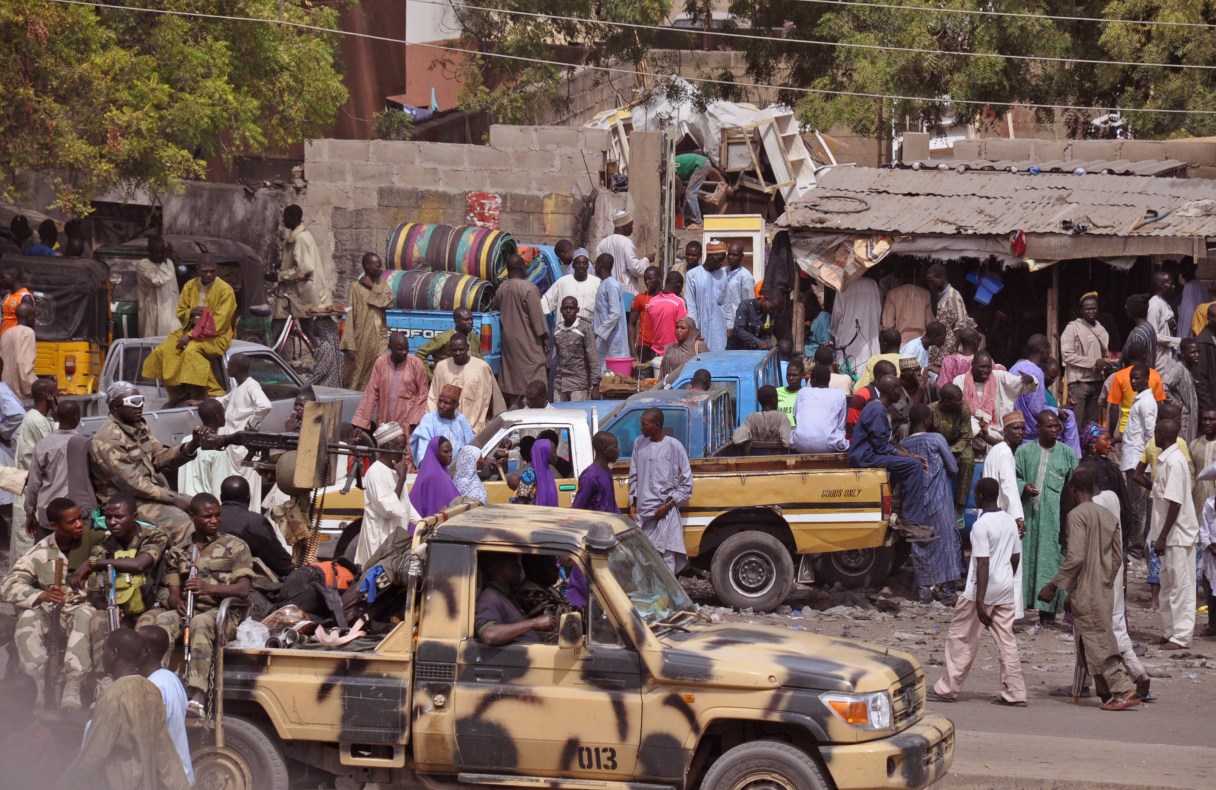
DAKAR, Senegal (AP) – Nigeria’s electoral commission will postpone Feb. 14 presidential and legislative elections for six weeks to give a new multinational force time to secure northeastern areas under the sway of Boko Haram, an official close to the commission told The Associated Press on Saturday.
Millions could be disenfranchised if the voting went ahead while the Islamic extremists hold a large swath of the northeast and commit mayhem that has driven 1.5 million people from their homes.
The Nigerian official, who is knowledgeable of the discussions, said the Independent National Electoral Commission will announce the postponement later Saturday. He spoke on condition of anonymity because of the sensitivity of the issue.
A major offensive with warplanes and ground troops from Chad and Nigeria already has forced the insurgents from a dozen towns and villages in the past 10 days. Even greater military strikes by more countries are planned.
African Union officials and representatives of countries supporting the initiative were ending a three-day meeting Saturday in Yaounde, Cameroon’s capital, to finalize details of a 7,500-strong force from Nigeria and its neighbors Chad, Cameroon, Benin and Niger. Details of funding, with the Africans wanting the United Nations and European Union to pay, may delay the mission.