
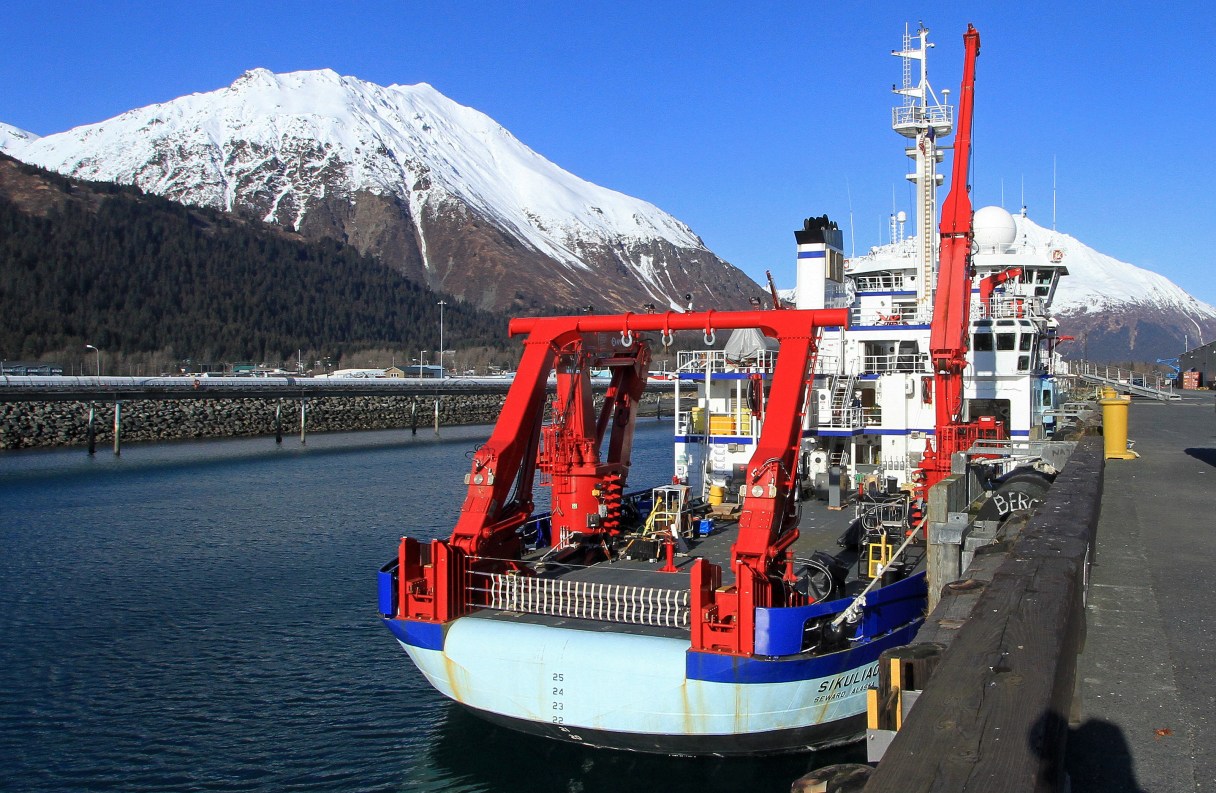
SEWARD, Alaska (AP) – A floating Arctic laboratory four decades in the making has arrived at its home port and stands poised to begin unlocking mysteries of one of the wildest places on Earth.
The 261-foot Sikuliaq (see-KOO’-lee-ak) next month will leave Seward, sail around the Aleutian Islands and tuck into sea ice in the Bering Sea. The voyage will be the final trial for its reinforced hull, propulsion system and array of cranes and booms that will deploy instruments ranging from small submarines and plankton nets to buoys that weigh a ton.
“Knock on wood, I’m hoping that’s it’s going to be something that people like over the next 30, 40 years,” said Terry Whitledge, a University of Alaska Fairbanks chemical oceanographer who has worked since 1999 to see the vessel built.
The Sikuliaq is named for the Inupiat Eskimo word for young sea ice. The ship is owned by the National Science Foundation and will be operated by UA Fairbanks.
It replaces the Alpha Helix, which was taken out of service in 2004. At just 125 feet long, the Alpha Helix could carry only 15 scientists and was undersized for the waters where crab fishermen of “Deadliest Catch” earn their money.