
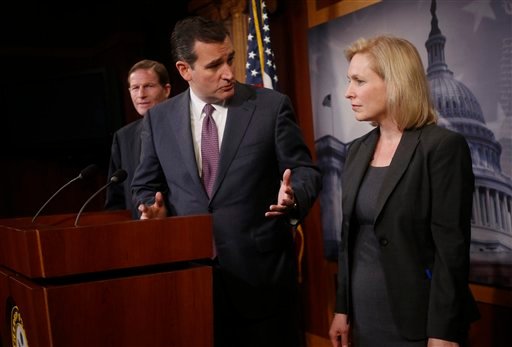
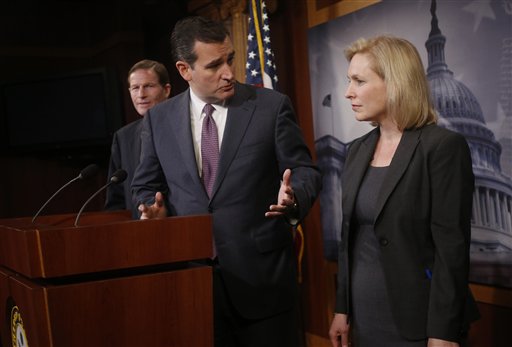
 Sen. Ted Cruz, R-Texas, center, talks with Sen. Kirsten Gillibrand, D-N.Y. on Capitol Hill in Washington, Thursday, March 6, 2014, during a news conference following a Senate vote on military sexual assaults.
WASHINGTON – Bowing to the Pentagon, the Senate agreed after impassioned debate Thursday to leave the authority to prosecute rapes and other serious crimes with military commanders in a struggle that highlighted the growing role of women in Congress.
The vote was 55-45 in favor of stripping commanders of that authority, but that was short of the 60 necessary to move ahead on the legislation sponsored by Sen. Kirsten Gillibrand. It would have given the decision to take serious crimes to courts-martial to seasoned military trial lawyers, independent of the chain of command.
The debate and vote was the culmination of a nearly yearlong campaign to curb sexual assault in the ranks, led by female senators who have questioned whether the military’s mostly male leadership understands differences between relatively minor sexual offenses and serious crimes that deserve swift and decisive justice.
Pentagon leaders vigorously opposed the measure, as did former prosecutors and military veterans in the Senate who argued that commanders should have more responsibility, not less, for the conduct of the men and women they lead in war and peacetime.
“We can’t let the commanders walk away,” insisted Sen. Claire McCaskill of Missouri, who bemoaned the tenor of a policy debate that pitted her against fellow Democrat Gillibrand.