
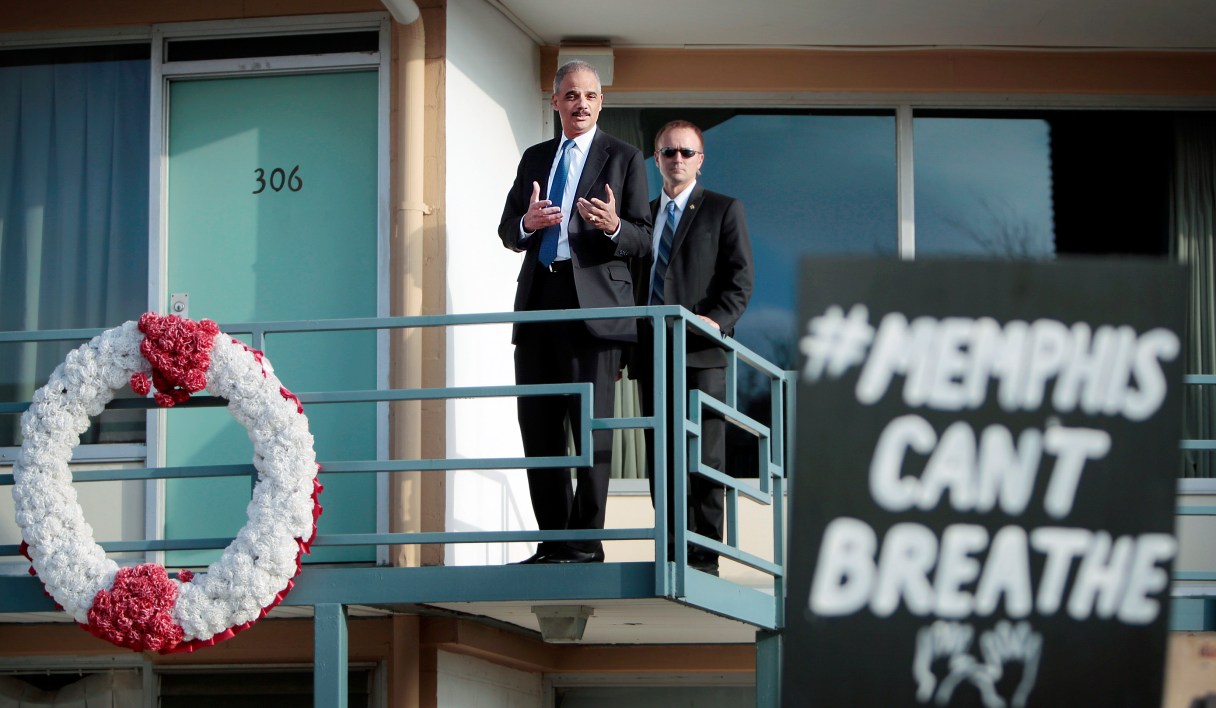
MEMPHIS, Tenn. (AP) – Attorney General Eric Holder on Tuesday urged state and local law enforcement bodies to develop their own rigorous policies regarding profiling, a day after announcing guidelines limiting the ability of federal law enforcement agencies to profile on the basis of religion, national origin and other characteristics.
Holder discussed the guidelines during a speech in a theater full of mostly Democrats at the My Brother’s Keeper Communities Challenge Summit in Memphis, the city where civil rights leader Martin Luther King Jr. was assassinated in April 1968 while supporting protests by black sanitation workers striking against low pay and unsafe working conditions.
Holder has visited Atlanta and Cleveland in recent days to address racial profiling and community policing, a topic that has been at the forefront of the national consciousness after two unarmed black men died during confrontations with white officers in Missouri and New York.
Guidelines announced Monday in Washington replace decade-old directives established under the Bush administration. The rules cover federal agencies within the Justice Department, including the FBI, the Drug Enforcement Administration and the Bureau of Alcohol, Tobacco, Firearms and Explosives. Some activities of the Department of Homeland Security are covered, such as civil immigration enforcement, though border and airport security screening are exempt along with interdictions at ports of entry.
The guidelines extend to local and state officers serving on task forces alongside federal agents, but not to state and local police who are primarily responsible for traffic stops, 911 calls and day-to-day interactions with the communities they patrol.