
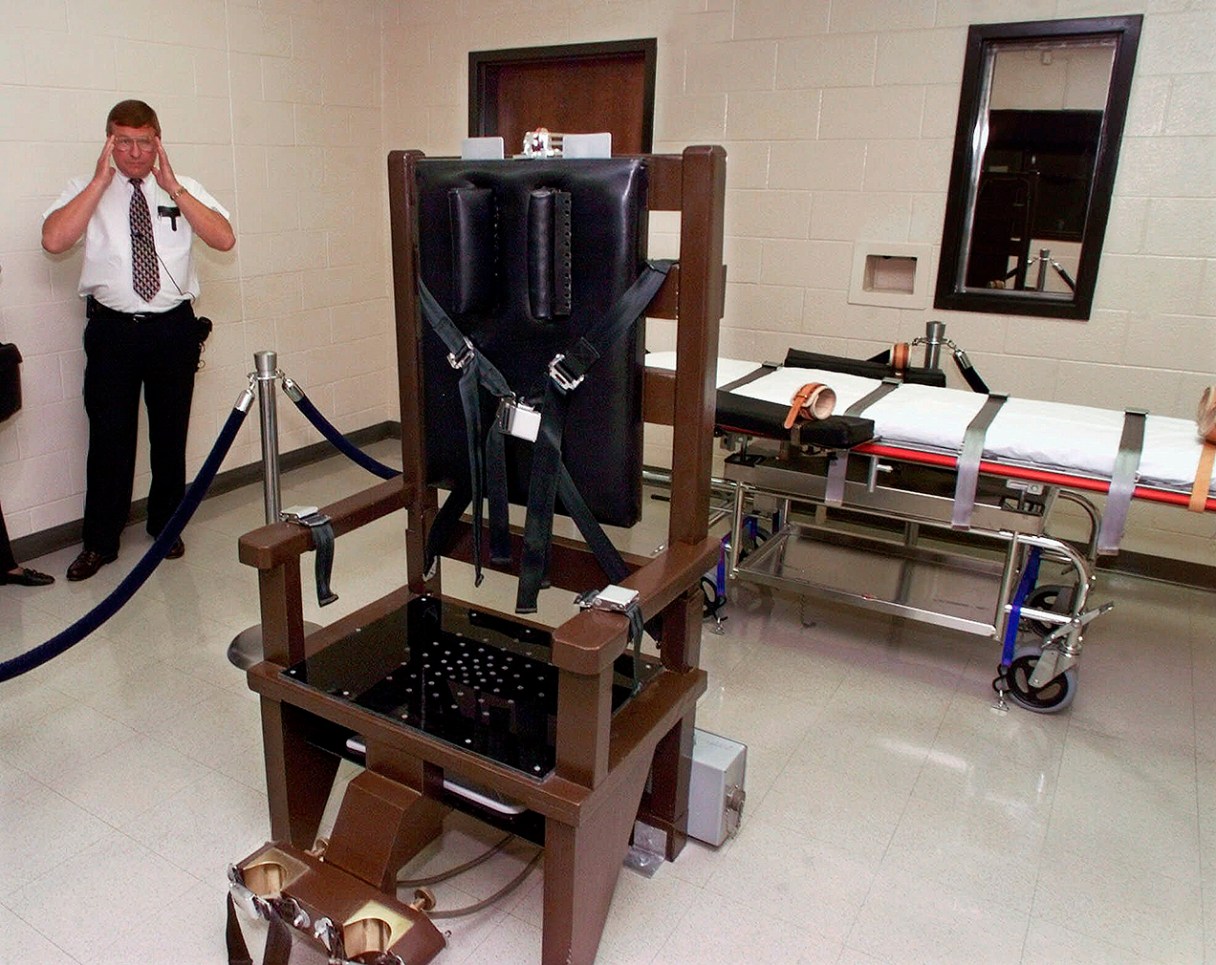
NASHVILLE, Tenn. (AP) – The inmate’s request was a surprising one, made three days before he was to be executed in October 2018: Edmund Zagorski told the state of Tennessee he’d rather die in the electric chair than receive a lethal injection.
Some took the request as a ploy to buy time. Defense attorney Kelley Henry insisted Zagorski was motivated by a sincere belief the lethal drugs used in Tennessee – anchored by the sedative midazolam – would mean a prolonged and agonizing death.
The state granted his request, and days later on Nov. 1, 2018, Zagorski was strapped into the stout wooden chair nicknamed ‘Old Sparky’ and put to death for shooting and slitting the throats of two men during a 1983 drug deal. Since then, the state has executed two other inmates by electrocution, bringing the total to three in the past year.
Tennessee is one of six states where inmates can choose the chair, but it’s the only state where they’re actually doing so. Courts in Georgia and Nebraska have declared the electric chair unconstitutional and the U.S. Supreme Court has never fully considered its constitutionality.
Zagorski and the others filed court challenges hoping to block their executions, arguing that both the electric chair and Tennessee’s lethal injection procedure violate the U.S. Constitution’s ban on cruel and unusual punishment. The courts refused to hear their arguments about electrocution because the inmates had voluntarily chosen that method, even though they said the decision was made under duress.