
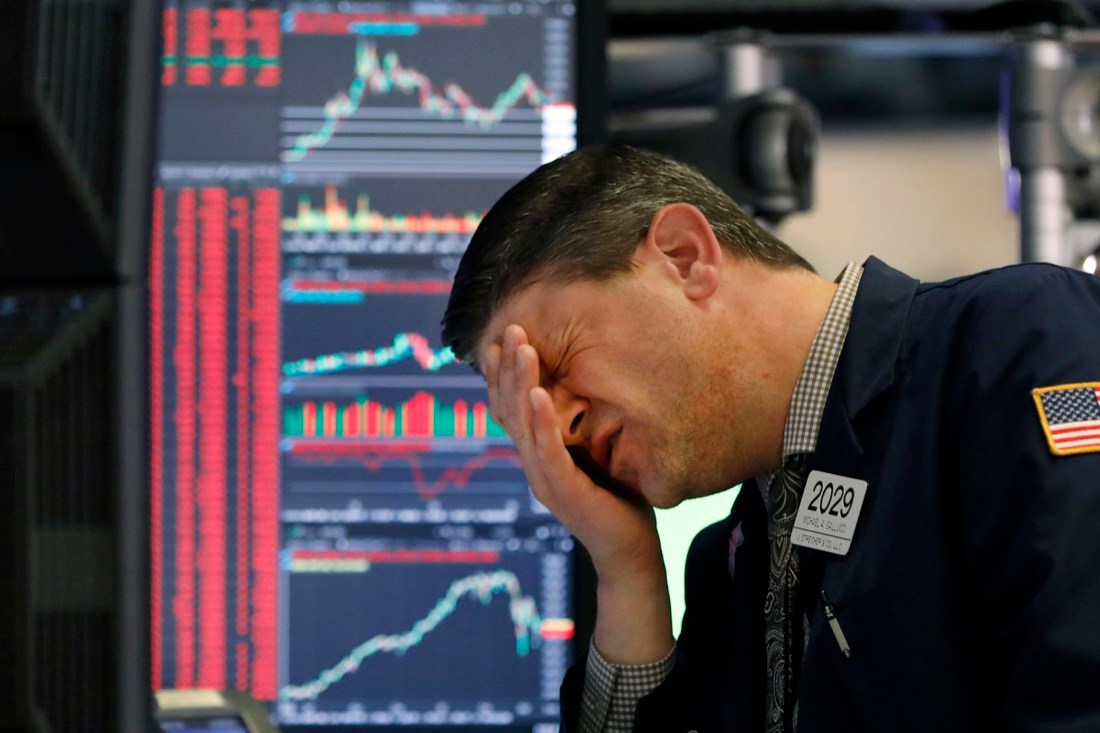
NEW YORK (AP) – The escalating coronavirus emergency Thursday sent stocks to their worst losses since the Black Monday crash of 1987, extending a sell-off that has now wiped out most of Wall Street’s big run-up since President Donald Trump’s election.
The S&P 500 plummeted 9.5%, for a total drop of 26.7% from its all-time high, set just last month. That puts it way past the 20% threshold to make this a bear market, snapping an unprecedented, nearly 11-year bull-market run. The Dow Jones Industrial Average sank 10% for its worst day since a nearly 23% drop on Oct. 19, 1987.
European markets lost 12% in one of their worst days ever, even after the European Central Bank pledged to buy more bonds and offer more help for the economy.
The heavy losses came amid a cascade of cancellations and shutdowns across the globe – including Trump’s suspension of most travel to the U.S. from Europe – and rising worries that the White House and other authorities around the world can’t or won’t counter the economic damage from the coronavirus pandemic any time soon.
“The news just continues to get worse, and the travel ban puts an exclamation point on the weakness we’re going to see in global GDP and, in turn, the U.S.,” said Liz Ann Sonders, chief investment strategist at Charles Schwab. “We’re starting to get a sense of how dire the impact on the economy is going to be. Each day the news doesn’t get better, it gets worse. It’s now has hit Main Street to a more significant degree.”