
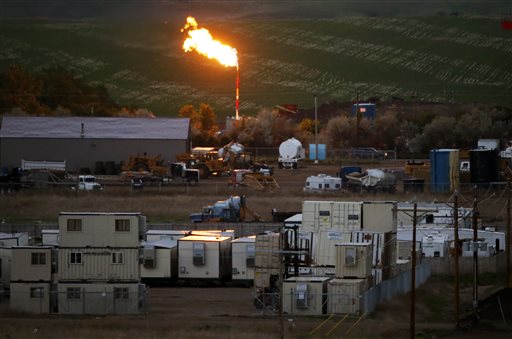
 FILE – In this June 9, 2014 file photo, the burn off flame of natural gas lights up the night sky in Williston, N.D. North America, once a sponge that sucked in a significant portion of the world’s oil, will instead be supplying the world with oil and other liquid hydrocarbons by the end of this decade, according to ExxonMobil’s annual long-term energy forecast released Tuesday, Dec. 9, 2014. (AP Photo/Charles Rex Arbogast, File)
NEW YORK (AP) – North America, once a sponge that sucked in a significant portion of the world’s oil, will instead be supplying the world with oil and other liquid hydrocarbons by the end of this decade, according to ExxonMobil’s annual long-term energy forecast.
And the “almost unspeakable” amount of natural gas found in recent years in the U.S. and elsewhere in North America will be enough to make the region one of the world’s biggest exporters of that fuel by 2025, even as domestic demand for it increases, according to Bill Colton, Exxon’s chief strategist.
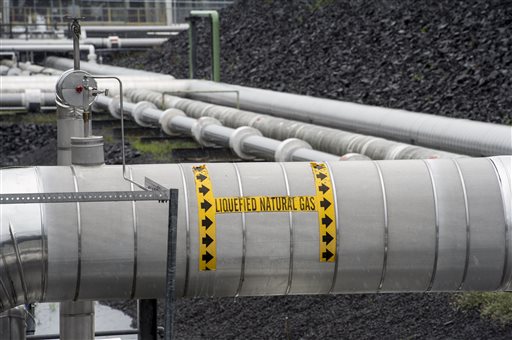 FILE- This file photo taken June 12, 2014 shows Dominion Energy’s Cove Point LNG Terminal in Lusby, Md. North America, once a sponge that sucked in a significant portion of the world’s oil, will instead be supplying the world with oil and other liquid hydrocarbons by the end of this decade, according to ExxonMobil’s annual long-term energy forecast released Tuesday, Dec. 9, 2014. (AP Photo/Cliff Owen, File)
“The world has such an improved outlook for supplies,” Colton said in an interview. “Peak oil theorists have been run out of town by American ingenuity.”
In a forecast that might make economists happy but environmentalists fret, Exxon’s two chief products, oil and natural gas, will be abundant and affordable enough to meet the rising demand for energy in the developing world as the global middle class swells to 5 billion from 2 billion and buys energy-hungry conveniences such as cars and air conditioners.
This is a result of advances in drilling technology that have made it possible for engineers to reach oil and gas in unconventional rock and extreme locations and quieted talk that the world was quickly running out of oil.