
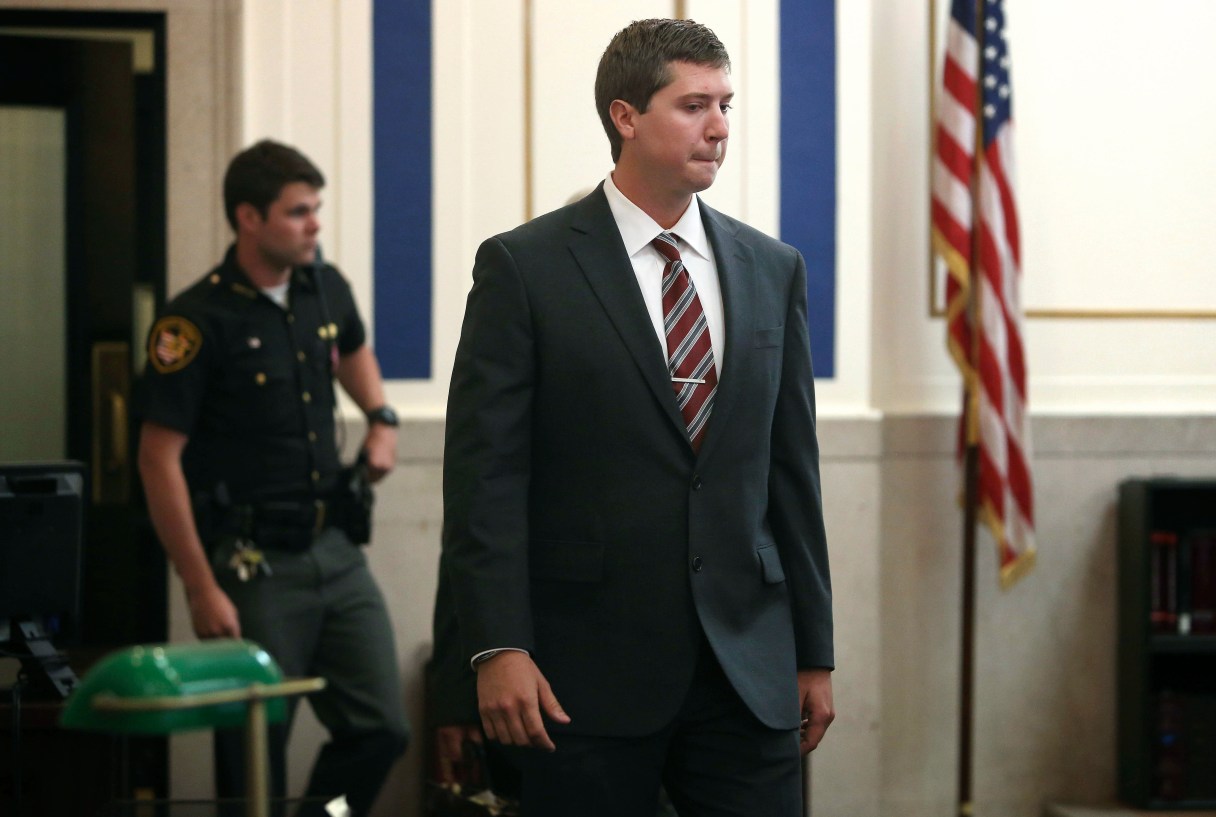
CINCINNATI (AP) – Under tight courthouse security and close monitoring by local officials concerned about keeping the peace, jury selection begins Tuesday for the murder trial of a white university police officer charged with killing an unarmed black man during a traffic stop.
Ray Tensing, 26, fatally shot Sam DuBose, 43, last year after pulling him over for a missing front license plate near the University of Cincinnati. The Hamilton County prosecutor called Tensing’s actions “asinine” and “senseless” in announcing the officer’s indictment and releasing a police body camera video.
An outside review commissioned by the university said the now-fired UC officer showed poor police tactics in an “entirely preventable” fatal shooting.
Defense attorney Stewart Mathews has said Tensing feared getting dragged under DuBose’s car as he tried to drive away. And legal experts say jurors often want to give police the benefit of the doubt in deadly force cases.
“It’s divided the community. But I think it’s a tough case for the prosecutor because juries have a difficult time convicting police officers,” said attorney Mike Allen, a former prosecutor and also a former police officer, including for UC. “They realize that police officers have to make split-second decisions sometimes.”