
Friday, October 30, 2026Oct 30

This story is free to read.

Conservationists work to puzzle together Tennessee history

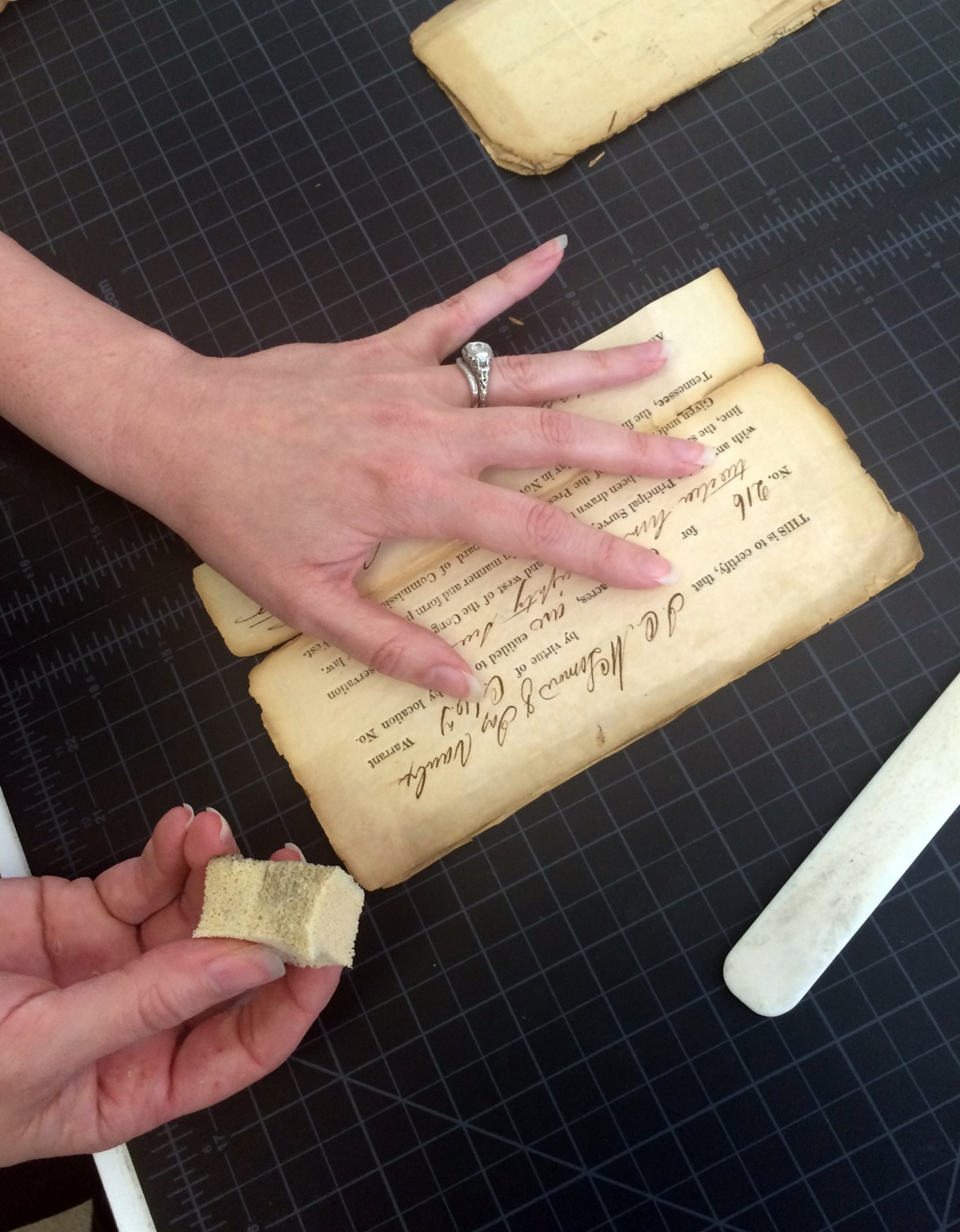
ADVANCE FOR USE SATURDAY, AUG. 8 - In this photo taken July 8, 2015, Kat Trammell, an intern at Tennessee State Library and Archives, uses a small sponge to surface-clean a Tennessee land record at the department of the Tennessee State Library and Archives in Nashville, Tenn. (Macaela Bennett/The Tennessean via AP) NO SALES; MANDATORY CREDIT
ADVANCE FOR USE SATURDAY, AUG. 8 - In this photo taken July 8, 2015, Kat Trammell, an intern at Tennessee State Library and Archives, uses a small sponge to surface-clean a Tennessee land record at the department of the Tennessee State Library and Archives in Nashville, Tenn. (Macaela Bennett/The Tennessean via AP) NO SALES; MANDATORY CREDIT ADVANCE FOR USE SATURDAY, AUG. 8 - In this photo taken July 8, 2015, Kat Trammell, an intern at Tennessee State Library and Archives, uses a small sponge to surface-clean a Tennessee land record at the department of the Tennessee State Library and Archives in Nashville, Tenn. (Macaela Bennett/The Tennessean via AP) NO SALES; MANDATORY CREDIT

NASHVILLE, Tenn. (AP) – With great attentiveness, Carol Roberts and Kat Trammell are delicately piecing together Tennessee history.

For decades, heaps of land records laid untouched in the state Capitol’s attic before being moved to the Tennessee State Library and Archives when it was built in the 1950s. Now workers there are preserving the documents that detail land ownership and exchanges as far back as 1779.

By law, the documents must be kept permanently. But right now, they are largely inaccessible to researchers because they are bundled together in boxes, where most of them are in poor condition.

Once they are available for more thorough examination, the land records will tell the tale of Tennessee’s separation from North Carolina, becoming its own territory and finally entering as America’s 16th state.

Roberts, the archives’ head conservationist, says the pieces of paper filled with hand-drawn sketches and detailed descriptions of property boundaries are dirty and fragile, with some left as brittle as dried leaves.