
Monday, November 16, 2026Nov 16

2 lions escape from parks in Kenya and South Africa

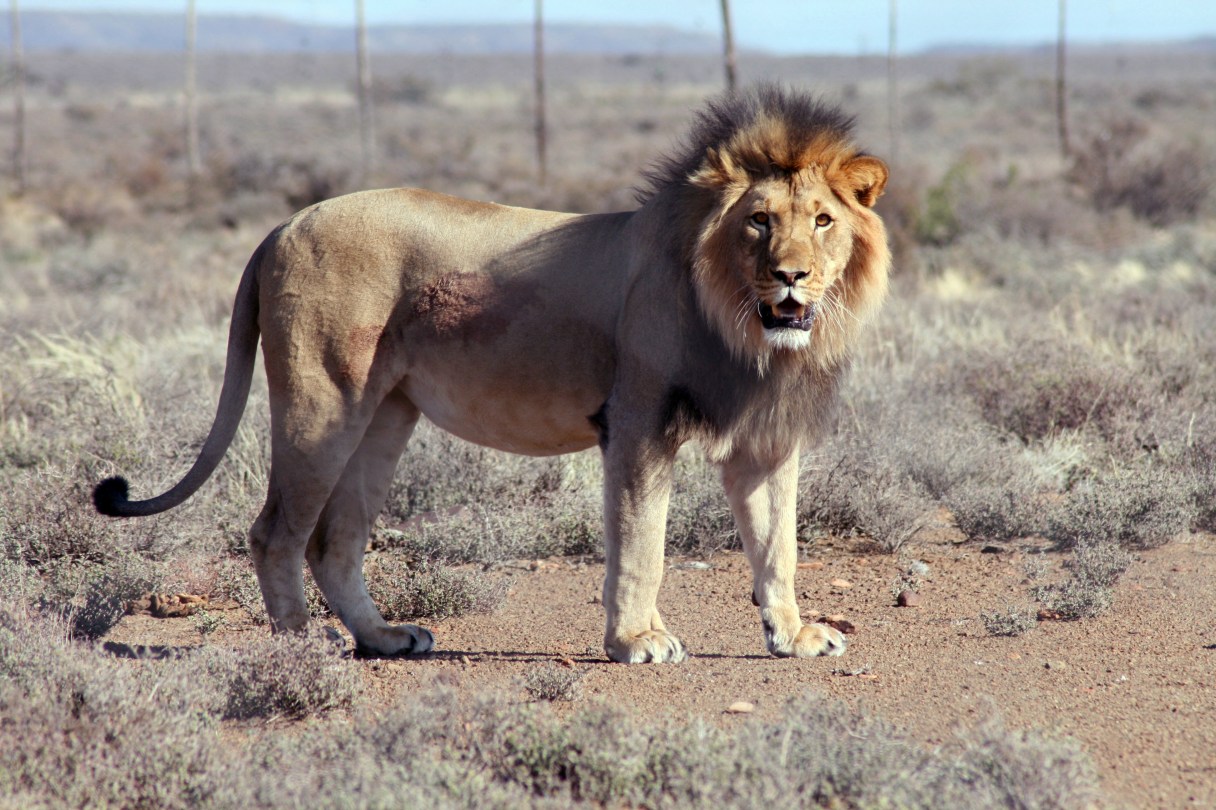
In this July 23, 2015 photo provided by SANParks, Spook the lion is seen after he was recaptured after escaping from the Karoo National Park near Beaufor West, South Africa. Last year, a South African lion earned the nickname "Spook" — "Ghost" in the Afrikaans language — after it escaped from a national park and eluded searchers for more than three weeks. Now Spook has broken out again. A helicopter on Tuesday, March 29, 2016 searched for the male lion, which was fitted with a satellite tracking collar after last year's escape from Karoo National Park and should be easier to trace this time, park spokeswoman Fayroush Ludick said. The lion, which escaped overnight Sunday, has become a "problem animal" and will be killed because he knows how to get out of the park and could endanger people, Ludick said.  (Gabriella Venter/SANSParks via AP)
In this July 23, 2015 photo provided by SANParks, Spook the lion is seen after he was recaptured after escaping from the Karoo National Park near Beaufor West, South Africa. Last year, a South African lion earned the nickname "Spook" — "Ghost" in the Afrikaans language — after it escaped from a national park and eluded searchers for more than three weeks. Now Spook has broken out again. A helicopter on Tuesday, March 29, 2016 searched for the male lion, which was fitted with a satellite tracking collar after last year's escape from Karoo National Park and should be easier to trace this time, park spokeswoman Fayroush Ludick said. The lion, which escaped overnight Sunday, has become a "problem animal" and will be killed because he knows how to get out of the park and could endanger people, Ludick said. (Gabriella Venter/SANSParks via AP)

JOHANNESBURG (AP) – A lion was shot dead in Kenya on Wednesday after attacking a man, while trackers in South Africa searched for a lion whose own escape from a park prompted appeals to wildlife officials to relocate it rather than kill it.

The two cases of African lions on the loose highlight the difficult balance between protecting people and conserving lions, whose numbers have declined dramatically over the past century because of unregulated hunting, a loss of habitat and growing conflict with livestock herders. Concern about the threatened species intensified last year when an American dentist killed a lion named Cecil in a hunt in Zimbabwe that officials said was illegal.

The circumstances of the stray lions also fueled questions about whether to dart a potentially dangerous predator with a tranquilizer and return it to a fenced area, or kill it before it can attack people. Such decisions depend on factors including the training of wildlife experts, their resources and whether the area where a lion is roaming is densely populated. In some cases, local residents have killed lions before officials arrived on the scene.

Wildlife officials in Kenya shot the escaped lion several times after it injured a man in the Kajiado district, 57 kilometers (35 miles) from Nairobi, the capital, said Paul Udoto, a spokesman for the Kenya Wildlife Service.

Officials had planned to capture the lion and save it from a crowd, Udoto said. But by the time officials arrived, the animal had become too agitated and dangerous, he said.