
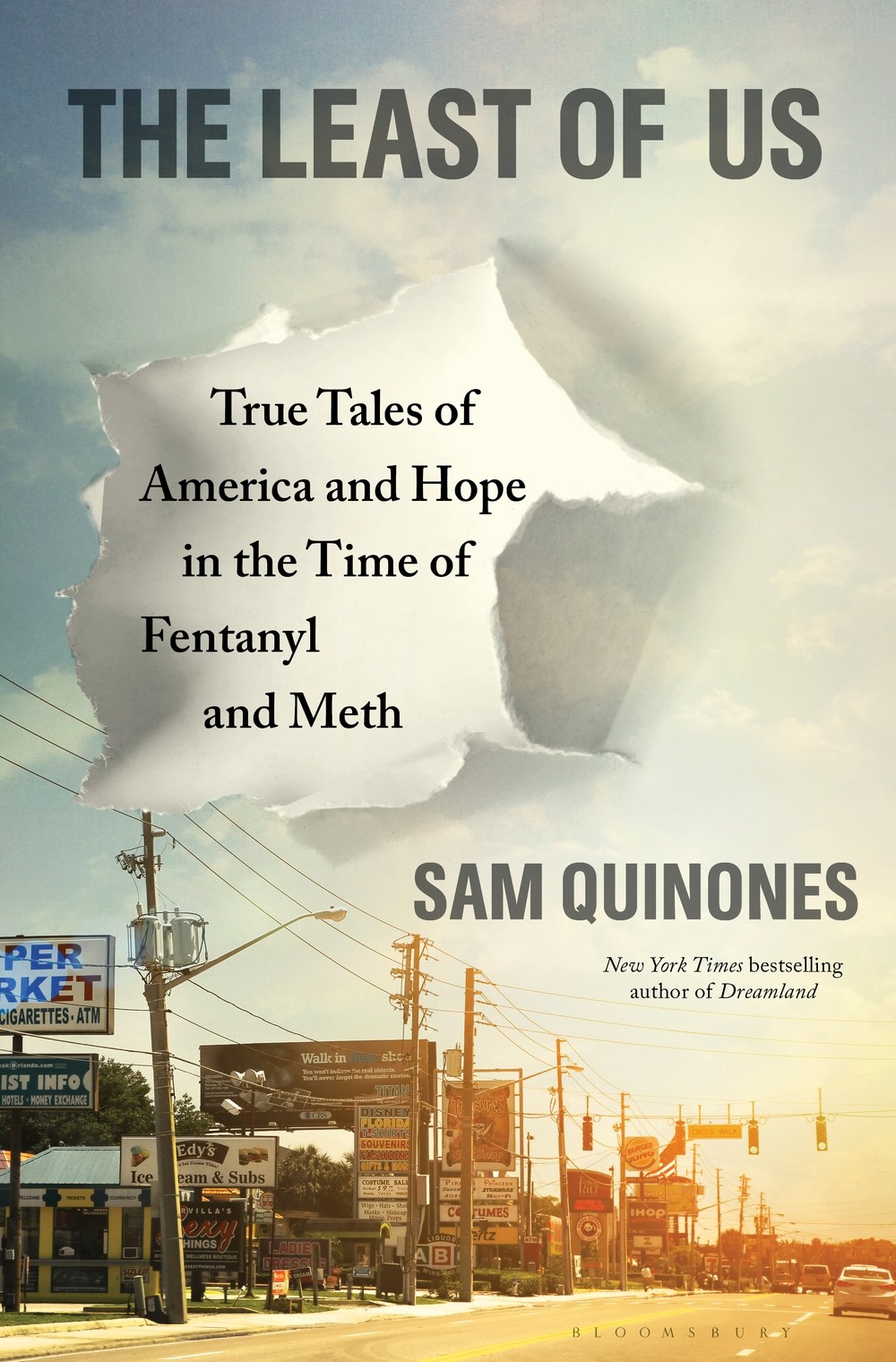
“THE LEAST OF US: TRUE TALES OF AMERICA AND HOPE IN THE TIME OF FENTANYL AND METH” by Sam Quinones (Bloomsbury Publishing, 434 pages, $28).
Journalist Sam Quinones’ 2015 book, “Dreamland: The True Tale of America’s Opiate Epidemic,” laid bare how enterprising Mexican drug dealers and greedy pharmaceutical companies converged with the economic decline of American towns to create what is perhaps the most staggering tragedy of our time. In that book, he shows how companies like Purdue Pharma created generations of addicts and a demand for drugs unlike anything the country had ever seen before. In his new book, “The Least of Us: True Tales of America and Hope in the Time of Fentanyl and Meth,” Quinones finds that traffickers and dealers have filled that need. But there’s something more here: community, recovery and hope.
Quinones, a visiting writer-in-residence in the Medicine, Health and Society Department at Vanderbilt University, makes a moving case for our survival. He answered questions via email.
Q: Briefly, can you describe how fentanyl came to dominate street drugs?
A: After Mexican traffickers figured out we were busy creating a big new population of opioid addicts with wanton prescribing of narcotic pain pills, it was only a matter of time before they discovered “synthetic heroin” – fentanyl. How that first happened is the story I tell early in the book. But fentanyl made business sense from the point of view of dealers/traffickers. You don’t need land to produce it, or seasons, no weather or irrigation, no farmers. You collapse the supply chain, reduce supply chain costs, and it’s easier to smuggle because it’s so potent and, of course, so immensely profitable.