
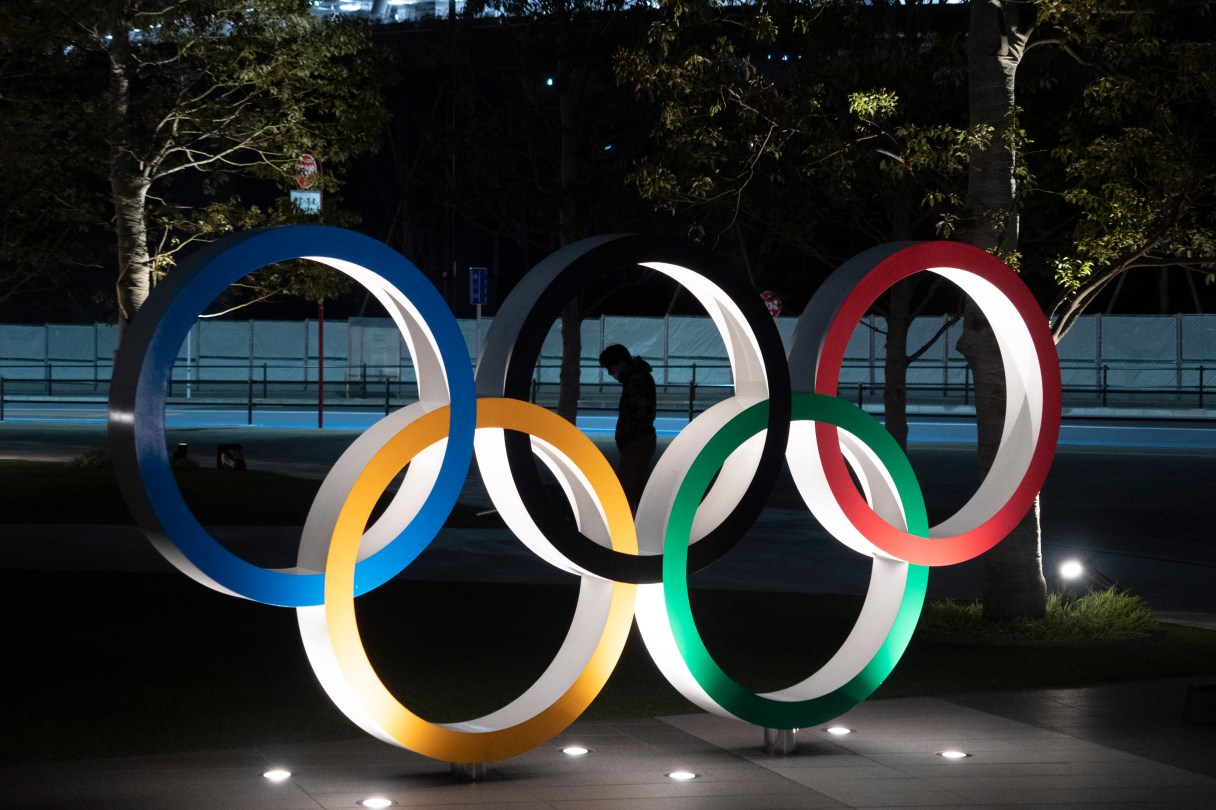
Not even the Summer Olympics could withstand the force of the new coronavirus.
After weeks of hedging, the International Olympic Committee took an unprecedented step Tuesday by postponing the world’s biggest sporting event, a global extravaganza that has been cemented into the calendar for more than a century.
The Tokyo Games, slated for 11,000 athletes from more than 200 countries and at a reported cost of $28 billion, had been scheduled to start July 24. They will now be pushed into 2021 on dates to be determined.
The next Summer Games will still be called the 2020 Olympics – a symbolic gesture the IOC hopes will allow the event that is celebration as much as competition to “stand as a beacon of hope” in a world dealing with a pandemic.
 A countdown display shows the remaining days until the Tokyo 2020 Olympics in Tokyo, Wednesday, March 25, 2020. IOC President Thomas Bach has agreed “100%” to a proposal of postponing the Tokyo Olympics for about one year until 2021 because of the coronavirus outbreak, Japanese Prime Minister Shinzo Abe said Tuesday. (AP Photo/Jae C. Hong)
“I don’t think anybody was really prepared for this virus happening,” said American sprinter Noah Lyles, primed to be one of the world’s breakout stars in Tokyo. “You look over the history of the Olympics and see that it’s usually war that’s stopped the Olympics from happening.”