
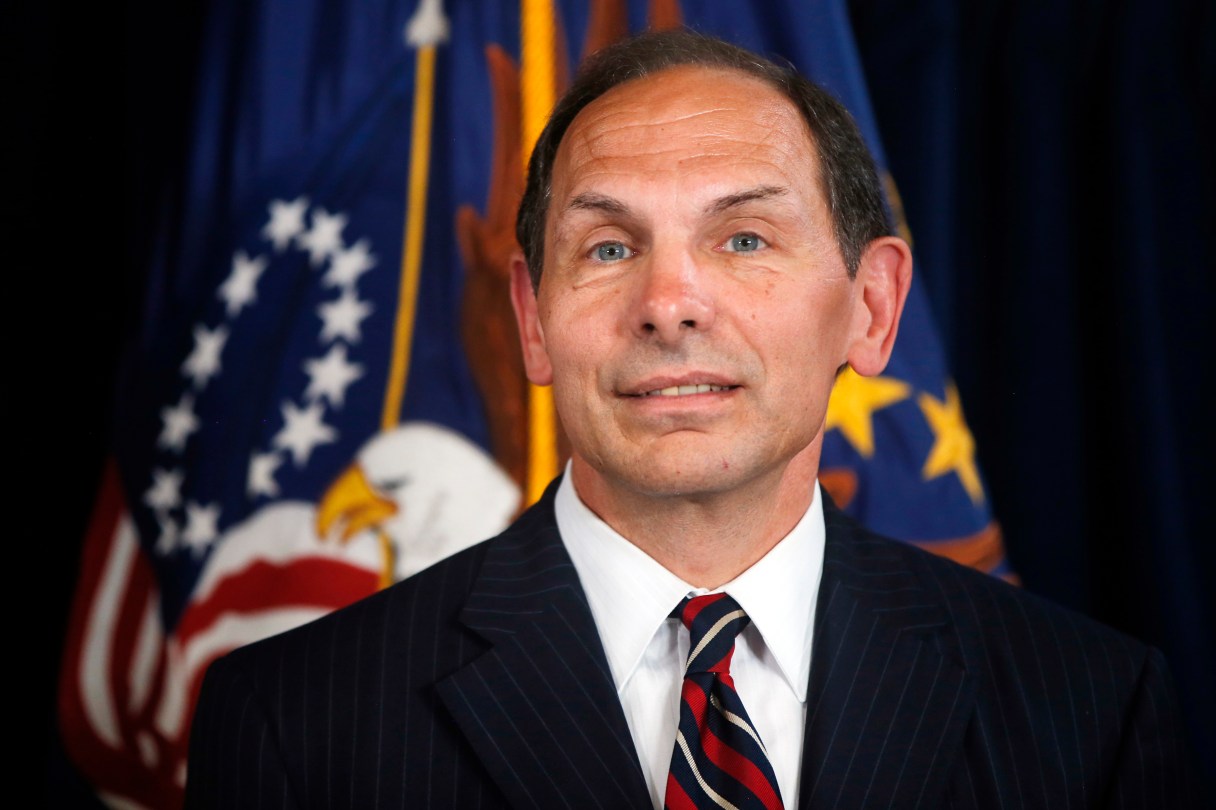
WASHINGTON (AP) – A onetime Army Ranger and former CEO of a Fortune 500 consumer products company, Robert McDonald may face his toughest challenge yet in fixing the huge, scandal-plagued Veterans Affairs Department.
Veterans groups worry that the longtime corporate executive, nominated by President Barack Obama to lead the VA, may have trouble adjusting to a far-flung bureaucracy of more than 300,000 employees, where hundreds of hospital directors and other career executives wield great power far from the agency’s Washington headquarters.
“Procter & Gamble is going to feel like a Ferrari compared to the VA,” said Paul Rieckhoff, CEO of Iraq and Afghanistan Veterans of America.
A year after he was forced out as P&G’s CEO, McDonald, 61, was tapped by Obama this week to overhaul an agency reeling from revelations of widespread treatment delays and falsified records to cover up months-long waits for appointments.
The White House released a scathing report last week, saying the VA was battling a “corrosive culture” of distrust, lacks resources and was ill-prepared to deal with an influx of new and older veterans with a range of medical and mental health needs. The agency serves nearly 9 million veterans with an annual budget of $154 billion, one of the largest in the federal government.