
NEW YORK (AP) – The United States and Japan are hoping to boost their defense relationship, allowing Japan to play a bigger role in global military operations with an eye on potential threats from China and North Korea.
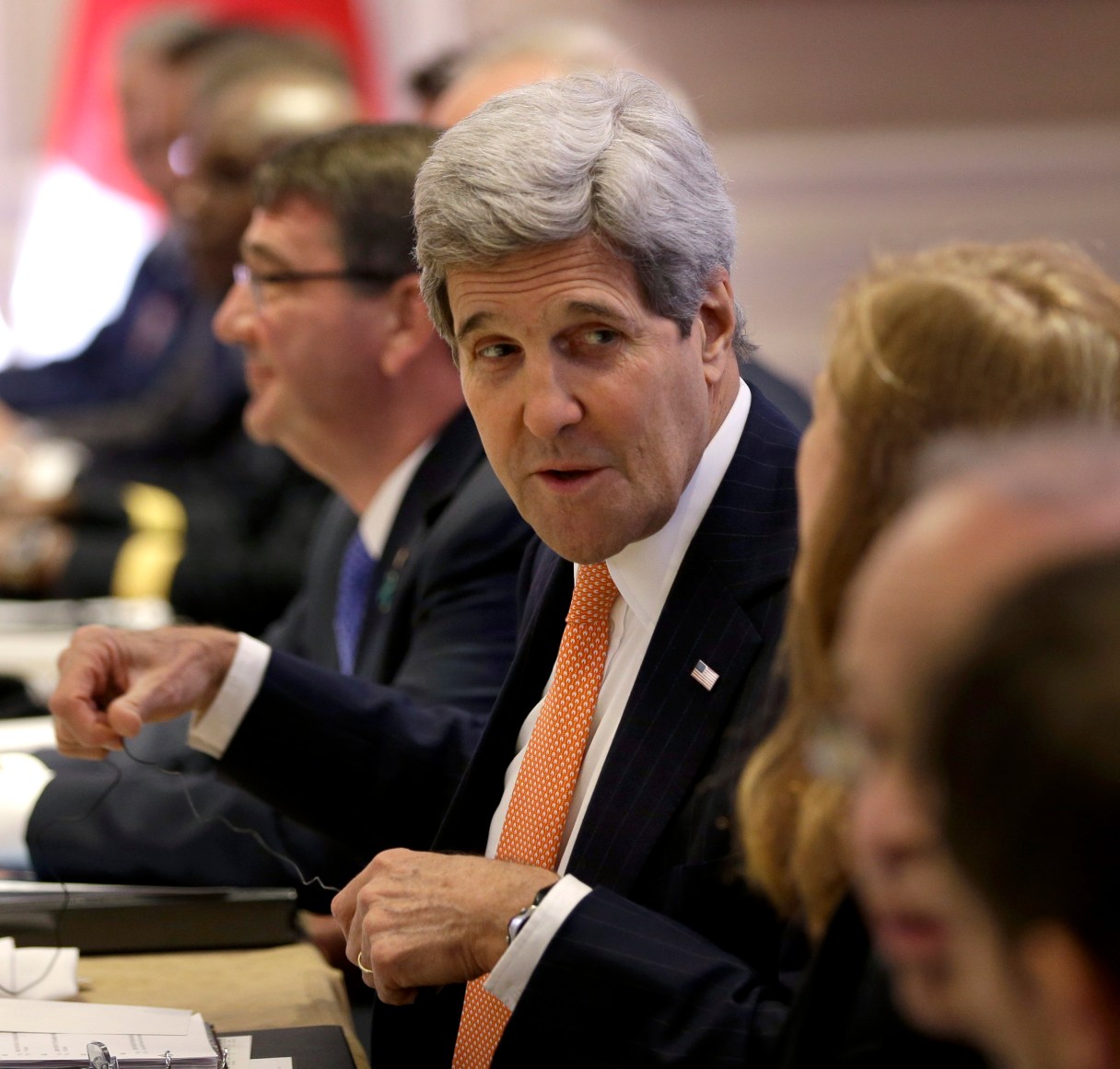
Before Japanese Prime Minister Shinzo Abe visits Washington this week, the two countries’ foreign and defense ministers met in New York on Monday and signed off on revisions to the U.S.-Japan defense guidelines. They are the first changes to the rules that govern U.S.-Japan defense cooperation in 18 years and will be subject to security legislation pending in Japan’s parliament.
The revisions boost Japan’s role in missile defense, mine sweeping and ship inspections amid growing Chinese assertiveness in disputed areas in the East and South China Sea claimed by Beijing. The new arrangements also allow Japan to dispatch its armed forces beyond the region for logistical backup of U.S. military’s global operations, in distant areas including the Middle East.
Japan’s military role is currently limited to its own self-defense, and the country’s war-renouncing constitution still prohibits pre-emptive strikes, leaving any offensive action to the U.S. The United States has nearly 50,000 troops based in Japan.
U.S. officials say the most significant part of the revisions is the elimination of current geographic limits on activities by the Japanese self-defense forces. Those details remain to be worked out, but the U.S. foresees Japanese forces playing an international role in peacekeeping, humanitarian and disaster relief operations and ballistic missile defense.