
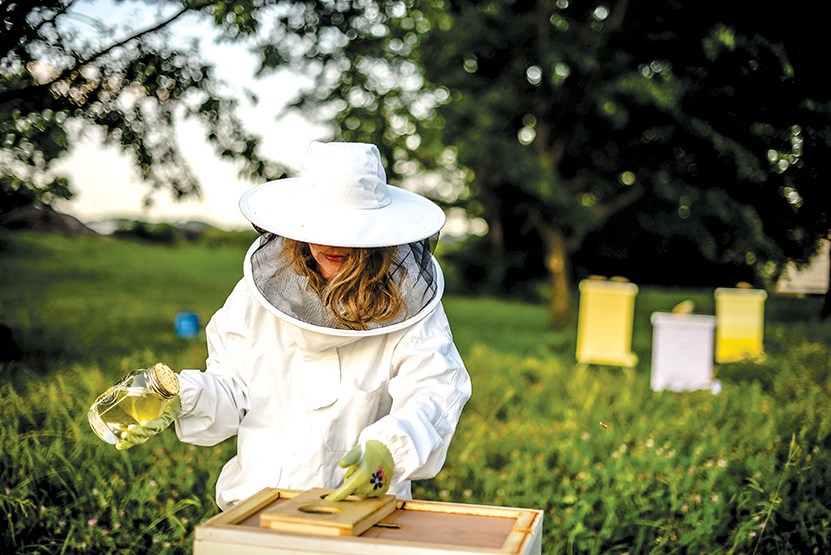
Beekeeping is not for the faint of heart. It takes a certain percentage of insanity to provide a home at your home for thousands of bees – typical colony numbers can reach as many as 60,000 to 70,000 bees – so beekeepers are courageous and, in my opinion, unsung heroes.
This year, after completing the Tennessee Valley Beekeepers Association’s nine-month mentorship program, I am honored to count myself among them. And now that it’s fall, it is finally time to celebrate.
Why, you might ask? Because fall is one of only two times each year that we get to harvest honey. The first is in July, after spring flowers have slowed their nectar production, and the second is right before winter hits.
For many local beekeepers, last year was a tough one. Hives were lost in Tennessee in part due to the summer’s and autumn’s drought and wildfires. But the hope is that this year’s honey supply will be well-stocked in the wake of the mild winter that followed, coupled with this year’s considerable rainfall.
But beekeeping is not all sweet nectar and beeswax. It can sting. So why exactly are we willing to risk our thinly veil-covered faces for this insect? Because without her (yes, her), life as we know it would not be the same. Our fresh food supply would decrease and the cost of produce would soar.