
BRUSSELS (AP) – Talks between Greece and its eurozone creditors broke down early Thursday without even a plan of action on how to move forward on the country’s debts and bailout, but markets were buoyant on hopes that a deal will be reached in time for Greece to avoid a potential exit from the euro.
Following an emergency meeting of the eurozone’s 19 finance ministers in Brussels, the two sides failed to even issue a statement, a sign they will need to yield some ground if a compromise deal is to be reached at a follow-up meeting on Monday.
Alexis Tsipras, Greece’s new prime minister, attending his first summit of European Union leaders, conceded that a solution will have to be based on an element of give-and-take by both sides.
“We will need to find a solution that respects the positions of all parties, so this agreement will have to be based on the core values of Europe, democracy and the vote of the people, but also on the necessity to respect the European rules,” he said.
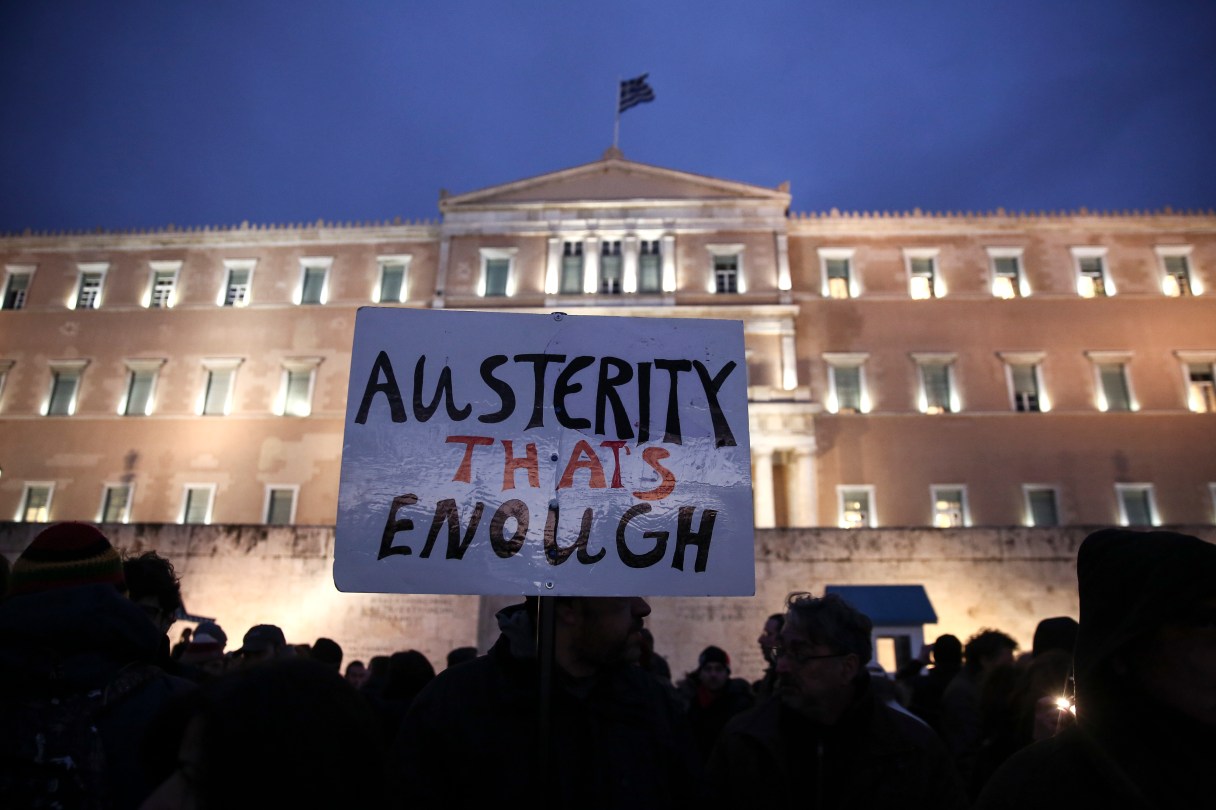
Europe has been embroiled in another Greek crisis following the election of the radical-left Syriza government last month. The new government was elected on a mandate to drastically reduce the burden of the country’s bailout and the associated budget austerity measures, which Tsipras blames in large part for the country’s economic woes.