
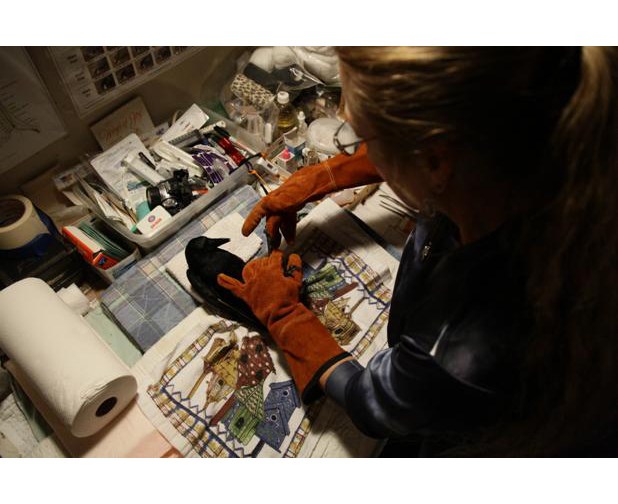
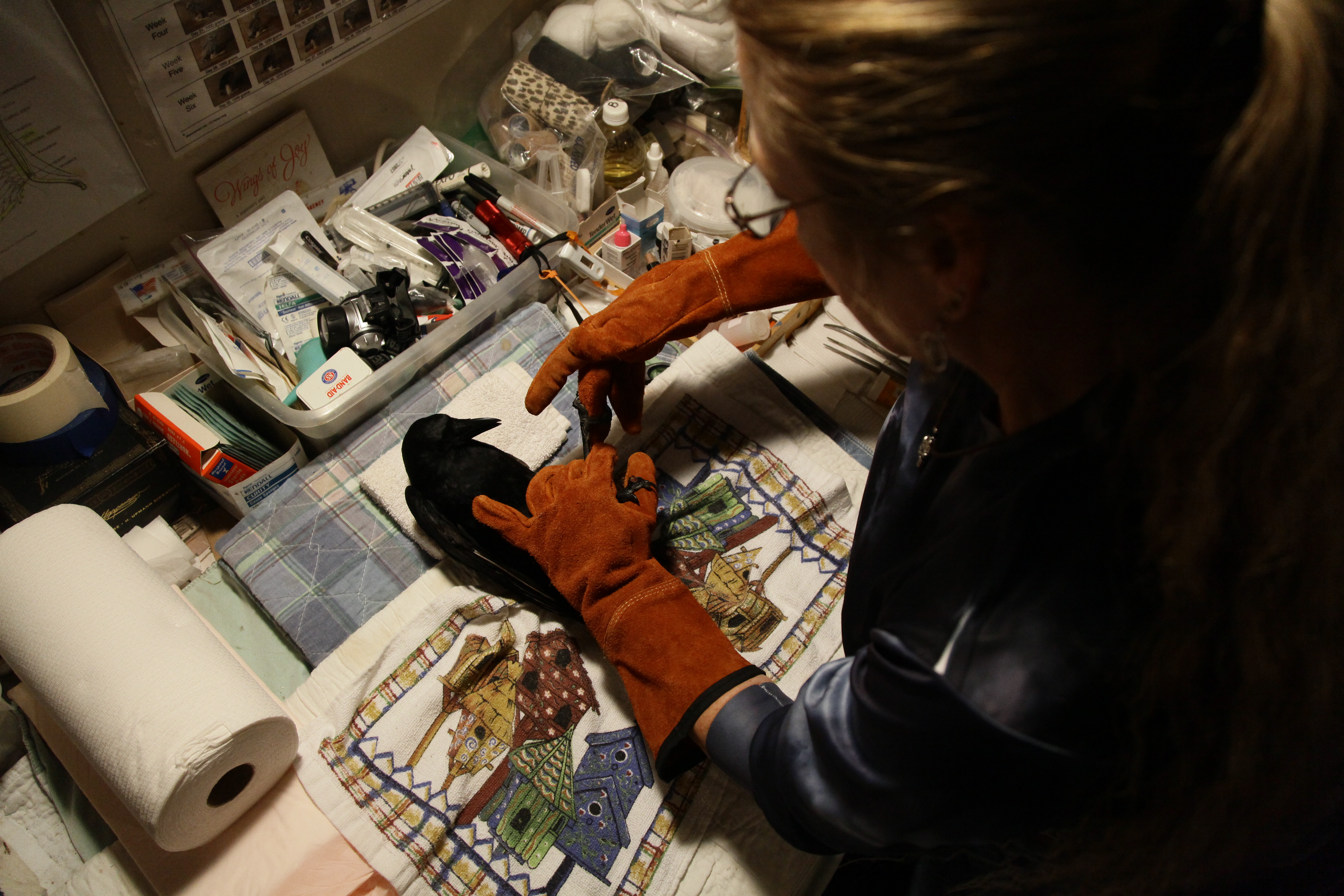
 Alix Parks examines Winks, an American crow recovering from a pox. Parks’ home rehabilitation center includes a trauma center and supply depot in her former garage and an 80-foot aviary she added to the side of her house for larger birds.

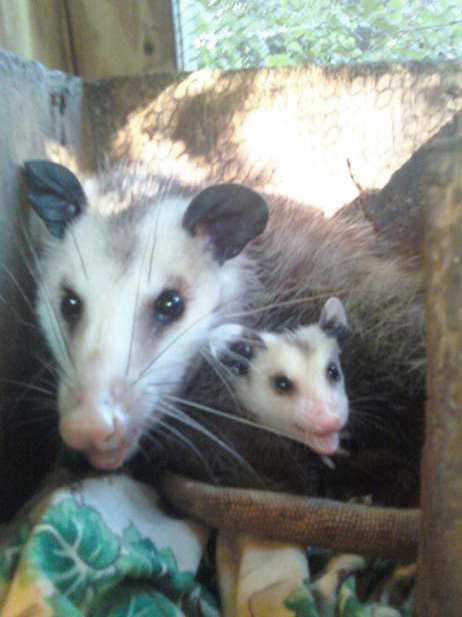 Opossums and squirrels are the specialty of animal rehabilitator Tish Gailmard.
WHOM TO CALLShould you encounter an injured or potentially orphaned wild animal, call or visit websites for the appropriate wildlife management agency and a list of permitted rehabilitators:* Tennessee: Tennessee Wildlife Resources Agency Law Enforcement, 615-781-6647 or www.tn.gov/twra/wildliferehab.html.* Georgia: Georgia Department of Natural Resources Special Permit Unit, 770-761-3044 or www.georgiawildlife.com/node/414.* Alabama: Alabama Department of Conservation and Natural Resources Wildlife and Freshwater Fisheries Division, 334-242-3465 or www.dcnr.state.al.us.* North Carolina: North Carolina Wildlife Resources Commission License Section, 1-888-248-6834 or www.ncwildlife.org.JOIN THE RANKSRequirements to attain a wildlife rehabilitation permit vary slightly from state to state, but the major criteria include:• Passing a written exam.• Demonstrate working knowledge with the intended species. In Tennessee, potential rehabilitators must record 200 hours of apprenticeship. Veterinarians and veterinary technicians automatically are considered to have met this requirement.• Having their proposed facilities inspected prior to approval.• Letters of reference and competency from veterinarians, wildlife officers or other qualified individuals.• A separate, federal permit from the U.S. Department of Fish and Wildlife is required, in addition to a state permit, for those who want to treat migratory birds.IF YOU SEE A WILD ANIMALMost rehabilitators say they begin seeing new patients with the onset of spring and the breeding season. To prevent unnecessary harm to native wildlife, rehabilitators suggest the following:• Limit cat attacks of songbirds by putting a bell on your cat and keeping it indoors or allowing it outside only at night, especially during June and July.• If a bird is attacked, place it in a large paper bag with holes for ventilation and call a veterinarian or wildlife agency for contact info for the appropriate rehabilitator• If you see a turtle about to cross a busy road, pick it up and place it on the opposite side of the street in the direction it was heading.• Contact a rehabilitator if you encounter turtles with large lumps on its body, a recently damaged shell or sunken, cloudy eyes.• Avoid picking up young wild animals, even if they seem abandoned. The mother is most likely nearby and will return. Contact a rehabilitator only if the baby is clearly injured or the parents do not return for six hours or more.• Encourage unwelcome animals on your property to leave by non-lethal “hazing” — pointing a strong flashlight and loud radio into their den.• If in doubt, call a rehabilitator.
Reaching into a wooden birdhouse in the 30-foot, latticework-enclosed aviary behind her Signal Mountain home, Alix Parks jerks her hand back, narrowly avoiding a nip from Al, a screech owl huddled inside.
Chuckling over his warning beak clicks, Parks, a state-certified wildlife rehabilitator, closes the birdhouse’s lid and retreats into the adjacent garage to find a pair of protective gloves. Al’s unsuccessful bite, she says, is an indication that he is almost mended after arriving at her home following a recent collision with a tractor-trailer traveling from Virginia.
“[Wild animals] don’t like us,” Parks says, picking up the eight-inch-tall, russet-colored owl in her now-glove-covered hands. “But that’s a good sign. It shows they’re afraid of man.”
Parks is a member of a nationwide network of individuals who volunteer their time and money, often without compensation, to help injured native animals recuperate before releasing them back into their natural habitat. In the Chattanooga area, there about a dozen such caregivers, each with their own specialty, be it birds or mammals such as squirrels, possums, rabbits, raccoons or deer.