
WASHINGTON (AP) – Railroads hauling crude oil would be required to develop comprehensive plans for dealing with a significant oil spill, including providing detailed information to state and tribal authorities, under a rule proposed Wednesday by the Department of Transportation.
The proposal also includes a new testing method for shippers to determine the volatility of oil shipments.
Oil is often transported in trains with as many as 100 tank cars at a time. At least 27 oil trains have derailed in the U.S. and Canada in the last decade, often leading to fiery explosions and extensive environmental damage. Local authorities have complained in the past that they’ve been unable to obtain information or there have been delays in obtaining information from railroads.
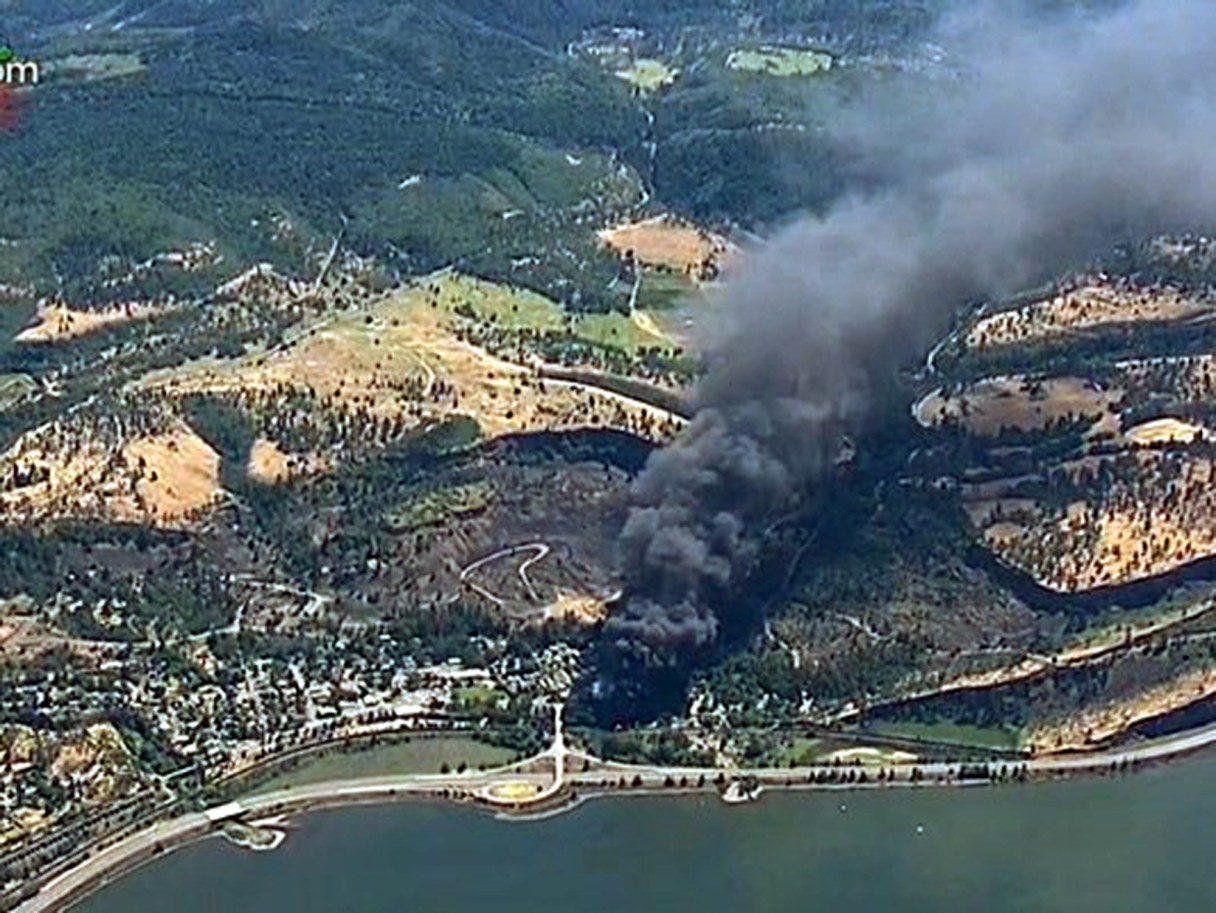
Last month, a Union Pacific Railroad oil train derailed in the scenic Columbia River Gorge along the Oregon-Washington border. The derailment released 42,000 gallons of crude oil and sparked a massive fire that burned for 14 hours.
The proposed rule would “hold industry accountable to plan and prepare for the worst-case scenario,” Transportation Secretary Anthony Foxx said.