
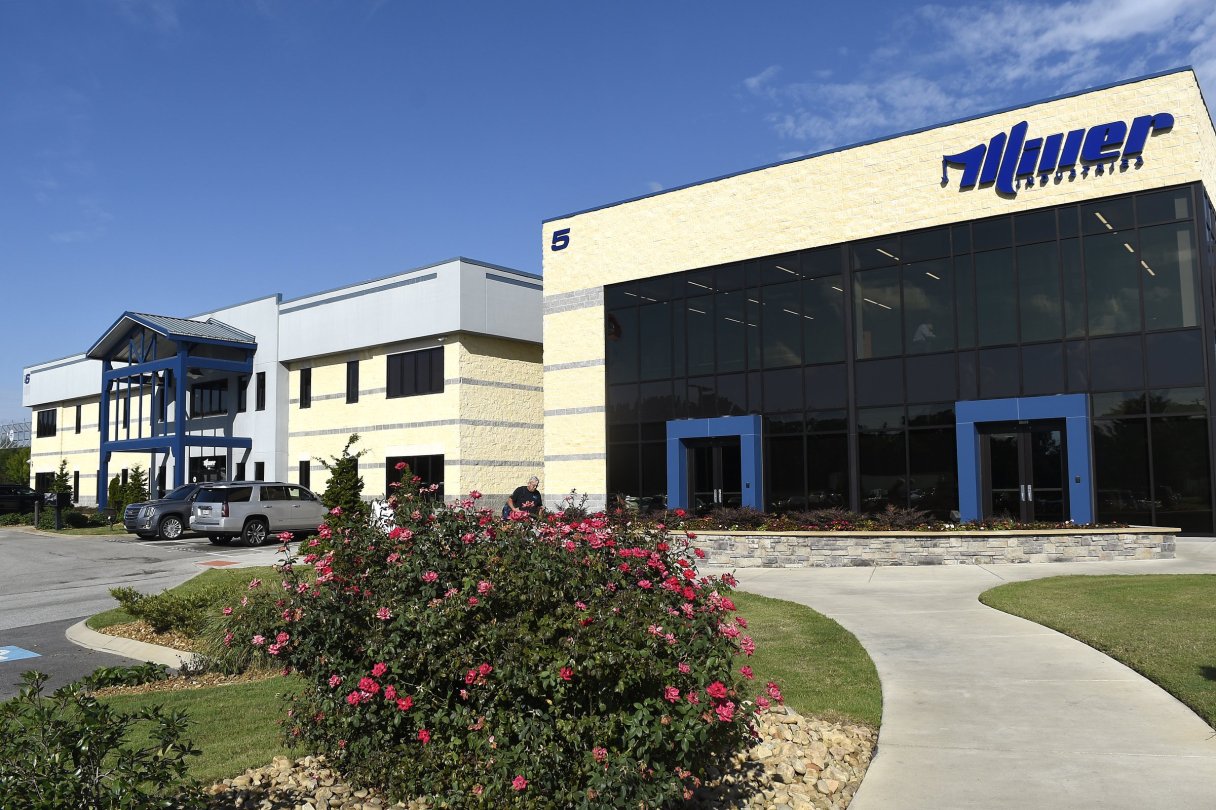
Chattanooga-based tow-truck maker Miller Industries on Wednesday reported that second quarter net income fell more than 45% due to the impact of the coronavirus outbreak.
Net income in the quarter was $5.8 million, or 51 cents per share, down 45.5% compared to net income of $10.7 million, or 94 cents per share, in the prior-year period, the company reported after the close of the markets.
Net sales were $128.5 million in the quarter, off 42.2% compared to $222.3 million a year ago.
Miller’s stock closed Wednesday at $28.87 per share, down 6 cents, or 0.21% on the New York Stock Exchange.
Jeffrey I. Badgley, the company’s co-chief executive officer, said revenue was down due to temporary shutdowns of some facilities and part of its supply chain, and the implementation of health and safety operating adjustments.
“Despite the challenging circumstances, we remained focused on optimizing our production schedules to meet customer demand and reduce operating costs, while maintaining stringent social distancing and sanitary protocols to protect the health and safety of our employees,” he said in a statement.
Badgley said Miller maintained a constant dialogue with its distribution network throughout the quarter so it could quickly and efficiently fulfill customer orders.
“I am very proud of the continued commitment to operational excellence from the entire Miller team as we work together to navigate the business through this uncertain market environment,” he said.
Miller posted gross profit for the second quarter of $17.7 million, or 13.8% of net sales, compared to $25.2 million, or 11.3% of net sales, a year ago. Selling, general and administrative expenses were $10.1 million, or 7.8% of net sales, compared to $11 million, or 4.9% of net sales, in the prior-year period.
For the six months ended June 30, net sales were $304.6 million, a drop of 27.4% compared to $419.6 million a year ago. The company reported net income of $11.3 million, or 99 cents per share for the six months of 2020, down 41.8% compared to net income of $19.3 million, or $1.70 per share a year ago.
Badgley said that during the second quarter, the company continued to invest in crucial technological improvements that will further enhance its operational efficiency and enable it to emerge from the pandemic stronger than before.
“While we are still in the early stages of this roll out, I am pleased to announce that we remain on schedule,” he said. “In addition to our operational improvements, we reduced our outstanding debt levels during the quarter to further strengthen our balance sheet and increase financial flexibility as we operate in this unpredictable environment.”