
BOGOTA, Colombia (AP) – In a landmark television interview, the rarely seen leader of the Revolutionary Armed Forces of Colombia reaffirmed the commitment of Latin America’s oldest insurgency to abandon the battlefield even while shying from a six-month deadline to sign a final peace accord.
Rodrigo Londono said he has always considered himself an “enemy” of putting artificial dates on negotiations, fearing it could backfire against the rebels if a target is missed. But he said he eventually was persuaded to put aside those objections and join Santos in making a pledge to reach a final deal by March because he trusts the president, who he called an “ally of peace.”
“If there’s political will, we can do it earlier, but six months may also be too short,” Londono said in his first interview since peace talks began in Cuba three years ago.
The interview aired Tuesday night was as significant for its very existence than any revelations made by the normally secretive Londono, who is better known by the alias Timochenko.
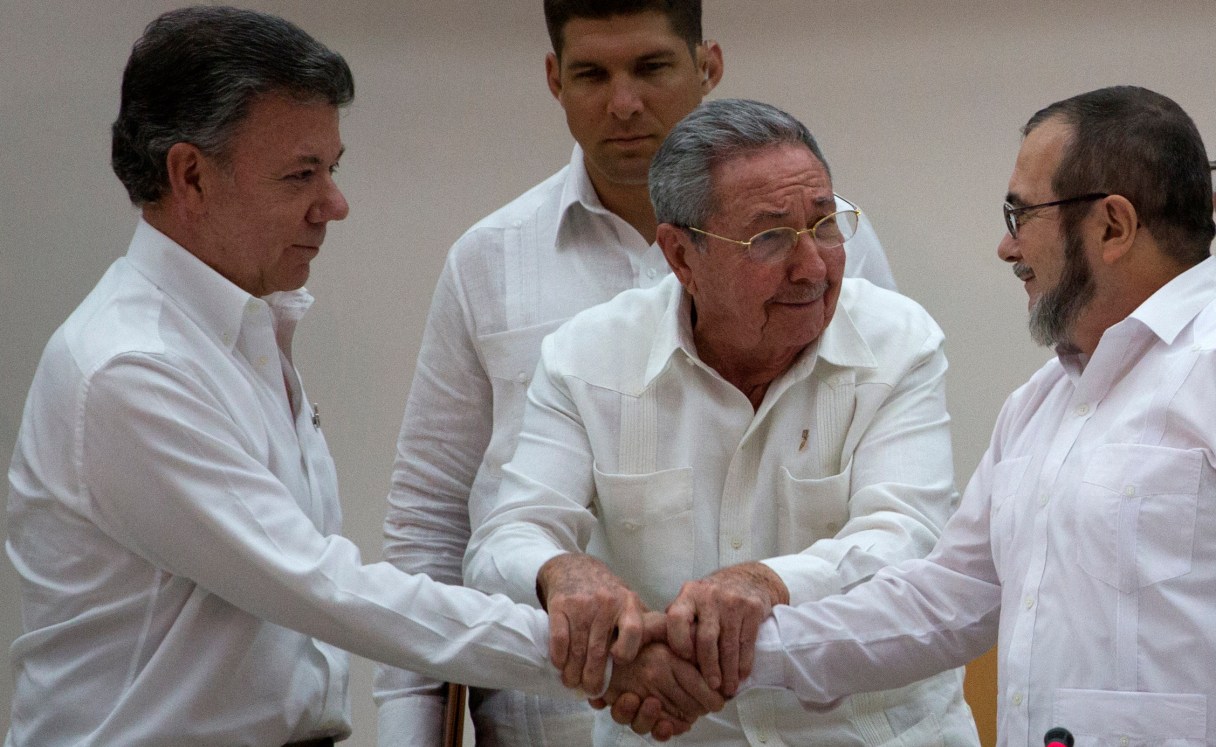
Until last week, when he shook hands with President Juan Manuel Santos in Havana to announce a breakthrough agreement on the thorny issue of punishment for war crimes during a half-century of fighting, the veteran guerrilla commander had been something of a sphinx to Colombians. When he was seen at all, it was only in videotaped messages from the jungle battlefield dressed in military fatigues and railing against Colombia’s U.S.-backed “oligarchy.”