
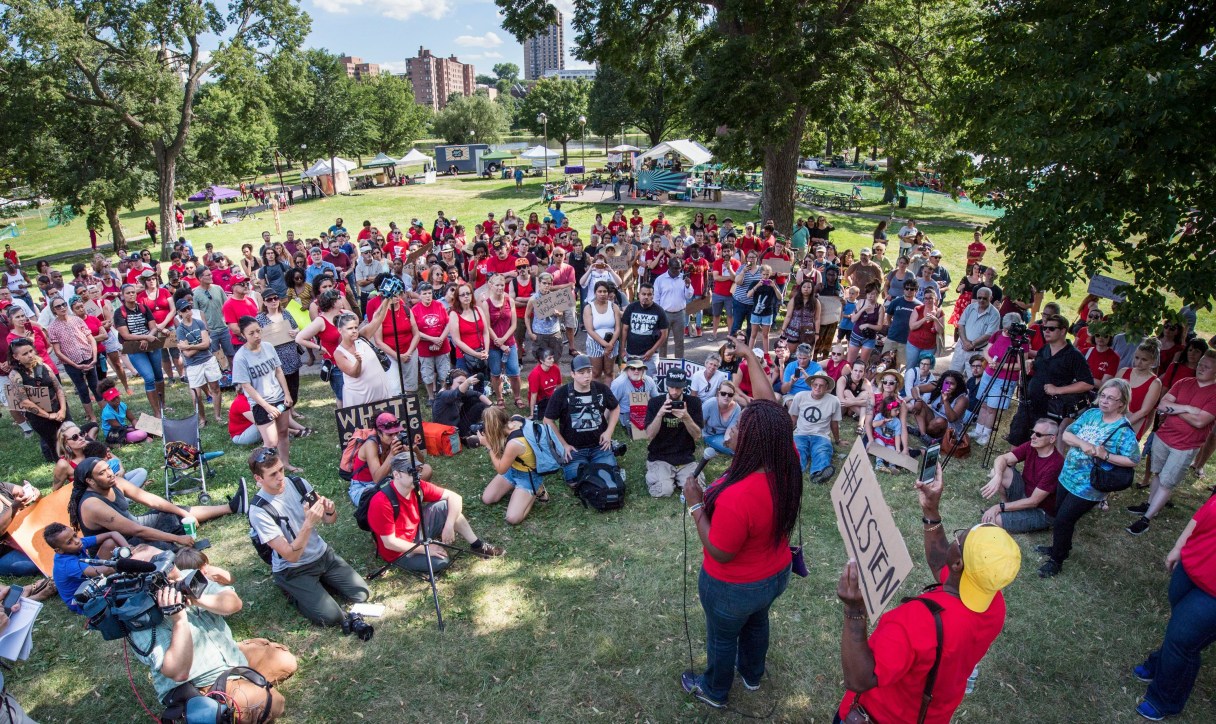
MINNEAPOLIS (AP) – For many leaders in Minnesota’s black community, the dropping of a federal investigation and no charges being filed after a black man was killed by Minneapolis police in November was reason to question whether months of work to repair racial disparities and police-community relations had paid off.
The question is again being asked after last week’s fatal police shooting of another black man in the Twin Cities area.
The governor has promised justice to the family of Philando Castile, who was fatally shot while reaching for his wallet during a traffic stop Wednesday in suburban St. Paul, according to his girlfriend, who video-streamed the shooting’s bloody aftermath on Facebook. The shooting came eight months after police fatally shot 24-year-old Jamar Clark in Minneapolis during what authorities said was an altercation with police.
“I do not have faith in our justice system,” Nekima Levy-Pounds, head of the Minneapolis NAACP, told protesters last week while reflecting on Clark’s case. Another protest sparked by Castile’s death shut down Interstate 94 in St. Paul late Saturday, resulting in dozens of arrests.
Clark’s death drew Minnesota into the national debate over police-involved deaths of young black men. Soon after, lawmakers designated $35 million for job training, investment funds and other programs targeting impoverished black residents in Minnesota, where African Americans make up just 6 percent of residents but are four times as likely to be unemployed as whites.