
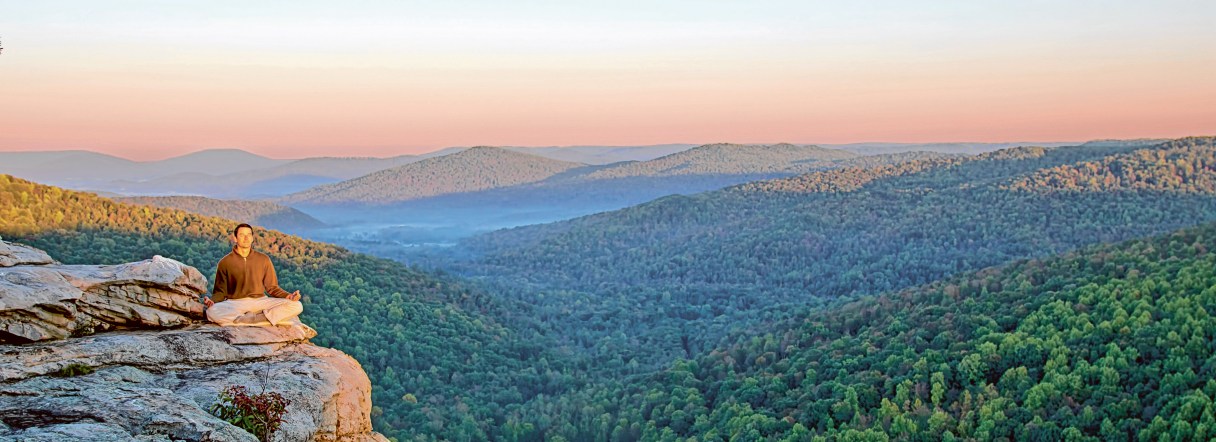
A pond is centered at the heart of Isha Institute of Inner-sciences. The water is fresh, feeding and flowing into nearby waterfalls. Waterfowl, fish and even a small turtle make their home in and around the pond, but this wasn’t always the case. When a group of seven Isha volunteers came to the 1,400-acre site to build a retreat center in 2006, the pond was dry, swampy and stagnant. So they infused the pond with freshwater, placed fish in it and the turtle. And over the years, they happily watched the pond come back to life.

Mahima
Situated on the Cumberland Plateau in McMinnville, Tennessee, the Isha Institute is the only one of its kind in the United States. As I drove the rolling, winding TN-111 toward my destination, I was hoping for a rejuvenating day away from the office, but truly I didn’t know what to expect. Preliminary research on the web told me the 1,400- acre retreat center sprung out of the Isha Foundation, a worldwide nonprofit based in India and founded by a mystic, humanitarian and yogi named Sadhguru. According to ishafoundation.org, it’s “a unique space created for human beings to deepen their experience of life, and to reach their ultimate potential.”
To be honest, I didn’t really know what that meant, and it isn’t every day I wander to the middle of nowhere, miles away from civilization, for the sake of a story. My coworkers had been joking for a week that if I didn’t return from this outing, they would send in a search team. I laughed away any concern, but then my editor Mark asked me repeatedly, “You’re going alone?” and I started having doubts.
Upon arrival, I was immediately put at ease by friendly, professional faces and a steaming cup of herbal tea. “We are primarily a yoga center; our focus is classical yoga and meditation,” Isha outreach volunteer Alison Murry explains. Alison, national outreach volunteer Kathy Campbell and I were chatting in the visitor welcome center, the walls of which consisted mostly of windows. The bright sun cut through the frigid day and warmed everything in the lobby, including a young key lime tree growing right up through an opening in the floor tiles. “It’s an opportunity to retreat into nature and get back in touch with that source of stillness that’s within somebody, so that you can go out into the world and feel like you are functioning from that place,” she adds.
I enjoy yoga, but I am far from an expert. If I can make it to a class at the YMCA, I go and usually don’t feel too bad about myself when I can’t keep my balance during tree pose. But Isha takes yoga practitioners to an entirely different level, sending them deeply within classical yoga, which in ancient times was meant to prepare the body for meditation, says Kathy.
Meditation? This was the part that really threw me. I tried to picture myself in the act, legs crossed and palms facing upward. But all I could think about were my deadlines the next day, or my to-do list for the weekend, or a million other things I couldn’t keep from running across my mind.
“There’s kind of a misnomer about meditation,” says Kathy. We had begun to stroll around the campus of lodge-like dormitories, a courtyard, dining hall and more-all surrounded by dense forest. “Basically, the idea is you can’t just try to calm your mind. It doesn’t work that way.”
Kathy explains that meditation requires an atmosphere that facilitates the process, which the Isha retreat center strives to offer.
The crown of the campus is a 39,000-square-foot meditation hall called Mahima, the biggest meditation hall in the Western Hemisphere. A brief step inside reveals a heavy, solemn silence that reaches to the tip-top of the domed ceiling. Though mainly used for meditation, the building actually serves multiple purposes, some louder than others. For instance, it held the 1,000-plus international visitors during the World Peace Day event last September, it’s housed a rock band and even a crowd of children during the summer camps for kids.
On the trail
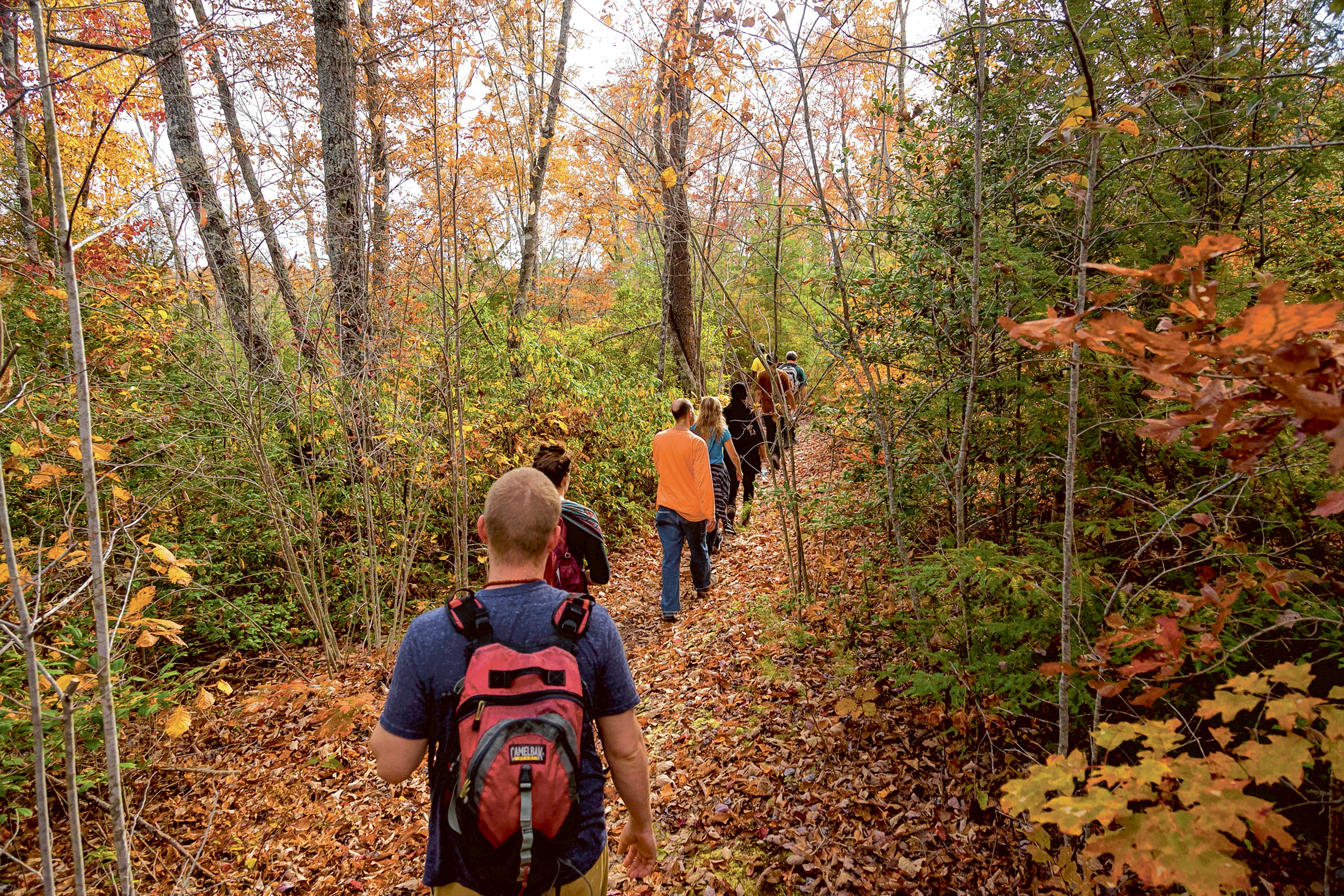
As we set off on one of the trails toward the bluff overlooks and waterfalls, both Kathy and Alison say they’ve felt the benefits of meditation firsthand. “I didn’t know how stressed out I was until I wasn’t stressed out anymore,” Alison says. “It wasn’t so much the content of my life was changing but how I responded to it.”
The practice of Isha yoga and meditation also has health benefits, they explain. Alison says a minor thyroid problem that ailed her for years disappeared after a few months. Sixty-two-year-old Kathy insists her stamina is now twelvefold what it was when she was 52. In a survey taken among Isha yoga practitioners, high percentages of people reported improvements in problems like anxiety, depression and hypertension and even in areas like allergies and asthma. The idea is that this meditative culture, the practice of yoga, healthy eating and exercise creates a balance-physically, mentally and spiritually.
The overlook
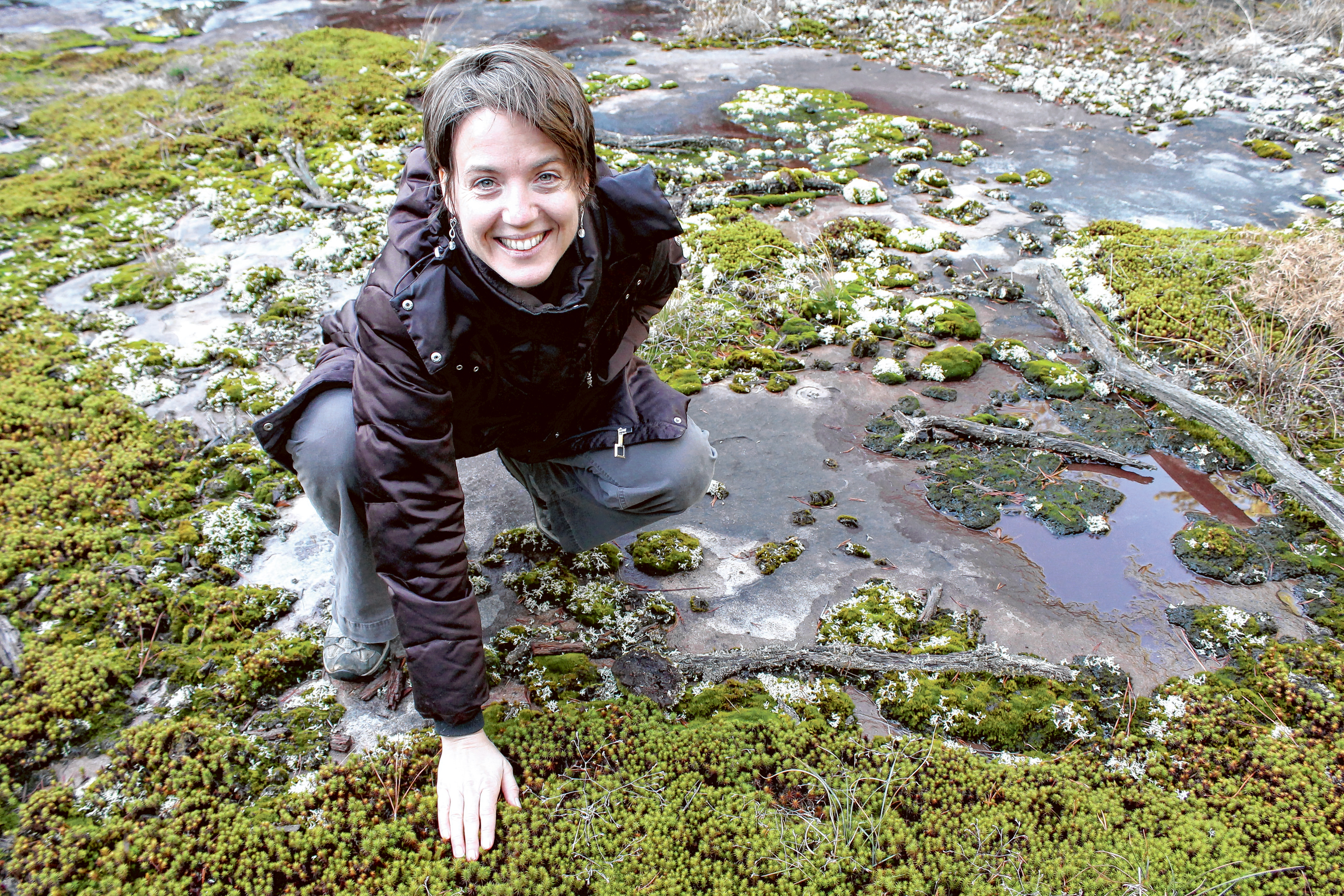
We slipped our way along the wet and wooded path, stopping to admire a natural moss garden that felt better than velvet beneath my hands. When we came to the waterfall, Alison showed me how to climb behind it into a small cave. As we reached out to touch the freezing water with our fingertips, I felt a pang of jealousy that these women have such natural beauty in their own back yard. Both Alison and Kathy live at the center, along with all of the other full-time volunteers. In fact, there are no paid employees at Isha. In exchange for the work they do, volunteers receive lodging and meals. Some volunteer for years, others for weeks or months.
“There are people here from every walk of life,” says Kathy, who’s lived at Isha for the past three years with her husband. “When you’ve done something to make yourself feel better, you want to make others feel better too.” Though at first glance the center seems like a retreat from the world, it actually puts a firm emphasis on reaching back out into the community. For example, some of the volunteers who live at the center are doctors who devote one day a week to a local community center to offer free medical care.
As we continued to wind our way up the trail, I could tell the forest was beginning to thin up ahead. The roar of the waterfall still in my ears, we stepped out of the tree line and onto the stone overlook. A pink-and-gold sky hinted at sunset above the rolling valley below. I took a deep breath, cherishing the brief respite from my busy life. And yes, it was rejuvenating.
Driving home that night, I caught myself daydreaming about turning my car around and going back to stay for a week or so. The thought of detoxing for a few days from the stress, my crazy schedule and admittedly poor eating habits was, and still is, alluring. I laughed when I thought about my coworkers. They would have to send a search team to look for me after all, but I would be unrecognizable – stress-free, glowing with health and likely laying in that velvety bed of moss.
Play
The institute offers various programs, including inner engineering, hata yoga and even yoga for children. Classes are held monthly and are growing in frequency and size, says Allison. Guided meditation sessions are also offered each day. Guests are free to participate in the daily schedule, posted on the website, as well as the gardening, cooking and other daily activities. Also, anyone who simply wants to ramble the wooded trails, including chains of waterfalls and gorgeous bluff overlooks, is welcome to do so.
Stay
A day trip to Isha is free of cost. The trails, meditation hall and kitchen are available for visitors to explore and utilize. Guests who wish to stay overnight or for longer have two options. Dorm-style accommodations hold eight beds in each room with access to community showers for $40 a night, which includes two meals a day. Or, for more privacy, suites with two beds are available for $90 per night, $110 for a couple. The rooms are furnished simply and feature durable and eco-friendly materials, including bamboo flooring. A short walk from the dorms is a courtyard, where the center sometimes holds candlelit dinners that are usually accompanied by The Sounds of Isha, the center’s home-grown fusion band.
Eat
Volunteers take turns cooking in the commercial kitchen and serving meals, explains Alison, which are all vegetarian and apparently delicious. “We have people who call to say ‘I’ve heard your food is very good,'” she laughs. All meals are eaten in silence according to a sign posted next to the buffet table. Alison says the reason for this is twofold: it continues to enable that culture and atmosphere of meditation and, secondly, scientific studies have shown that food is better digested when eaten in a calm and quiet state.
Find out more:
Isha Institute of Inner-sciences is located at 951 Isha Lane in McMinnville. For more information visit ishafoundation.org/us. To get involved locally here in Chattanooga visit meetup.com/Free-Meditations-Chatt.