
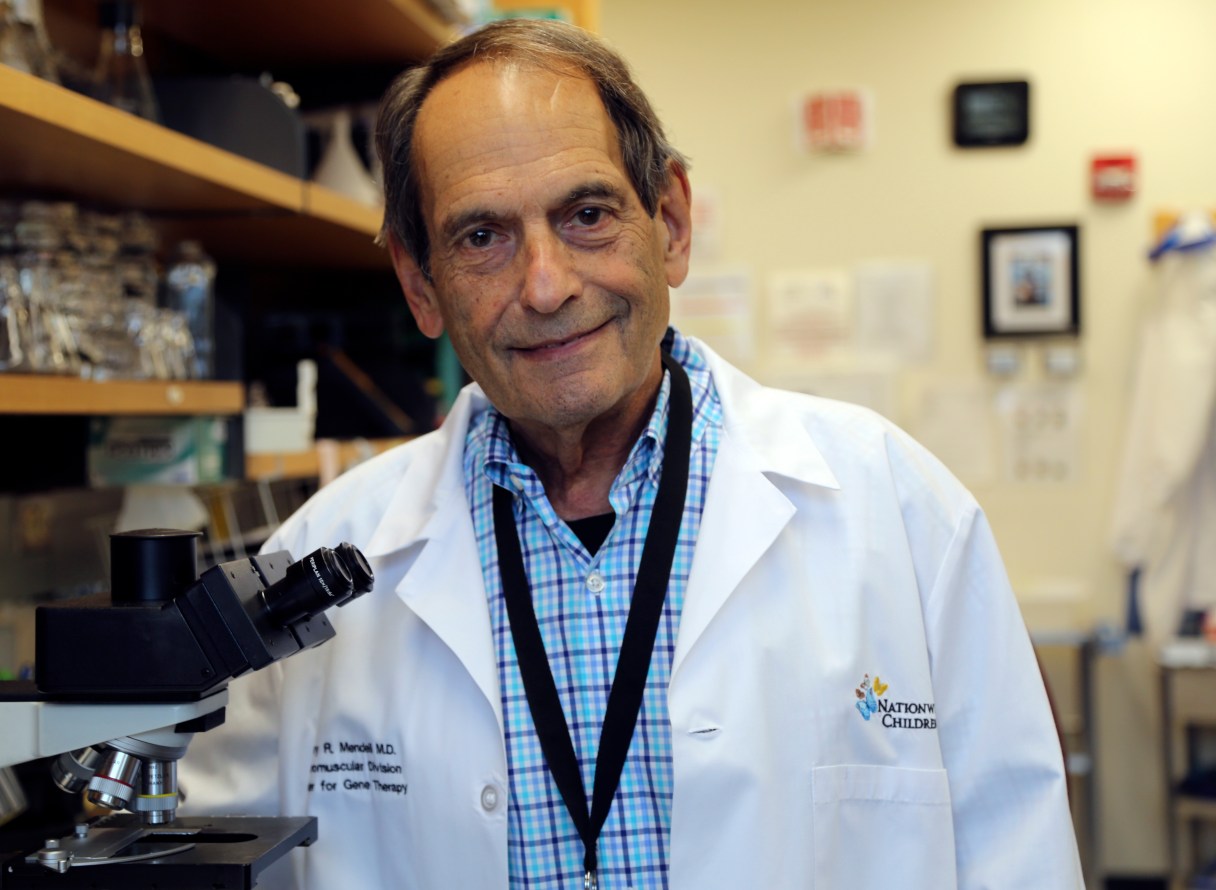
WASHINGTON (AP) – A first attempt at gene therapy for a disease that leaves babies unable to move, swallow and, eventually, breathe has extended the tots’ lives, and some began to roll over, sit and stand on their own, researchers reported Wednesday.
Only 15 babies with spinal muscular atrophy received the experimental gene therapy, but researchers in Ohio credited the preliminary and promising results to replacing the infants’ defective gene early – in the first few months of life, before the neuromuscular disease destroyed too many key nerve cells.
“They all should have died by now,” said Dr. Jerry Mendell of Nationwide Children’s Hospital, who led the work published by The New England Journal of Medicine. Yet, “those babies are still improving.”
Mendell cautioned that much more study is needed to prove the gene therapy works and is safe. Nor is it clear whether the replacement gene’s effects would wane over time.
Spinal muscular atrophy occurs in about 1 in 10,000 births, and those with the most severe form, called SMA Type 1, rarely reach their second birthday. They can be born looking healthy but rapidly decline. One study found just 8 percent of the most severely affected survived to age 20 months without needing permanent mechanical ventilation to breathe.