
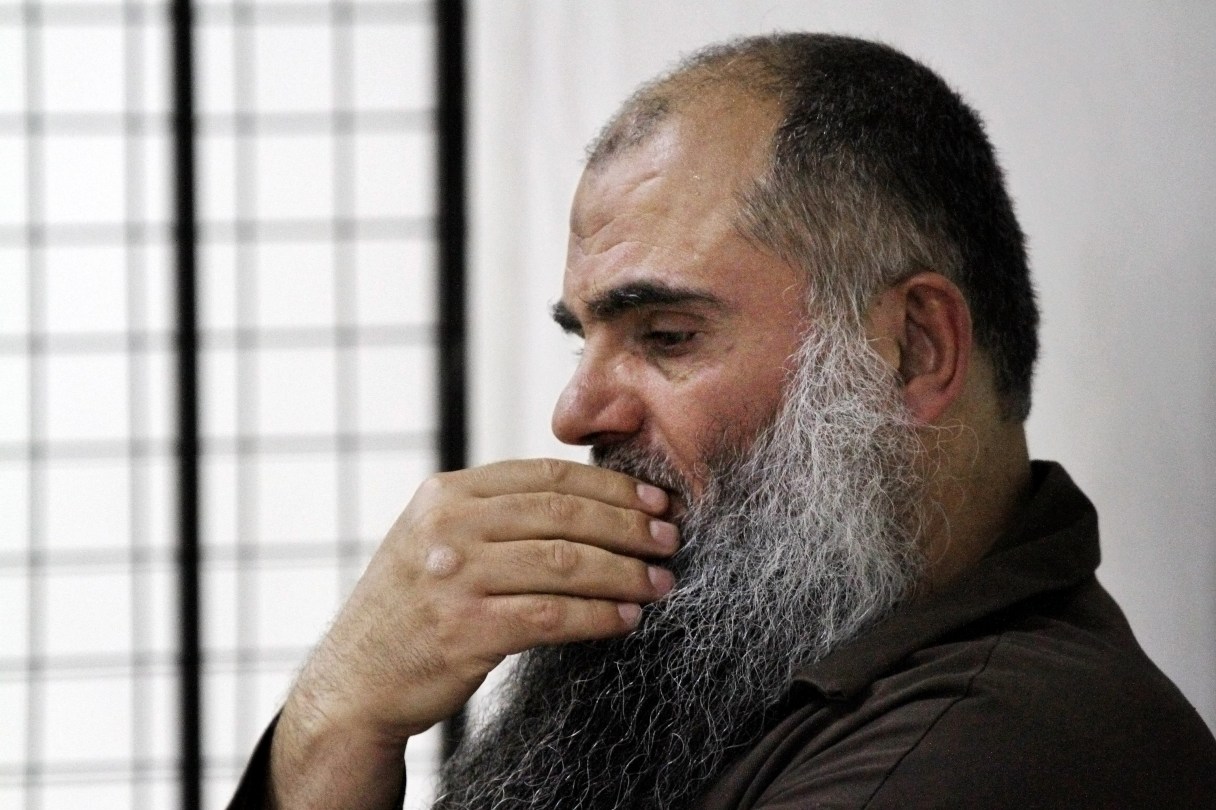
AMMAN, Jordan (AP) – The judge in the trial of a radical Jordanian cleric accused of a 2000 plot to attack Israelis, Americans and other Westerners said Sunday he was delaying his verdict pending further examination of the case.
A decision on the charges against Abu Qatada will now be issued Sept. 24, judge Ahmed al-Qatarneh said.
Abu Qatada, whose real name is Omar Mahmoud Mohammed Othman, has been described in courts in Britain and Spain as a senior al-Qaida figure in Europe who had close ties to the late Osama bin Laden.
An Amman court acquitted him in June of charges linked to a foiled 1999 plan to attack an American school in the Jordanian capital, but reserved judgment on a second set of charges related to the alleged 2000 plot.
In both cases, Abu Qatada was convicted in absentia years ago and sentenced to life in prison. But on his extradition from Britain in July 2013, those sentences were suspended, and under Jordanian law, he was ordered to stand a new trial. Following more complaints later by his defense team, the military court brought civilian judges, led by al-Qatarneh, to preside over the case.