
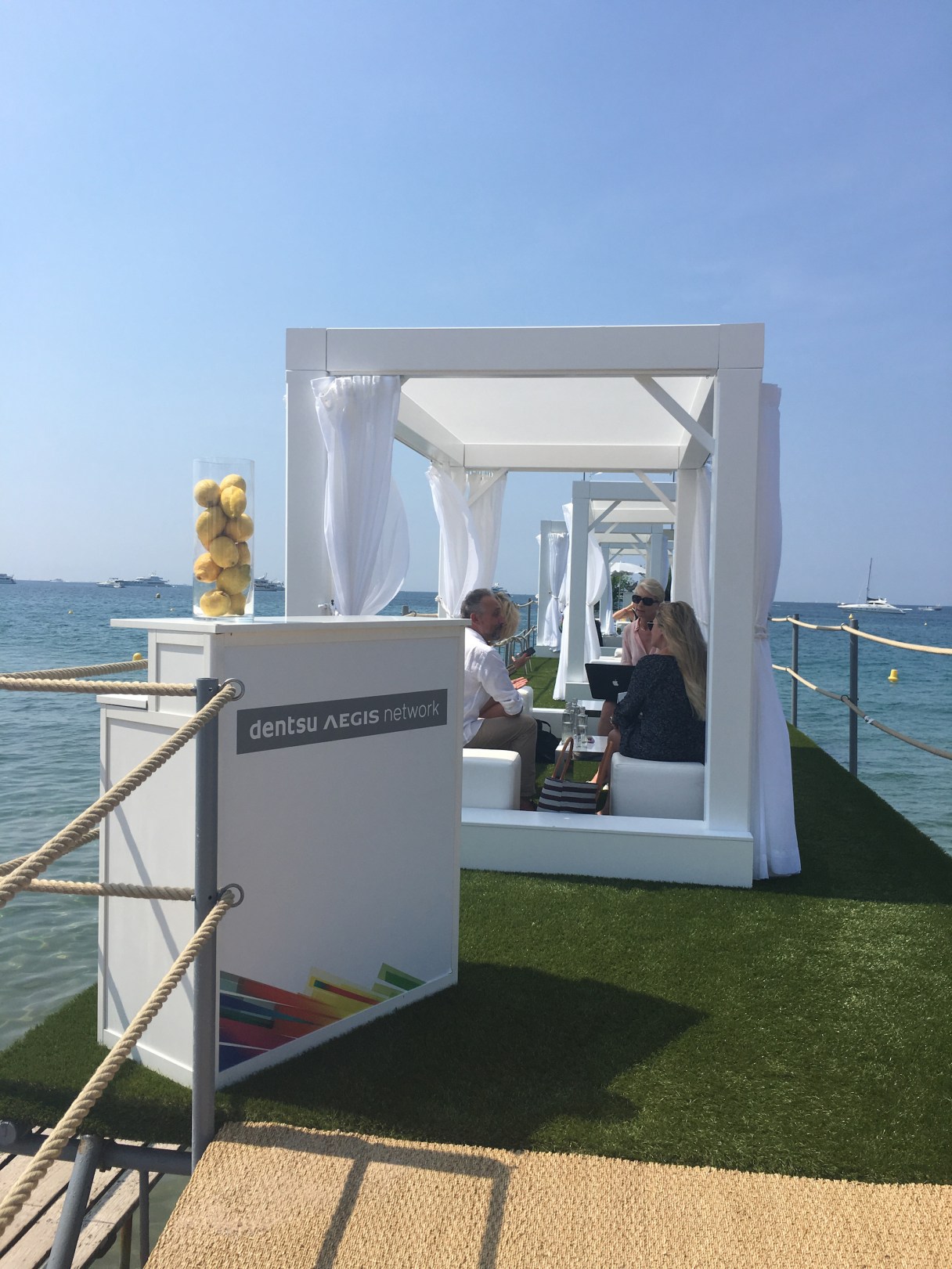
I was on a party yacht in Cannes recently when I found myself locked in one of the classic quandaries of life on the French Riviera: canapés, crudités, or rosé?
I’m joking, of course! Why choose just one? As I stuffed my face, I mingled with a posse of slobbery, middle-aged American dudes bedecked in wrinkled linen. They were discussing the highlights of Cannes Lions, the annual advertising industry confab that brought thousands of marketers, armed with expense accounts, to the south of France for the week. Their conversation moved easily, if bizarrely, between hip-hop and ad tech.
I found it hard to partake in the mirth. For much of the glamorous week in Cannes, I was plagued by a nagging question about the ad business and the global economy: What were all these people doing here?
Why had their bosses paid for flights, hotels, yachts, private villas, helicopter rides, sponsored beaches, hip-hop stars and enough food, drink and fancy swag to sustain a small village? And why schlep all the way to Cannes rather than to, say, the Marriott in Atlantic City? All week, as I traipsed from rooftop party to beachfront party to Michelin-restaurant party (I’m hoping The Times puts me in one of those ads showing its journalists braving harsh conditions to uncover the truth), I was struck by the incongruence between the story that the ad industry tells about itself and the story playing out before my eyes. Wasn’t the ad business supposed to be ruled by data now? How could anyone justify this expense-account boondoggle – or any of the similar annual corporate excursions to Aspen, Davos, Sun Valley or Jackson Hole?
Then, over the course of my very tough week in Cannes, in conversations with people from every corner of the business, a truth dawned on me: The global economy runs on parties.