
Monday, November 16, 2026Nov 16

Big zap: Huge new power lines in West get federal OK

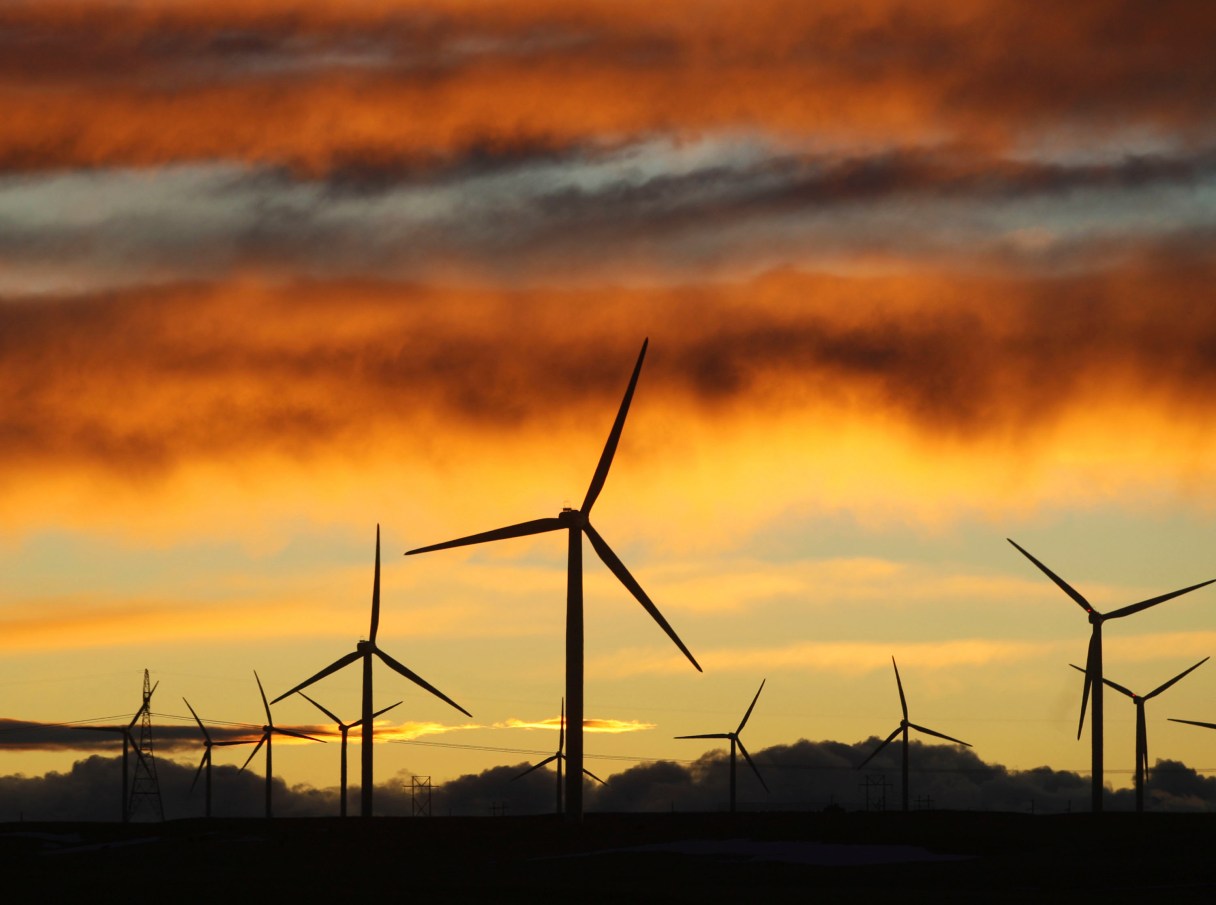
CORRECTS LOCATION FROM EAST TO WEST - FILE - In this Jan. 19, 2010 photo, clouds turn orange and purple as the sun sets behind the Happy Jack Wind Farm west of Cheyenne, Wyo. Two power line projects that won federal approval Tuesday, Dec. 13, 2016, will give a big capacity boost to the Western energy grid, including voltage from potentially the biggest wind farm in the U.S--Anschutz Corporation's Chokecherry-Sierra Madre wind farm in southern Wyoming. The TransWest Express project will help California meet its renewable energy goals with wind power from Wyoming. (Michael Smith/The Wyoming Tribune Eagle via AP, file)

CHEYENNE, Wyo. (AP) – Two power line projects that won federal approval Tuesday will give a big capacity boost to the Western energy grid, including power for up to 1 million homes from what’s on track to become the biggest wind farm in the U.S.

The TransWest Express project will help California meet its goal of getting half its electricity from renewable sources by 2030 by carrying up to 3,000 megawatts from the Chokecherry-Sierra Madre wind farm in southern Wyoming. The new power lines would span 728 miles from the wind farm to southern Nevada, crossing northwest Colorado and all of Utah along the way.

Denver-based The Anschutz Corp., which is behind the wind farm and 3,000-megawatt TransWest Express, could begin work on both within a couple years if remaining approvals and right-of-way acquisition for the power lines go smoothly.

Portland, Oregon-based PacifiCorp, meanwhile, plans to increase reliability and capacity with its 416-mile, 1,500-megawatt Gateway South project along a roughly similar route ending in central Utah. Construction would begin in the early 2020s.

Gateway South will join the utility’s already-completed Gateway Central and planned Gateway West expansions crisscrossing the region.