
Grace period extended
In the final vote to recommend the City Council take up the form-based code at its June meeting, local Realtor and Planning Commissioner Jason Farmer added a condition increasing the grace period for new developments to come under either the old or new zoning laws from no more than 90 days to up to six months.“So we’ve got an opportunity to kind of tweak this again in six months, both the Planning Commission and the City Council,” he said.To read a full version of the form-based code, see a map of the affected areas and review conditions going before the City Council next month, visit hcrpa.com or cha-fbc.com.
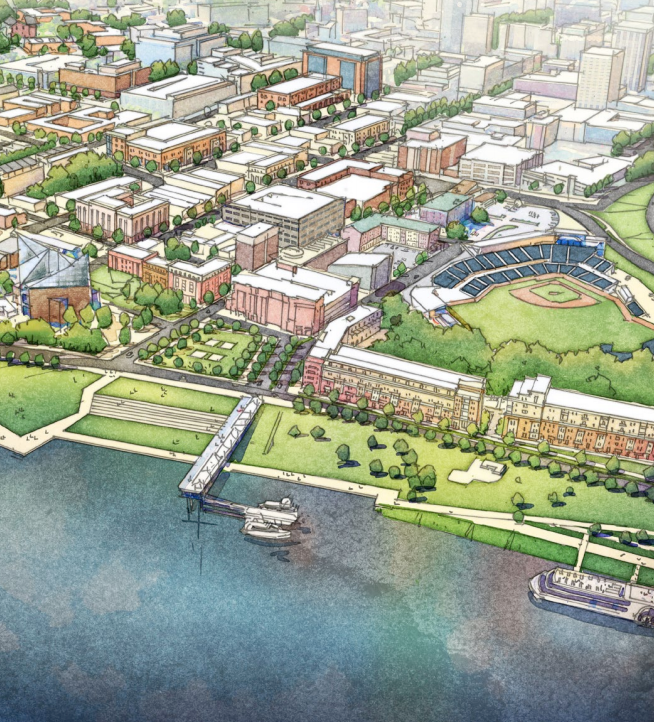
 Proposed form-based codes for downtown Chattanooga would move building to streets, create walkable and bike-friendly streets and sidewalks with ample green space.
The most significant changes to downtown zoning regulations in a half century cleared their first hurdle last week – though it took two hours of back-and-forth. But planning commissioners ultimately voted in favor of sweeping new zoning regulations, with 12 conditions attached.
The commission’s vote is a recommendation that members of the Chattanooga City Council approve the form-based code when it comes before them next month.
But debate over the new zoning law is far from over.
In the days and weeks leading up to last Monday’s vote, tensions mounted about various aspects of the new downtown zoning code, specifically, about how the code deals with parking.
On one hand, city dwellers say the code doesn’t do enough to ensure new development doesn’t flood existing downtown street and public parking with new vehicles. They say parking is already hard to find in some parts of downtown, and without protection from developers, it might become impossible.
On the other hand, builders and developers say the code is too restrictive, and potentially jeopardizes new downtown development because of the costs of on-site parking. They say developers won’t risk a project by overlooking parking and build something clients don’t want to buy, rent or lease.
Other residents and developers voiced concerns about whether the new code will make some properties less valuable by restricting building heights, and about the grace period for builders and developers to decide whether a new downtown project will adhere to old or new zoning laws.
Parking
Karen Hundt, director of the Regional Planning Agency’s community design group, said following the final form-based code workshop on April 21 – when emotions ran high about parking – city planners went back to the code and revised it, attempting to strike a compromise between those who want more restrictions and those who want less.
The result is a code requiring developers to include a minimum amount of parking everywhere downtown, except in the central city core.
Hundt said the planning staff talked with CARTA officials and found on an average weekday there are hundreds of unused parking spaces downtown, though she noted “these are just typical daily averages.”
“On weekends and during events, I’m sure numbers may be much higher,” she said.
Hundt said the parking requirements are written to be reflective of their district, and the city aims going forward to find further, more holistic approaches to crowded streets. She mentioned CARTA programs like reduced-cost lots and garage parking for restaurant employees, who have been found to take up street parking meant for visitors and patrons.
Hundt said RPA sought to write parking codes that ultimately made the most sense for urban use, and which cracks down on large, surface parking lots in the city.
But Garnet Chapin, a North Shore architect and vocal opponent of lowering parking requirements, said the revisions still aren’t enough to prevent a parking nightmare for downtown, and that the form-based code parking standards are “not good planning.”
“It is not good urban design, and this half-baked pie needs to be put back in the oven,” he said. “These are quality of life issues.”
Chapin said allowing developers to get parking “discounts” by utilizing off-site parking nearby – with written and proven consent, approval from a city administrator – is inappropriate, and pointed to a similar deal announced currently for a North Shore development which will rent parking spaces at the Renaissance Park lot.
Planning Commissioner Barry Payne added a condition regarding industrial property parking. Currently, the form-based code states industrial properties must provide .75 parking spots per 1,000 square feet of gross leasable space.
Ron Feldman, an attorney representing Archer Daniels Midland Co., said “gross leasable space” is more commercial language, and asked for a compromise between the old and the new: that industrial properties be required to provide .75 spaces for every two employees on the combined two largest shifts.
Parking will likely be a hot topic again when the City Council votes on the form-based code for the first time on June 14. Yusuf Hakeem, who is on the planning commission and the City Council, encouraged those in attendance at last Monday’s meeting to get in touch with their elected city leaders prior to the mid-June meeting.
Contact Alex Green at agreen@timesfreepress.com or 757-6480.