
For all the critical articles I have written about television, there are still moments when I absolutely love its heart and soul.
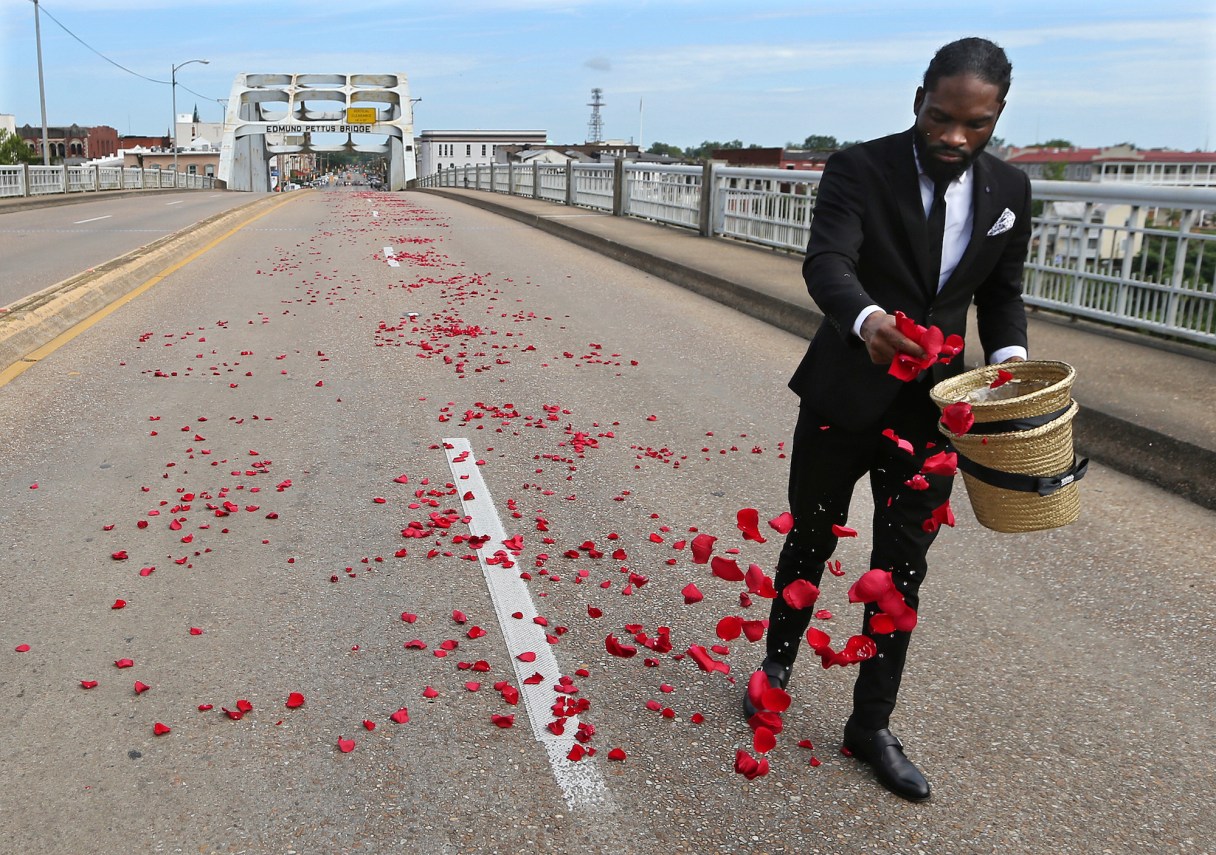
Sunday morning held one of those moments when I turned on CNN and saw the images of the Edmund Pettus Bridge with red rose petals covering its hard, baked pavement. My first thought at the site of the flowers was not the blood that was spilled there on “Bloody Sunday” as the late Rep. John Lewis and other civil rights workers were brutally beaten in their march for voting rights. My first thought was Mahatma Gandhi, and that Lewis was just as much a man of peace and courage as the man who fought for India’s independence from Britain.
By the time the horse-drawn caisson carrying the casket of Lewis arrived at the foot of the bridge for what was described as the congressman’s “last crossing,” I was as deeply moved by what I was seeing on the screen as I have been by anything in my real life the last few challenging COVID months.
This was television living up to some of its promise for once. It transported me from a quiet Sunday morning in Baltimore to one of the most sacred sites of the civil rights movement as one of its greatest leaders was being carried over the ground his sacrifice and suffering helped make holy. Television carried images into my home that stirred my soul, fired my imagination and made me want to weep at the intensity of what I was feeling.
In its earliest days of the 1950s, those who championed TV bragged about its ability to vividly transport us to new places filled with great ideas and moments of history. Instead of such greatness, what we mostly got in that decade were junkie, sometimes even rigged, game shows and seductive commercials that made a generation raised during The Great Depression start buying on credit whether they could afford it or not.