
Friday, October 30, 2026Oct 30

This story is free to read.

More Monarchs return to Mexico, but now face cold

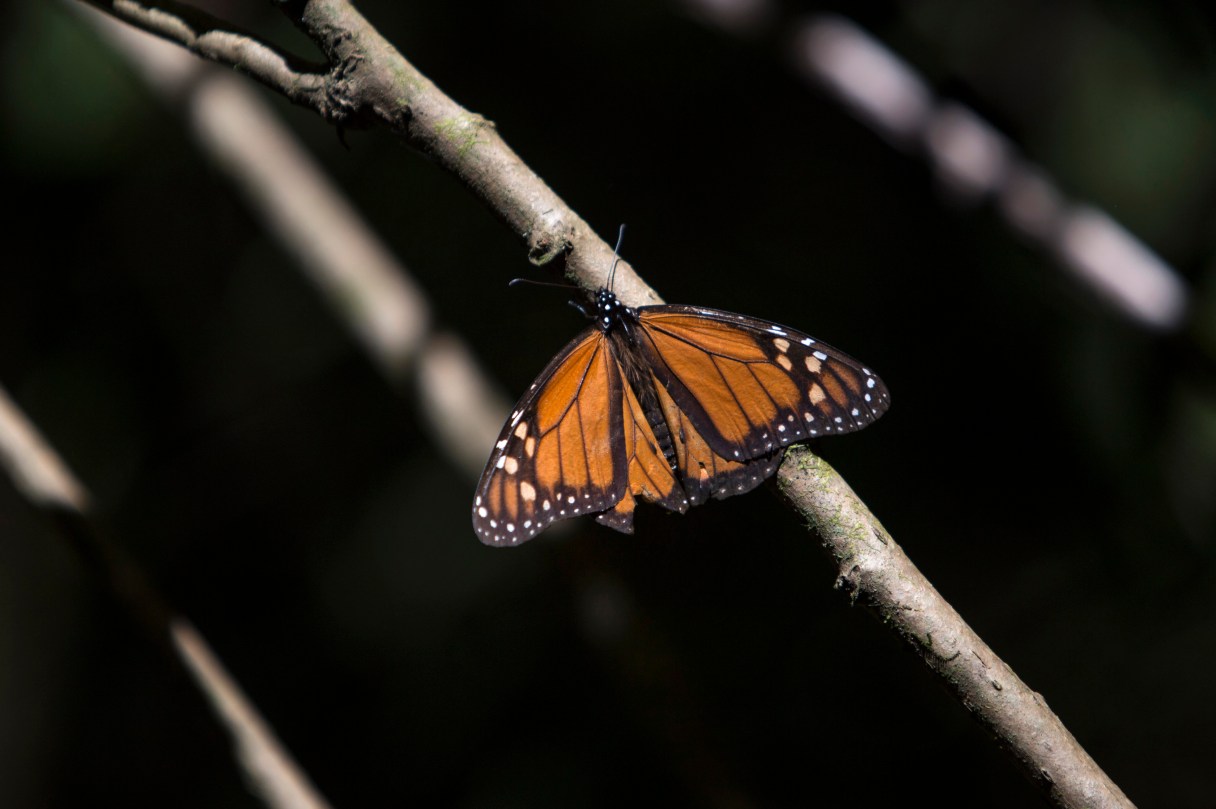
In this Dec. 21, 2014 photo, a monarch butterfly perches on a branch in the Piedra Herrada sanctuary near Valle de Bravo, Mexico. More butterflies appear to have made the long flight from the U.S. and Canada to their winter nesting ground in western Mexico, raising hopes after their number dropped to a record low last year. The insects are being hurt by various factors: in Mexico, the encroachment of logging into their habitat; and in the United States, the decline of milkweed, the butterflies’ main source of food that has been crowded out by pesticide-resistant crops. (AP Photo/Christian Palma)
In this Dec. 21, 2014 photo, a monarch butterfly perches on a branch in the Piedra Herrada sanctuary near Valle de Bravo, Mexico. More butterflies appear to have made the long flight from the U.S. and Canada to their winter nesting ground in western Mexico, raising hopes after their number dropped to a record low last year. The insects are being hurt by various factors: in Mexico, the encroachment of logging into their habitat; and in the United States, the decline of milkweed, the butterflies’ main source of food that has been crowded out by pesticide-resistant crops. (AP Photo/Christian Palma) In this Dec. 21, 2014 photo, a monarch butterfly perches on a branch in the Piedra Herrada sanctuary near Valle de Bravo, Mexico. More butterflies appear to have made the long flight from the U.S. and Canada to their winter nesting ground in western Mexico, raising hopes after their number dropped to a record low last year. The insects are being hurt by various factors: in Mexico, the encroachment of logging into their habitat; and in the United States, the decline of milkweed, the butterflies’ main source of food that has been crowded out by pesticide-resistant crops. (AP Photo/Christian Palma)

PIEDRA HERRADA, Mexico (AP) – More Monarch butterflies appear to have made the long flight from the U.S. and Canada to their winter nesting ground in western Mexico, raising hopes after their number dropped to a record low last year. But experts still fear that unusual cold temperatures will threaten the orange and black insects.

While an official census won’t be ready until mid-January, observers are seeing healthy populations of butterflies bunched together on fir and pine trees in protected sanctuaries, said Gloria Talavera, director of the official monarch butterfly reserve.

“We’re encouraged, because we’ve seen more,” Talavera said Monday.

But cold forecast for this winter, she said, “could put at risk the whole migratory phenomenon. … We will be saying a prayer each day until mid-February.”

Mexico’s National Meteorological Service predicts 55 cold fronts for the country through May, a 15 percent increase from the average, and with the possibility for repeated cold systems to extend into March and April.