
 Ron DeSantis and his wife Casey celebrate after winning the Florida Governor’s race during DeSantis’ party at the Rosen Centre in Orlando on Orlando, Fla., on Tuesday, Nov. 6, 2018. (Stephen M. Dowell/Orlando Sentinel via AP)
TALLAHASSEE, Fla. (AP) – Florida faced the prospect of recounts in the razor-thin races for governor and U.S. Senate, potentially prolonging the battle over two of this year’s most-closely watched campaigns.
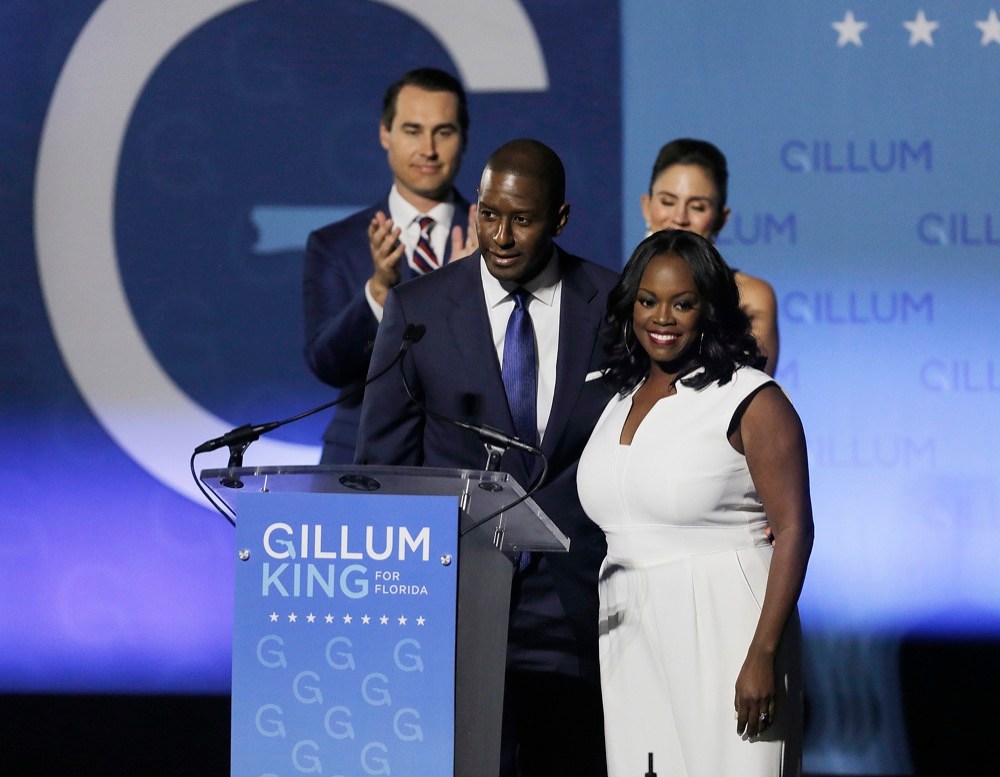
In the governor’s race, Democrat Andrew Gillum’s campaign said Thursday it’s prepared for a possible recount. He conceded to Republican Ron DeSantis on Tuesday night, though the margin of the race has since tightened. As of Thursday afternoon, DeSantis led Gillum by 0.47 percentage point.
Meanwhile, Democratic incumbent Sen. Bill Nelson has already begun preparing for a potential recount in a race still too close to call against Republican Gov. Rick Scott. Nelson’s lawyer called that race a “jump ball” – though Scott’s campaign urged Nelson to concede. Scott held a 0.21 percentage lead over Nelson on Thursday afternoon.
The tight races underscored Florida’s status as a perennial swing state where elections are often decided by the thinnest of margins. Since 2000, when Florida decided the presidency by 537 votes in a contest that took more than five weeks to sort out, the state has seen many close elections, but never so many dead heats in one year.
And like 2000, the counting process is becoming contentious.