
Friday, November 13, 2026Nov 13

Not just boy and girl; more teens identify as transgender

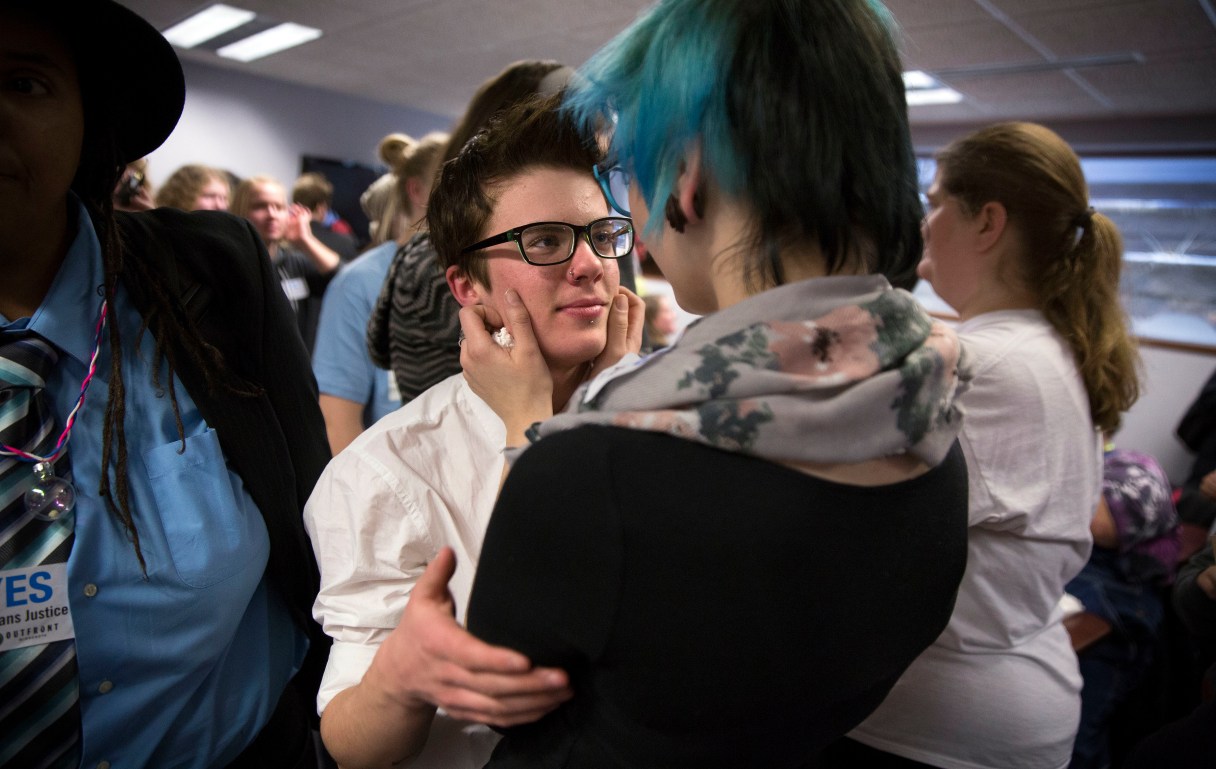
In this Dec. 4, 2014 file photo, Elliott Kunerth, 17, a transgender male high school student in Mankato, hugs his girlfriend, Kelsi Pettit, 17, after the Minnesota State High School League board voted to pass the Model Gender Identity Participation in MSHSL Activities Policy in Brooklyn Park, Minn. A study released Monday, Feb. 5, 2018, from an analysis of a 2016 statewide survey of nearly 81,000 Minnesota teens, suggests that far more U.S. teens are transgender or gender nonconforming than previously thought, with many rejecting the idea that girl and boy are the only possible genders. (Leila Navidi/Star Tribune via AP)
In this Dec. 4, 2014 file photo, Elliott Kunerth, 17, a transgender male high school student in Mankato, hugs his girlfriend, Kelsi Pettit, 17, after the Minnesota State High School League board voted to pass the Model Gender Identity Participation in MSHSL Activities Policy in Brooklyn Park, Minn. A study released Monday, Feb. 5, 2018, from an analysis of a 2016 statewide survey of nearly 81,000 Minnesota teens, suggests that far more U.S. teens are transgender or gender nonconforming than previously thought, with many rejecting the idea that girl and boy are the only possible genders. (Leila Navidi/Star Tribune via AP) In this Dec. 4, 2014 file photo, Elliott Kunerth, 17, a transgender male high school student in Mankato, hugs his girlfriend, Kelsi Pettit, 17, after the Minnesota State High School League board voted to pass the Model Gender Identity Participation in MSHSL Activities Policy in Brooklyn Park, Minn. A study released Monday, Feb. 5, 2018, from an analysis of a 2016 statewide survey of nearly 81,000 Minnesota teens, suggests that far more U.S. teens are transgender or gender nonconforming than previously thought, with many rejecting the idea that girl and boy are the only possible genders. (Leila Navidi/Star Tribune via AP)

CHICAGO (AP) – Far more U.S. teens than previously thought are transgender or identify themselves using other nontraditional gender terms, with many rejecting the idea that girl and boy are the only options, new research suggests.

The study looked at students in ninth and 11th grade and estimated that nearly 3 percent are transgender or gender nonconforming, meaning they don’t always self-identify as the sex they were assigned at birth. That includes kids who refer to themselves using neutral pronouns like “them” instead of “he” or “she.”

“Diverse gender identities are more prevalent than people would expect,” said lead author Nic Rider, a University of Minnesota postdoctoral fellow who studies transgender health.

The study is an analysis of a 2016 statewide survey of almost 81,000 Minnesota teens.

Nearly 2,200 identified as transgender or gender nonconforming. The study found that these kids reported worse mental and physical health than other kids, echoing results seen in previous research. Bullying and discrimination are among possible reasons for the differences, Rider said, although the survey didn’t ask.