
The Democrats face a tough fight to retain their tenuous hold on the U.S. Senate, but they’ve gotten some unexpected help in recent weeks – from Republicans.
The unforced GOP errors include one proposal that would raise taxes on half of all Americans and another to resume the Republican fight to scrap the increasingly popular Affordable Care Act.
Raising the stakes is the fact that strategists for both parties and independent analysts expect the GOP to regain the House. Republicans need to gain only five seats to win the majority.
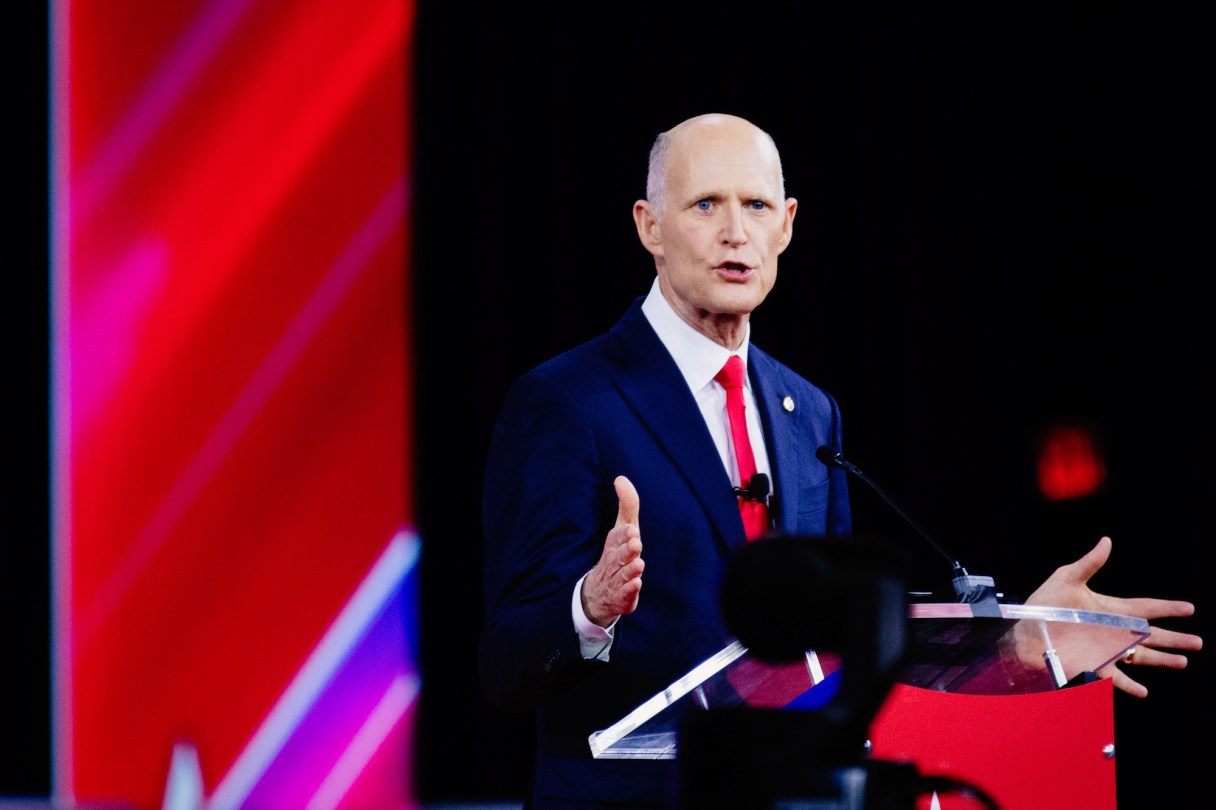
Ironically, this year’s most damaging GOP misstep came from the man who is masterminding the party’s Senate campaign, Florida Sen. Rick Scott, who chairs the National Republican Senatorial Committee.
Scott issued an “11-point plan to rescue America” that detailed dozens of Republican goals.
“Americans deserve to know what we will do when given the chance to govern,” declared Scott, who is widely believed to harbor 2024 presidential ambitions. His platform was an extensive conservative wish list that included finishing former President Donald Trump’s border wall, eliminating federal programs that “can be done locally,” enacting term limits for Congress and federal bureaucrats, re-funding the police and stopping “left-wing efforts to rig elections.”
Buried in a vow to “stop socialism” was a proposal that “All Americans should pay some income tax to have skin in the game, even if a small amount. Currently over half of Americans pay no income tax.”
That last statement is true. The percentage actually rose to 61% during the pandemic. But it is misleading because it only refers to those Americans paying no federal income taxes: mostly lower income Americans but also millionaires using tax shelters.
“Federal income taxes do not include payroll taxes,” notes the nonpartisan Tax Policy Center. It says only 20% paid neither federal income nor payroll taxes and “nearly everyone” paid some form of property tax, sales tax or excise tax.
Scott’s proposal would raise taxes for half of all Americans. That is a non-starter politically, and Democrats promptly jumped on it.
“Republicans Rally Around Their Plan To Raise Taxes and Rip Health Care Away From Millions of Americans,” headed a typical Democratic National Committee release, citing Scott’s platform and Wisconsin GOP Sen. Ron Johnson’s call to repeal Obamacare.
Republican candidates have been having their own troubles.
In North Carolina, a verbal duel broke out between two GOP Senate candidates when former Gov. Pat McCrory accused Rep. Ted Budd of being “friendly” to Russian President Vladimir Putin. Budd, who Trump endorsed in the race, called Putin a “very intelligent actor,” though he also said he was “evil.”
North Carolina is a state where Democrats hope to flip a GOP seat, along with Pennsylvania and Ohio. In the latter, at least five Republicans are vying in the May 3 primary with four of them seeking Trump’s backing.
Meanwhile, Democrats have their own problems, starting with Biden’s low job approval.
A recent Georgia poll showed likely Republican nominee Herschel Walker, the former University of Georgia football star recruited by Trump, four points ahead of freshman Sen. Raphael Warnock. Biden’s Georgia approval is in the mid-30s.
Historically, the same party tends to win all close Senate races. The current political climate suggests Democrats face an uphill fight to hold their 50 seats, but, in an unpromising year, a little GOP help could prove a big asset.
The Dallas Morning News