
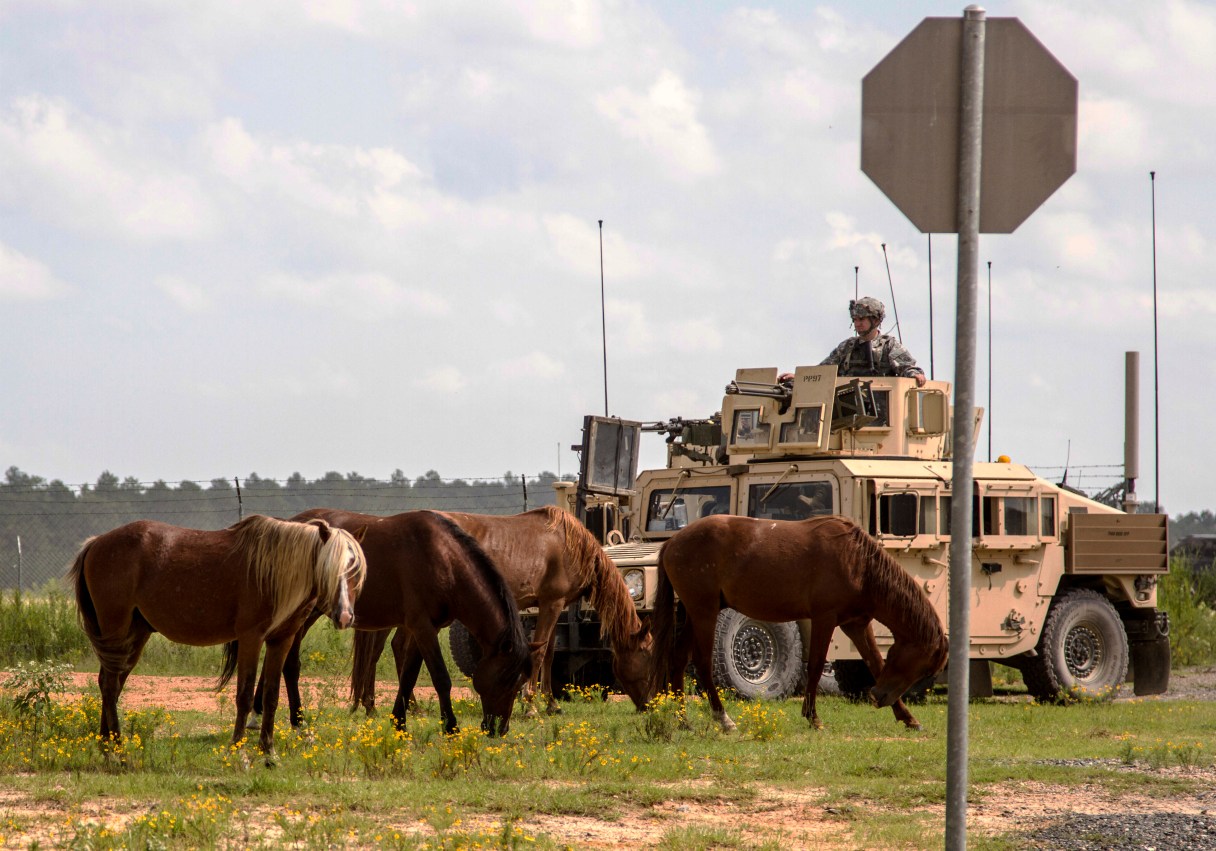
Herds of feral horses are roaming on thousands of acres in Louisiana where soldiers conduct intensive training, posing a danger and a nuisance to troops at risk of being kicked, bitten or unpleasantly surprised by random piles of manure, Army officials say.
“Sometimes training has to be halted while they shoo horses out,” said Kim Reischling, spokeswoman for Fort Polk, a 198,000-acre base about 20 miles from the Texas state line.
The officials are trying to find a way to deal with the approximately 700 “trespass horses,” and are holding a meeting Thursday to hear input from residents and animal rights groups, among others.
Most of the horses can be found on about 48,000 of the 90,000 acres of forest land that the base uses for training, said Jim Caldwell, spokesman for the 604,000-acre forest.
Some people speculate that the horses are descended from Army cavalry horses, and a local author has self-published a children’s book based on that tale. But it is more likely that they are descendants of area farm and ranch horses, said Reischling and Rita Bingham, director of the Humane Society of West Louisiana.