
WASHINGTON – It’s not easy being on the moderate left these days. Politicians and activists committed to defending both liberal democracy and a practical, socially generous approach to government find themselves constantly torn between short-term imperatives and long-term hopes.
This was brought home last week by two very different political struggles. In the United States, congressional Democrats divided over whether to provide the votes Republicans needed to pass a budget bill to keep the government open. In Germany, Social Democratic leaders agreed to form a grand coalition that would extend Chancellor Angela Merkel’s tenure, but the arrangement could still be voted down by the party’s rank-and-file.
 House Minority Leader Nancy Pelosi of Calif., speaks to reporters after she staged a record-breaking, eight-hour speech in hopes of pressuring Republicans to allow a vote on protecting “Dreamer” immigrants on Capitol Hill in Washington. Wednesday, Feb. 7, 2018. (AP Photo/Pablo Martinez Monsivais)
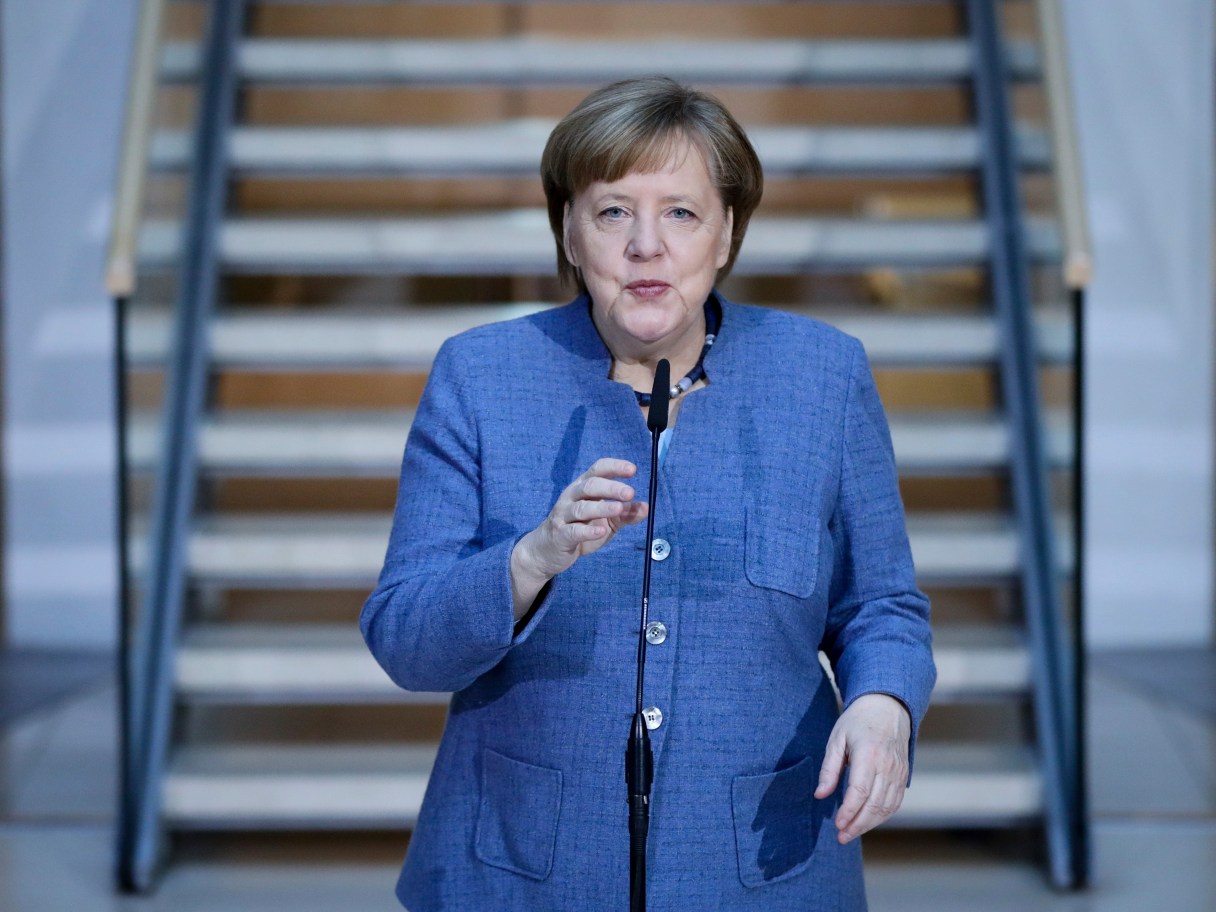
The contexts, of course, are different. The U.S. is led by an unstable politician who caters to far-right feelings on race and immigration. Merkel is the embodiment of liberal democratic moderation. Trump is pandering to the authoritarian right. Merkel is trying to defeat it.
To that end, she conceded a lot to the Social Democratic Party on public spending, labor questions and European integration, which makes her party’s right uneasy. Moreover, given the way the German political system works, the Social Democrats would hold positions in the government as true partners. In the United States, the Democrats have lost both the executive and legislative branches. Yet they feel a responsibility to do what they can to protect social programs and to keep the federal apparatus functioning.
At the same time, Republicans are incapable of governing without help from Democrats. The GOP far right won’t give House Speaker Paul Ryan the votes he requires to pass compromises and because Senate Majority Leader Mitch McConnell usually needs supermajorities.