
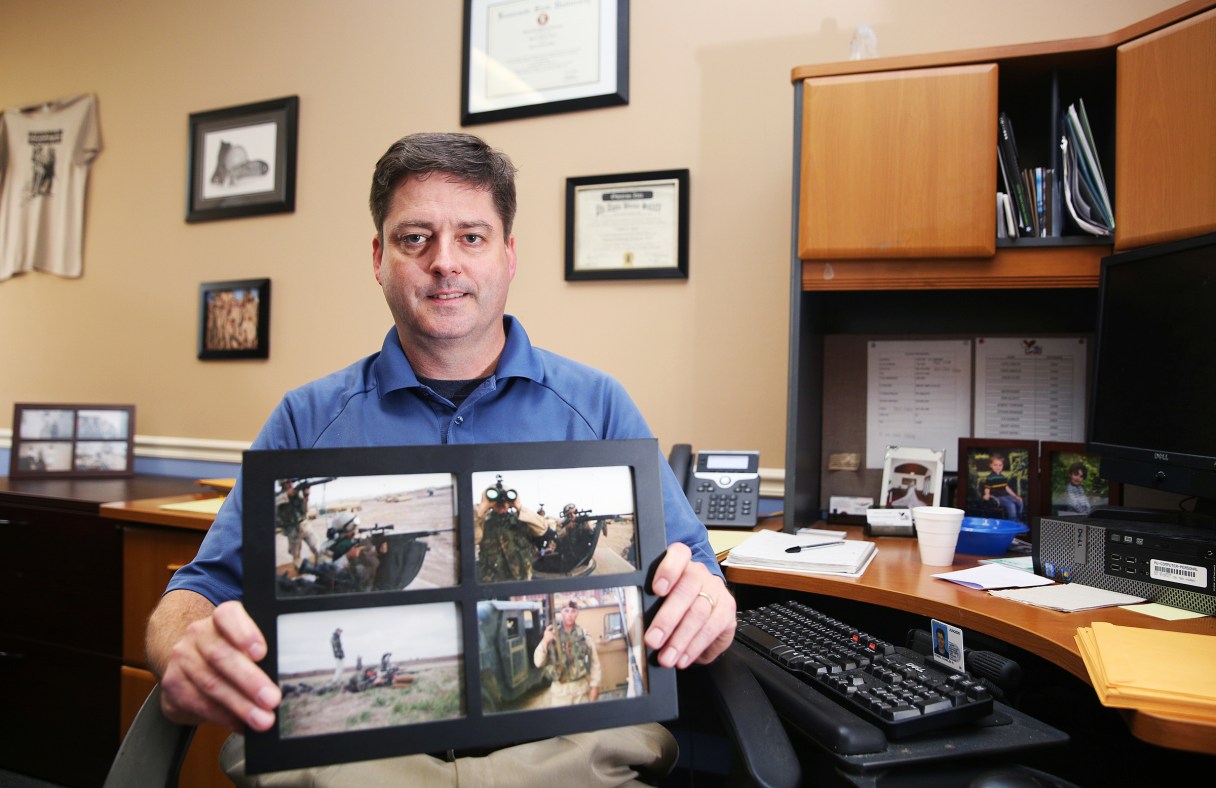


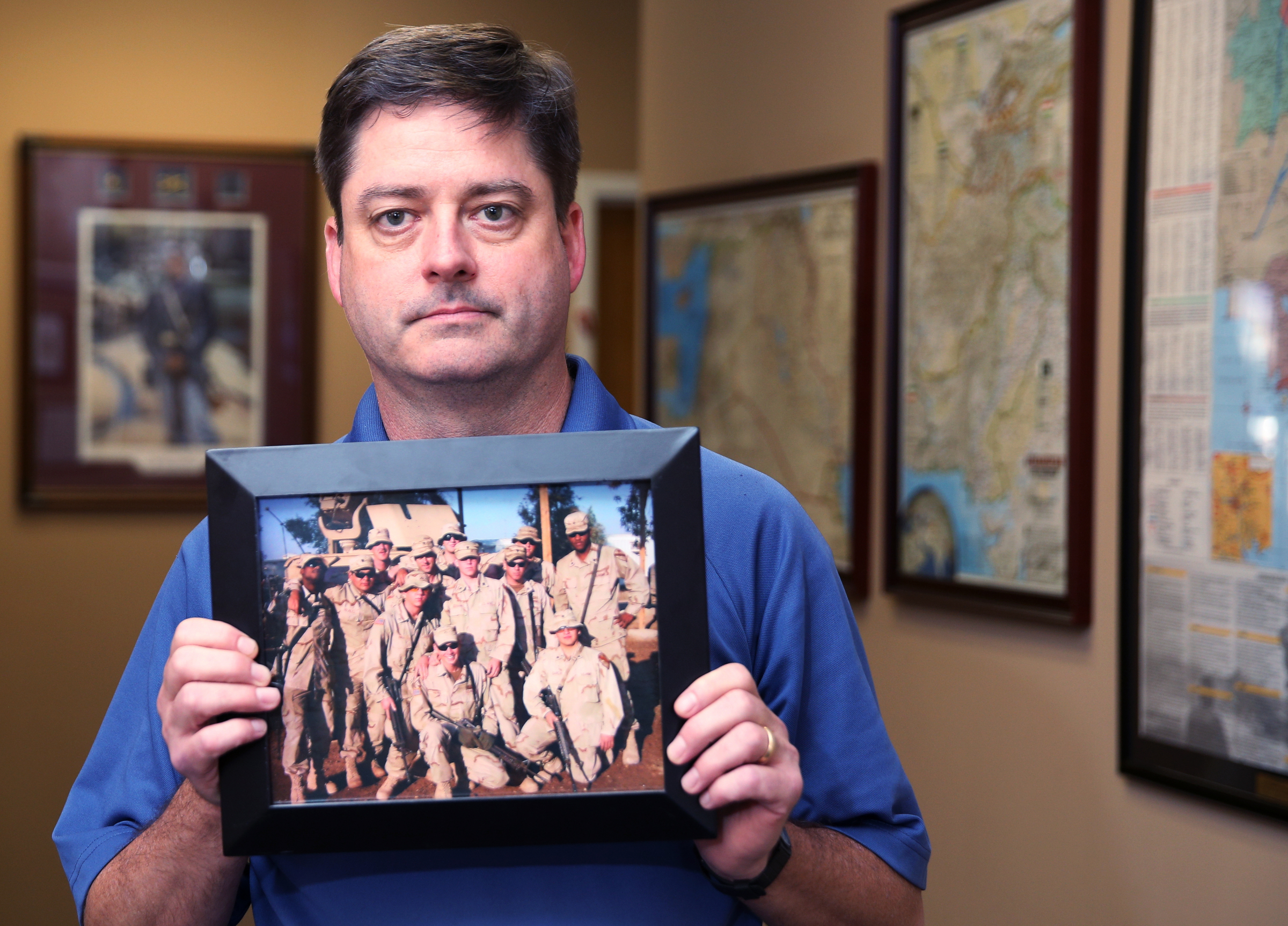
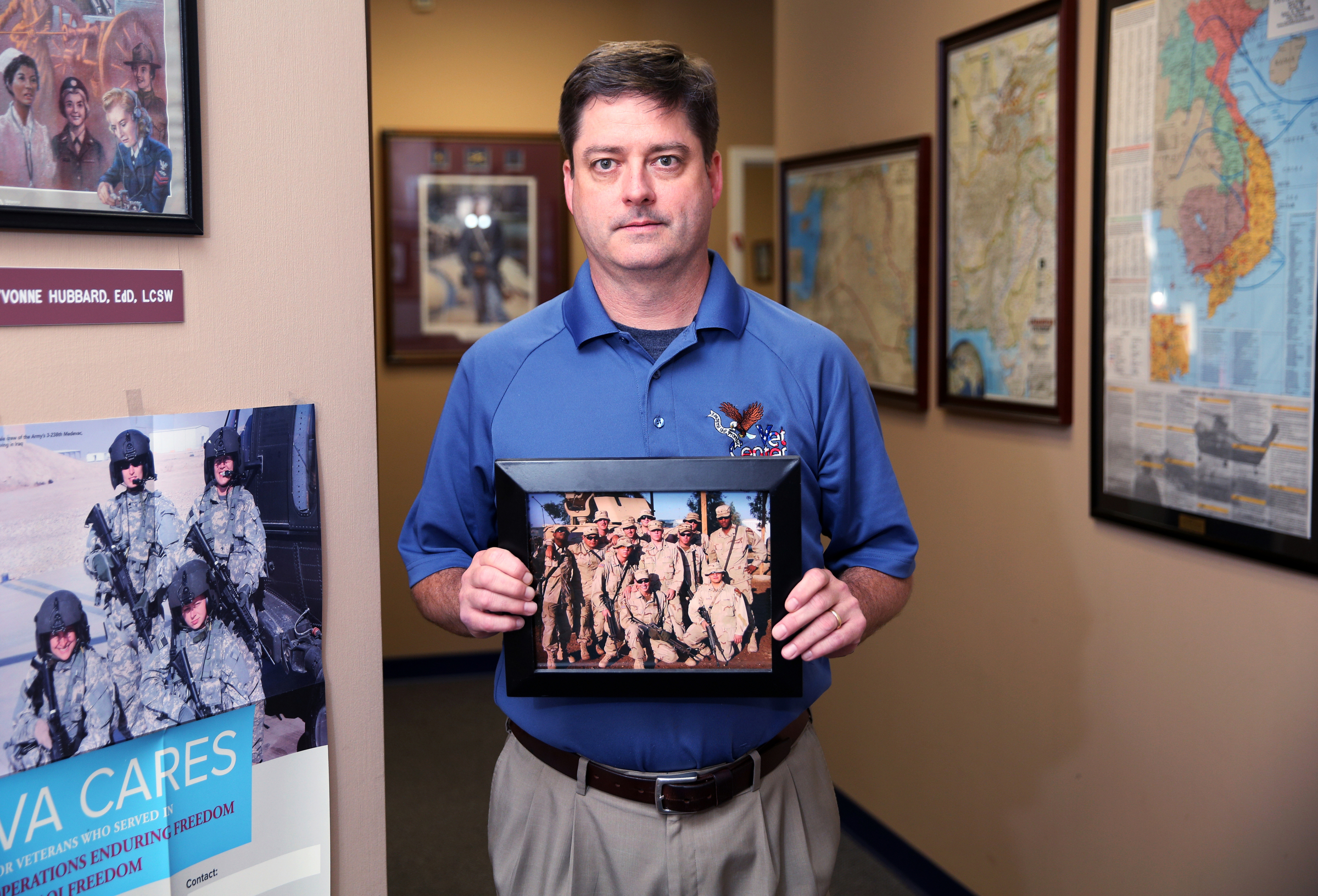
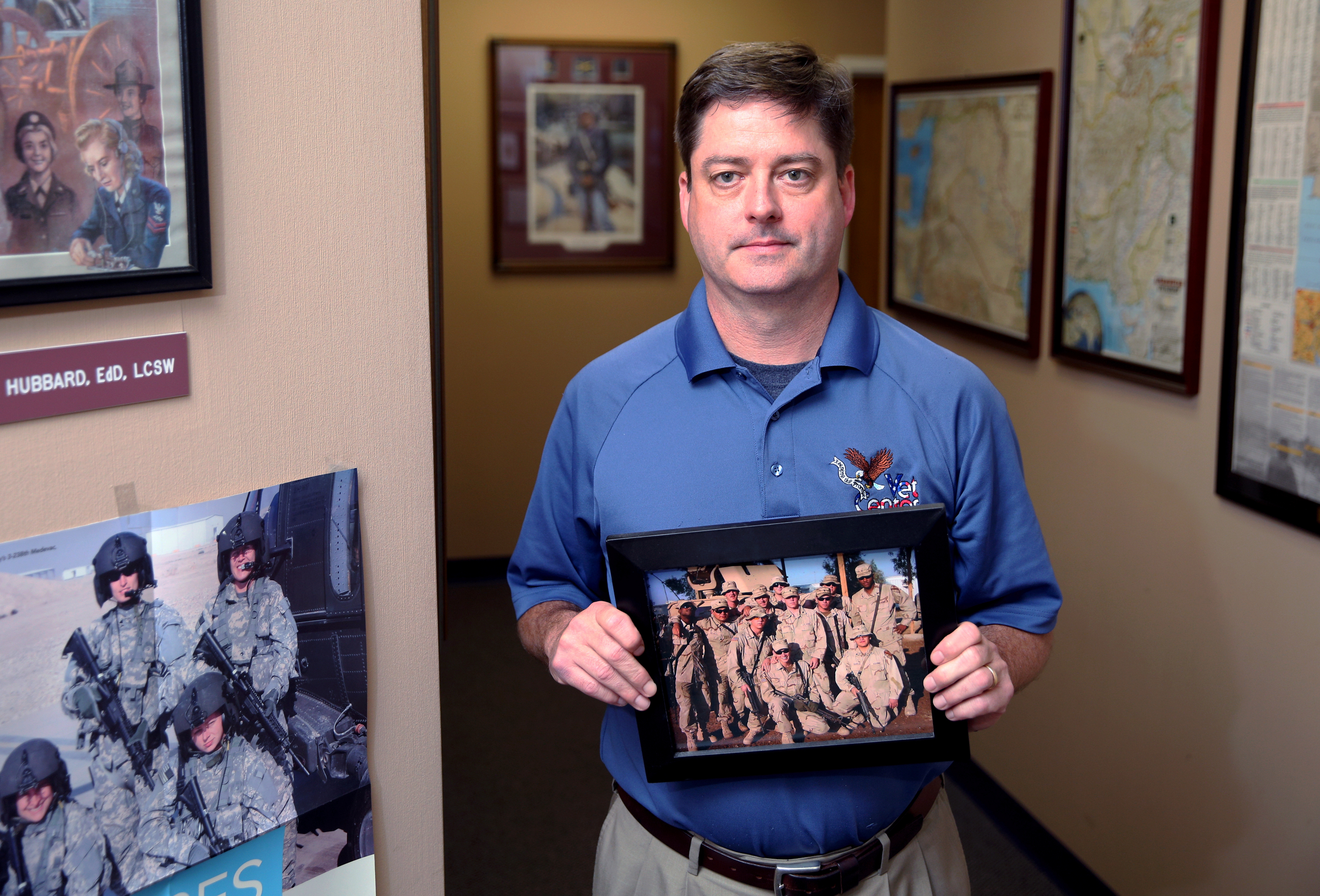
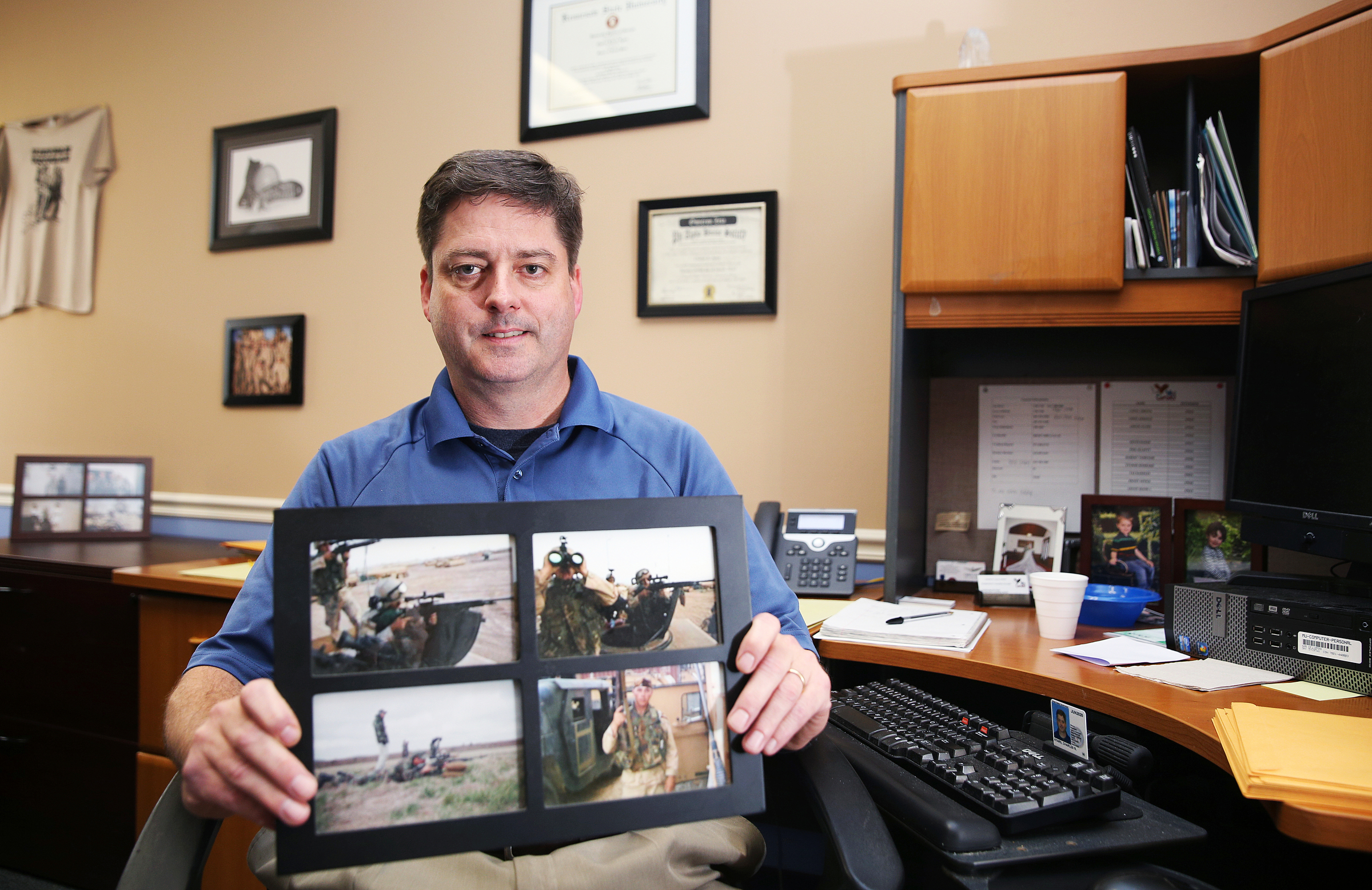
In 2007, two years removed from his tour in Sadr City, Iraq, Chuck Ayars sat in the Chattanooga Vet Center, staring at a white board.
His readjustment counseling therapist, Michael Bearden, was drawing one of those charts with a line running up and down and another running left to right. The vertical line measured stress levels, from 1-10. The horizontal line measured the duration of that stress.
Those who have seen war may barely be on the chart, about as far to the top and to the right as you can go, explained Bearden, who served during Vietnam. He went further, teaching Ayars about the limbic system, the part of your brain that deals with your reactions. Within the system, your hippocampus may have shrunk; that explains why your short-term memory is an embarrassment while you can tell friends about a breakfast you had five years ago.
And then there are your synapses, Bearden said. The part of your brain that sends chemical signals between neurons. When you were at war, he told Ayars, the synapses worked at full force for hours. Reacting to bombs and brutal injuries, adrenaline pumped to your muscles and brain, your senses sharpened. With time, Bearden said, those parts of your brain may have fried like an overworked car engine. And now here you are, unable to transfer enough serotonin, a mood stabilizer.
Bio:
Name: Chuck AyarsAge: 48Home: Franklin, Tenn.Military branch and rank: U.S. Army, specialist