
Monday, November 16, 2026Nov 16

Supreme Court reimposes Boston Marathon bomber’s death sentence

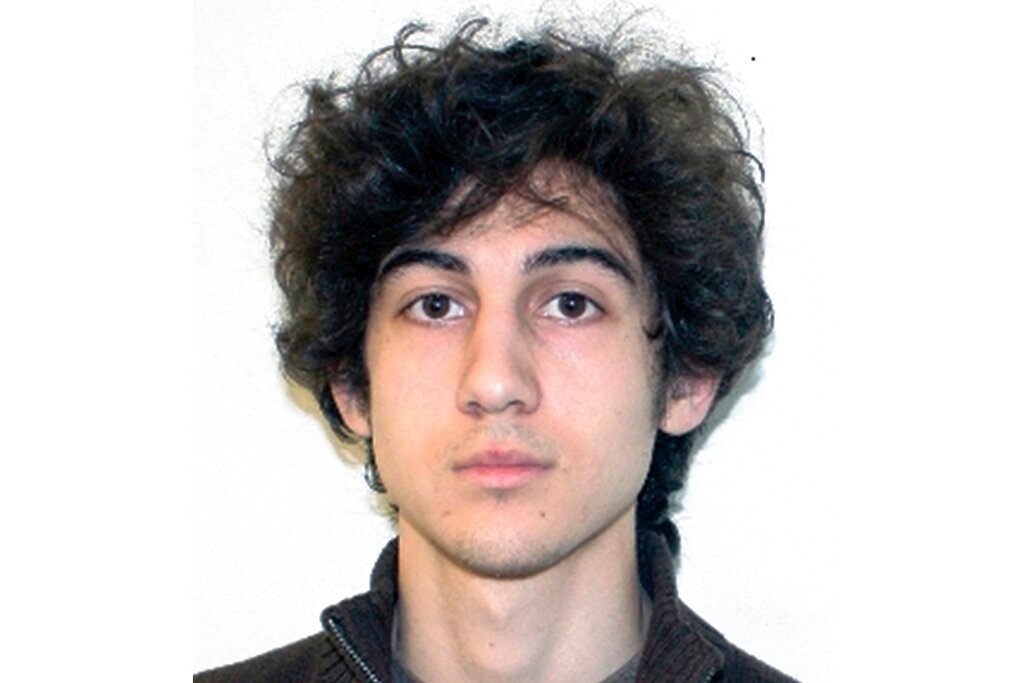
This file photo released April 19, 2013, by the Federal Bureau of Investigation shows Dzhokhar Tsarnaev, convicted and sentenced to death for carrying out the April 15, 2013, Boston Marathon bombing attack that killed three people and injured more than 260. The Supreme Court has reinstated the death sentence for convicted Boston Marathon bomber Dzhokhar Tsarnaev. The justices, by a 6-3 vote Friday, agreed with the Biden administration's arguments that a federal appeals court was wrong to throw out the sentence of death a jury imposed on Tsarnaev for his role in the bombing. (FBI via AP, File)

WASHINGTON (AP) – The Supreme Court has reinstated the death sentence for Boston Marathon bomber Dzhokhar Tsarnaev.

The justices, by a 6-3 vote Friday, agreed with the Biden administration’s arguments that a federal appeals court was wrong to throw out the sentence of death a jury imposed on Tsarnaev for his role in the bombing that killed three people near the finish line of the marathon in 2013.

“Dzhokhar Tsarnaev committed heinous crimes. The Sixth Amendment nonetheless guaranteed him a fair trial before an impartial jury. He received one,” Justice Clarence Thomas wrote for the majority, made up of the court’s six conservative justices.

The court reversed the 1st U.S. Circuit Court of Appeals in Boston, which ruled in 2020 that the trial judge improperly excluded evidence that could have shown Tsarnaev was deeply influenced by his older brother, Tamerlan, and was somehow less responsible for the carnage. The appeals court also faulted the judge for not sufficiently questioning jurors about their exposure to extensive news coverage of the bombing.

In dissent for the court’s three liberal justices, Justice Stephen Breyer wrote, “In my view, the Court of Appeals acted lawfully in holding that the District Court should have allowed Dzhokhar to introduce this evidence.”