
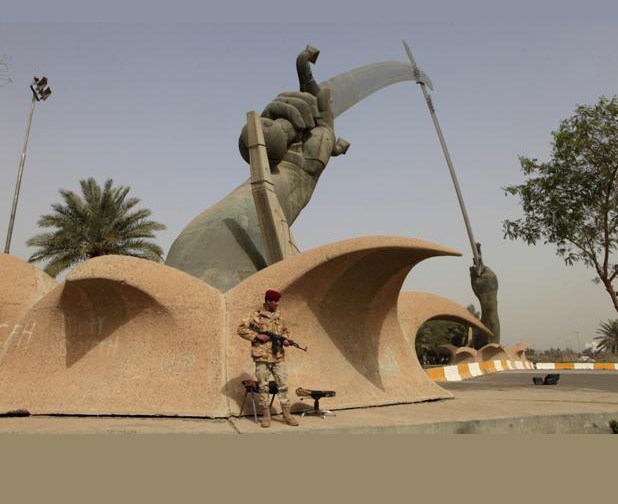
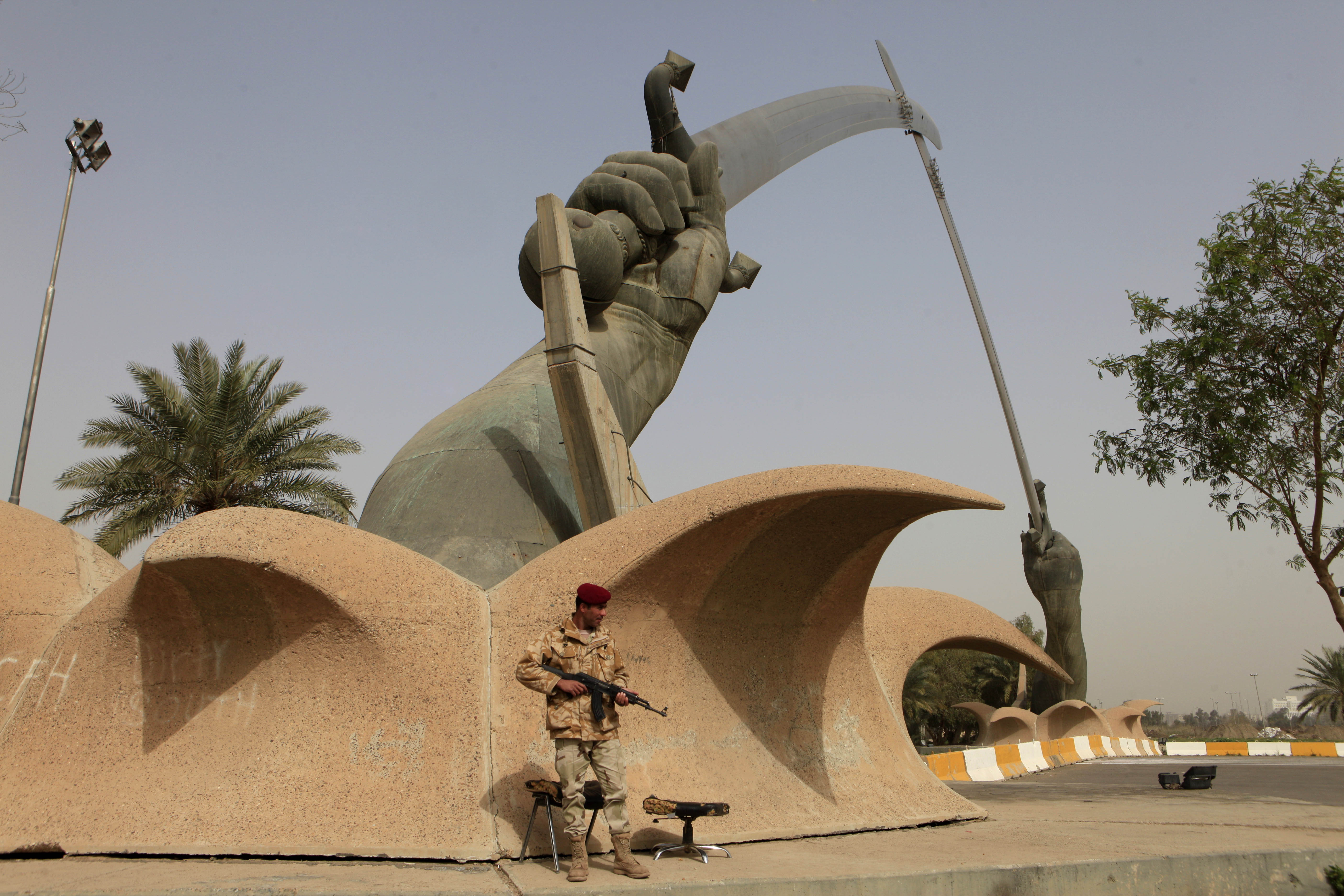
 An Iraqi soldier stands guard at the crossed-swords monument in Baghdad, Iraq. Inside the fortified Green Zone that is home to the sprawling U.S. Embassy and several government offices, the crossed-sword archways Saddam commissioned during Iraqís nearly eight-year fight with Iran ground stand defiantly on a little-used parade ground. Iraqi officials began tearing them down in 2007, but quickly halted those plans and then started restoring the monument two years ago.
BAGHDAD – The soaring half domes of the Martyr Monument stand out against the drabness of eastern Baghdad, not far from where Saddam Hussein’s feared eldest son was said to torture underperforming athletes.
Saddam built the split teardrop-shaped sculpture in the middle of a manmade lake in the early 1980s to commemorate Iraqis killed in the Iran-Iraq War. The names of hundreds of thousands of fallen Iraqi soldiers are inscribed in simple Arabic script around the base.
Today the monument stands as a memorial to a different sort of martyr. In recent years, the Shiite-led government has begun turning it into a museum honoring the overwhelmingly Shiite and Kurdish victims of Saddam’s Sunni-dominated regime.
The transformation of the Martyr Monument and other Saddam-era sites highlights Iraq’s effort to memorialize those persecuted by the former dictator and purge many symbols of his rule. Yet a decade on from the U.S.-led invasion, Iraqis still grapple with the country’s postwar identity and how much should be done to cleanse Iraq of traces of the strongman.
It is a tricky balancing act that risks exacerbating Iraq’s already strained sectarian tensions. Many Iraqi Sunnis today feel their sect has been marginalized and unfairly persecuted by Shiite Prime Minister Nouri al-Maliki’s government. For Baghdad, the historical clean-up effort has the added benefit of ridding Iraq of many uncomfortable references to war with Shiite heavyweight Iran, an increasingly important ally.