
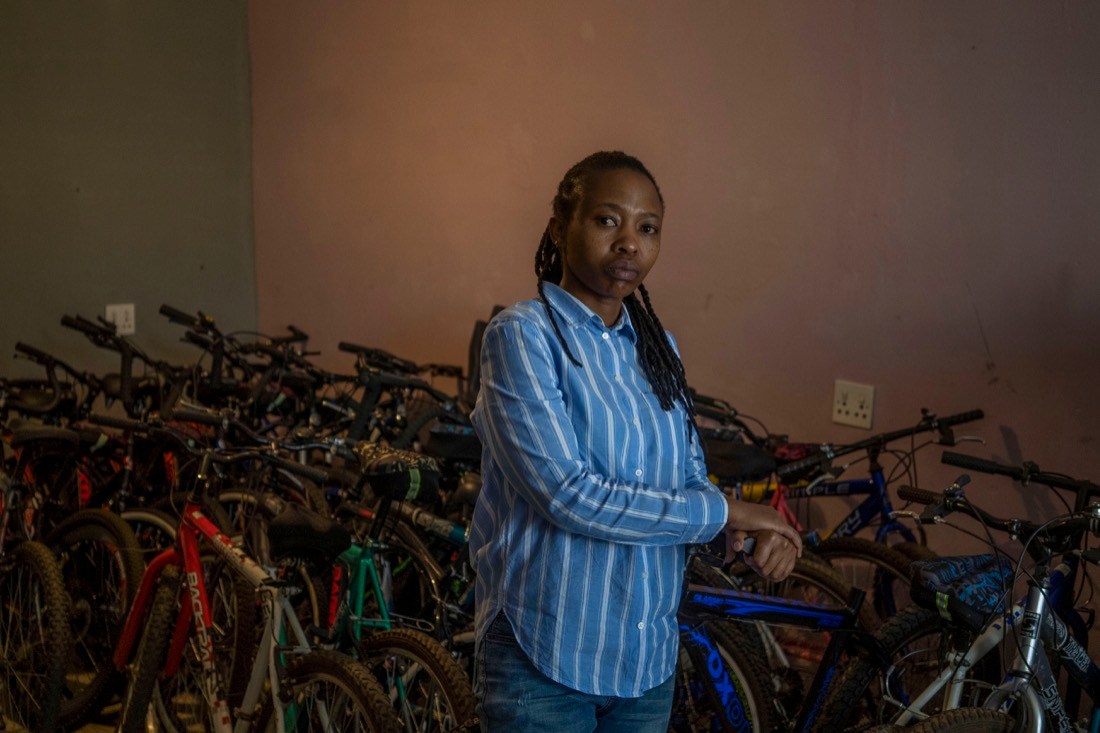
JOHANNESBURG (AP) – With her winning smile and outgoing nature, Fino Dlamini was a natural to succeed in South Africa’s booming tourism industry.
Her bicycle tours of Soweto took visitors to historic sites, including the homes of Nelson Mandela and Archbishop Desmond Tutu, and to restaurants where they could meet South Africans. The tourists and locals would quickly connect over shared interests in sports or TV shows, forming instant bonds that were “magic,” she said.
Business was good in January and February, and projections for the rest of 2020 were excellent. Then the coronavirus brought everything to an abrupt halt. Dlamini was confined to her small home under a strict lockdown, with few options for earning money.
Millions of other South Africans share in the same misfortune. The country with the continent’s most developed economy also has its highest number of confirmed infections – more than 22,000, representing 20% of Africa’s total. And because the disease may not hit its peak for four more months, leaders expect to spend an especially long time balancing the risks to public health with the economic activity essential to the national welfare.
“The risk of a massive increase in infections is now greater than ever,” South African President Cyril Ramaphosa told the nation Sunday night even as he announced a further loosening of the lockdown starting June 1 to allow some 8 million more people to return to work.