
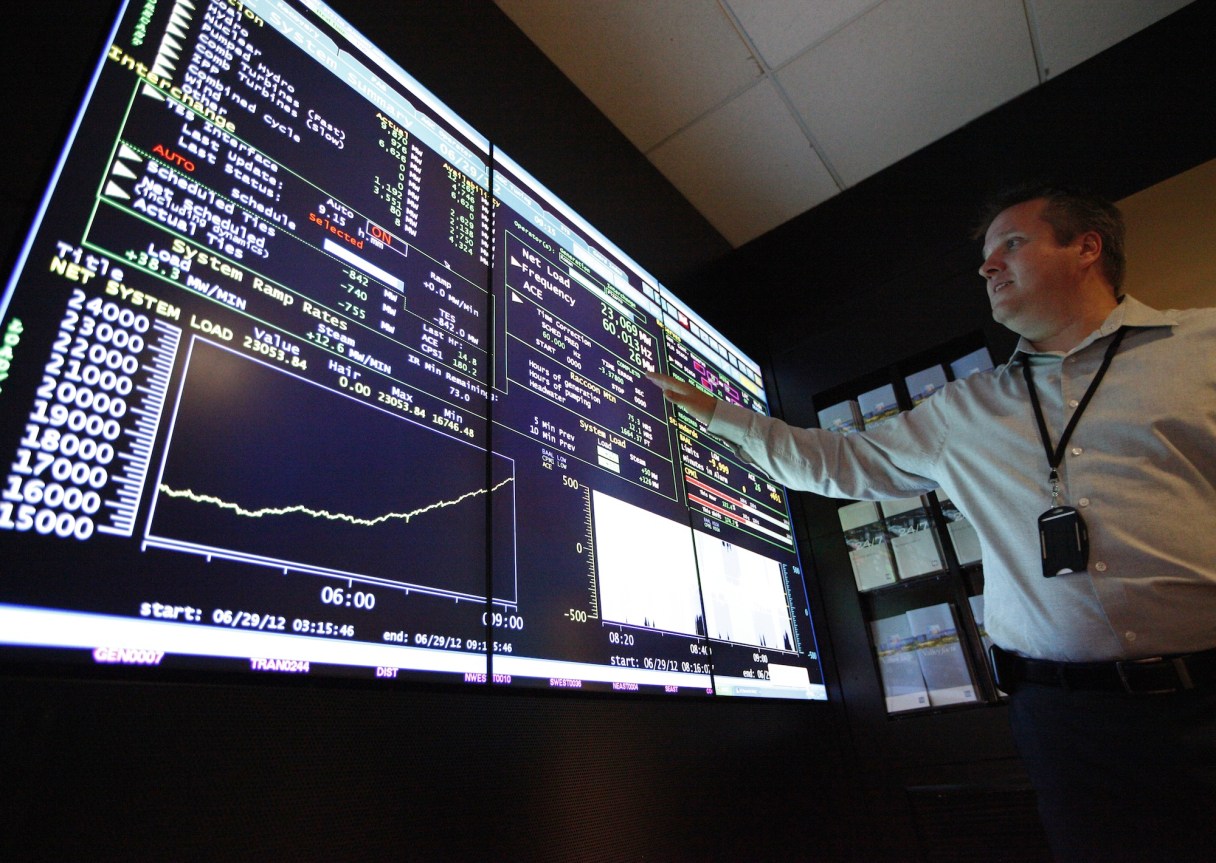
 Staff Photo by Doug Strickland/Chattanooga Times Free Press – June 29, 2012. Balancing authority Cheryl Roman works at a computer station to match power load and generation as a digital display shows a current total load of over 30,000 megawatts in the TVA System Operations Center at TVA headquarters in Chattanooga, Tenn. on Friday. Several days of temperatures above 100 degrees will push TVA’s power demands over the weekend.
January brought the coldest streak of weather in the Tennessee Valley in a decade, setting three of the top 12 all-time winter peaks for TVA and the biggest one-day consumption of electricity in TVA’s 85-year history.
But last month’s weather-induced boost in power consumption probably won’t last.
TVA’s total power load last year was down by more than 10 percent from a decade ago and the federal utility projects demand for electricity will be essentially flat or down even more over the next decade. TVA, which long banked on annual electricity growth of as much as 7 percent, now predicts power demand in 2027 will be nearly 13 percent below the peak level reached 20 years earlier in 2007.
More energy efficient appliances, machines and heat pumps are reducing the demand for more electricity even as cheaper natural gas and self-generated sources of power from solar panels, wind mills and geothermal systems are capable of generating more power for customers in the Tennessee Valley from sources other than TVA.
The Tennessee Valley Authority, which helped electrify an impoverished Appalachian region during the Great Depression to help spur much of the region’s growth over the past century, heats a bigger share of homes with electricity than in other parts of America and is being hit harder than many utilities by the drop in power demand. But TVA is certainly not alone in the impact of America’s power shift.