
Friday, November 13, 2026Nov 13

Seaports mostly reopen after Los Angeles-area fire

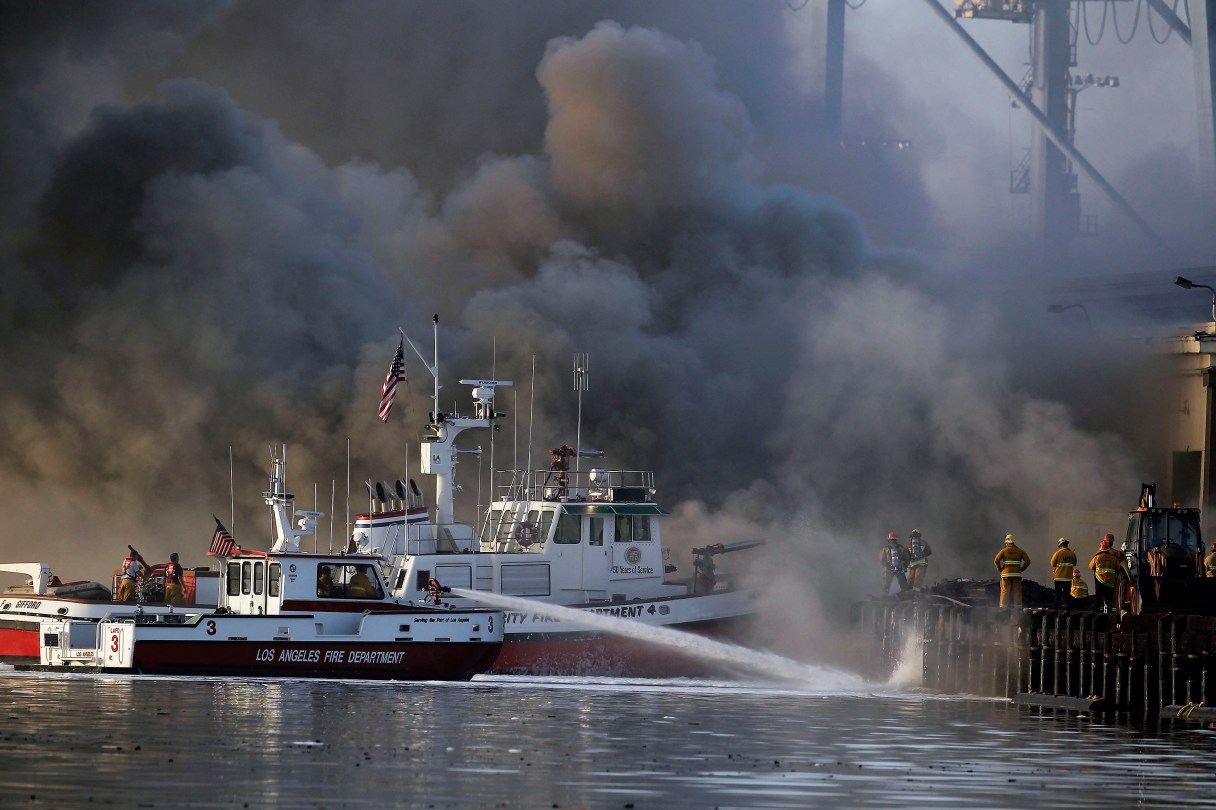
Los Angeles firefighters watch as smoke from a dock fire continues to rise at the Port of Los Angeles in the Wilmington section of Los Angeles on Tuesday, Sept 23, 2014. The fire that forced evacuations from the wharf continues to smolder but officials say it's under control. Nearly 12 hours after starting, the blaze is sending up huge plumes of smoke that is drifting over Los Angeles Harbor early Tuesday. (AP Photo/ Nick Ut )
Los Angeles firefighters watch as smoke from a dock fire continues to rise at the Port of Los Angeles in the Wilmington section of Los Angeles on Tuesday, Sept 23, 2014. The fire that forced evacuations from the wharf continues to smolder but officials say it's under control. Nearly 12 hours after starting, the blaze is sending up huge plumes of smoke that is drifting over Los Angeles Harbor early Tuesday. (AP Photo/ Nick Ut ) Los Angeles firefighters watch as smoke from a dock fire continues to rise at the Port of Los Angeles in the Wilmington section of Los Angeles on Tuesday, Sept 23, 2014. The fire that forced evacuations from the wharf continues to smolder but officials say it's under control. Nearly 12 hours after starting, the blaze is sending up huge plumes of smoke that is drifting over Los Angeles Harbor early Tuesday. (AP Photo/ Nick Ut )

LOS ANGELES (AP) – The twin ports that handle 40 percent of America’s import trade were mostly back in business again after an idle day brought on by smoke from a fire at an old wooden wharf.

The last of the 14 container terminals at the ports of Los Angeles and Long Beach is expected to be reopened on Wednesday morning.

All eight container terminals at the Port of Los Angeles and three of the six at the Port of Long Beach were closed most of Tuesday because of worries about unhealthy smoke, but all but one were running again for the night shift nearly 24 hours after the fire was sparked by a welding accident, port officials said.

That ignited the 800-foot-long, pre-World War II wharf with creosote-preserved timber that brought concerns over the plume of dark smoke it produced.

The wharf is part of a terminal that processes cargo that isn’t confined to large, stackable containers.