
Sunday, November 8, 2026Nov 8

This story is free to read.

Polish president sees flaws in contentious law on top court

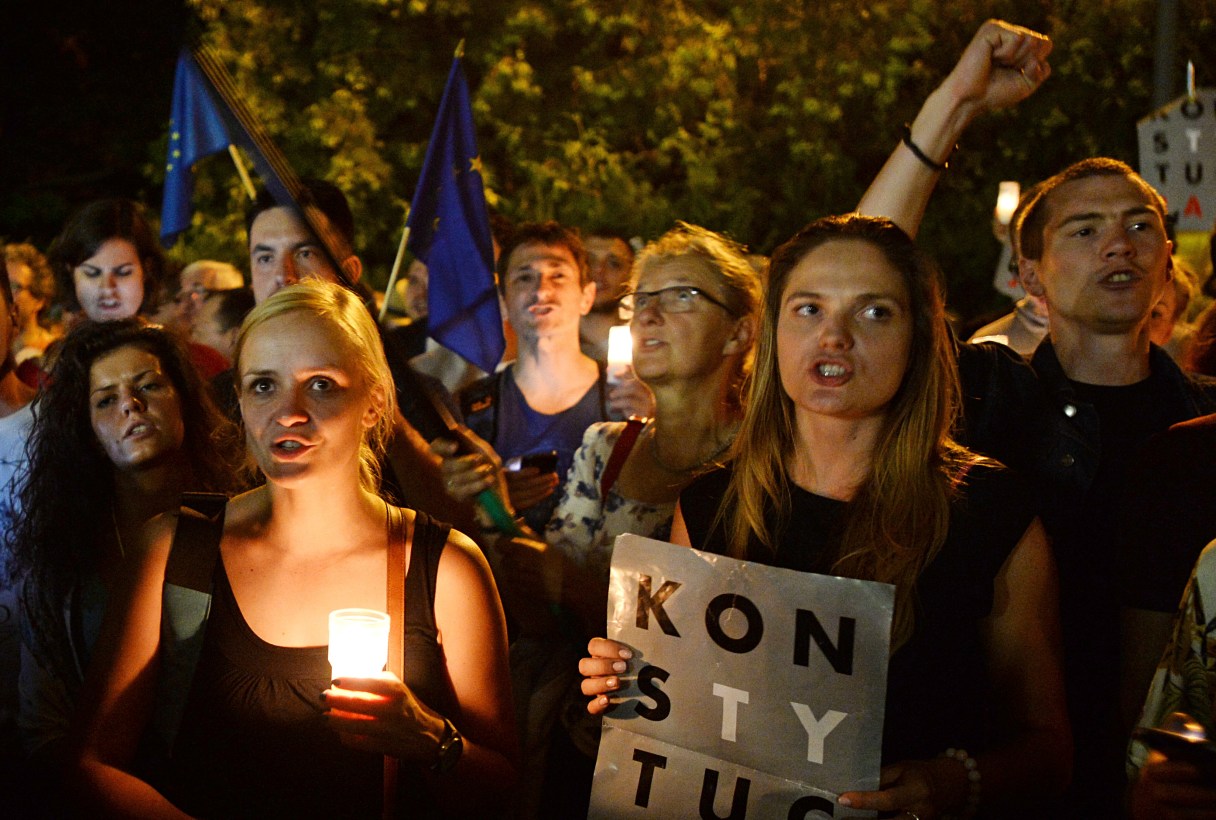
Opposition supporters shout slogans and hold candles as they protest in front of the Senate which continues a debate before a crucial vote to approve legislation that would give politicians substantial influence over the country's Supreme Court, in Warsaw, Poland, Friday, July 21, 2017. The bill on the Supreme Court has drawn condemnation from the European Union and has led to street protests across Poland. (AP Photo/Alik Keplicz)
Opposition supporters shout slogans and hold candles as they protest in front of the Senate which continues a debate before a crucial vote to approve legislation that would give politicians substantial influence over the country's Supreme Court, in Warsaw, Poland, Friday, July 21, 2017. The bill on the Supreme Court has drawn condemnation from the European Union and has led to street protests across Poland. (AP Photo/Alik Keplicz) Opposition supporters shout slogans and hold candles as they protest in front of the Senate which continues a debate before a crucial vote to approve legislation that would give politicians substantial influence over the country's Supreme Court, in Warsaw, Poland, Friday, July 21, 2017. The bill on the Supreme Court has drawn condemnation from the European Union and has led to street protests across Poland. (AP Photo/Alik Keplicz)

WARSAW, Poland (AP) – The spokesman for Poland’s president says the leader sees flaws in contentious legislation adopted by the Senate that gives politicians significant influence over the nation’s top court.

Andrzej Duda’s spokesman, Andrzej Lapinski, stopped short of saying whether the president would reject the bill or seek the opinion of the constitutional court. Duda has 21 days to sign it into law.

The legislation, approved early Saturday, has drawn condemnation from European Union leaders and has led to major protests across Poland.

Proposed by the populist ruling party, it gives the justice minister and the president the power to appoint and assess Supreme Court judges. Critics say that will kill off judicial independence.

Lapinski said that Duda sees inconsistency between two articles regarding the appointment of the court’s head.