
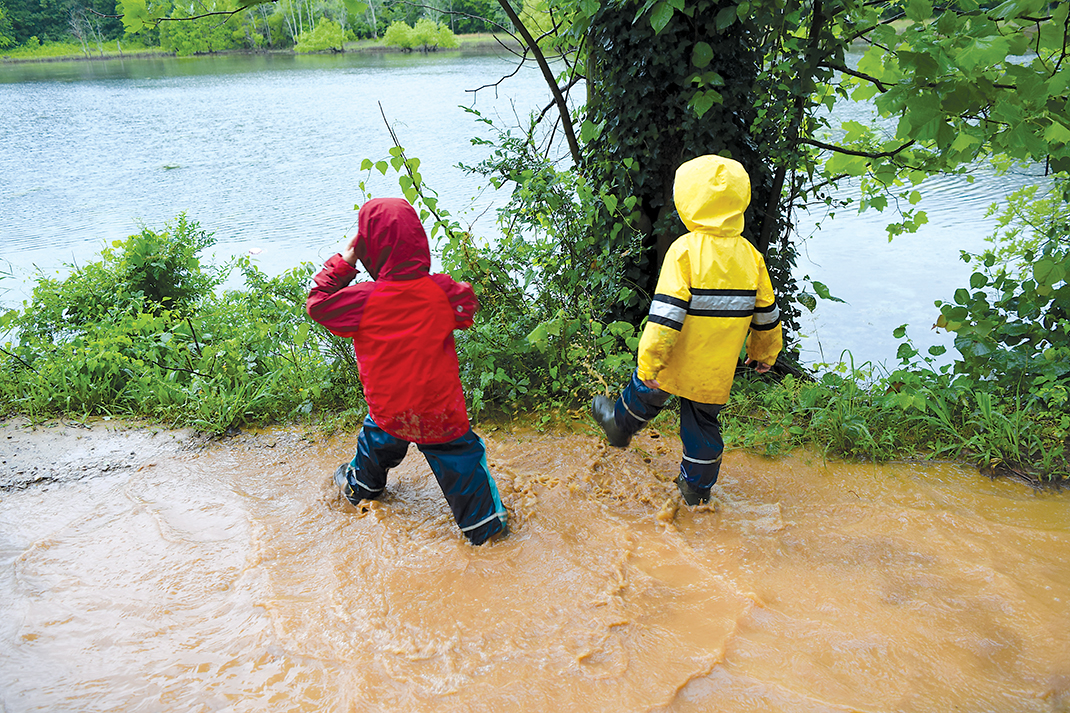
 Two boys from Wauhatchie School’s forest kindergarten class splash into an ankle-deep pool and kick the muddy water over the path’s steeply sloped embankment.
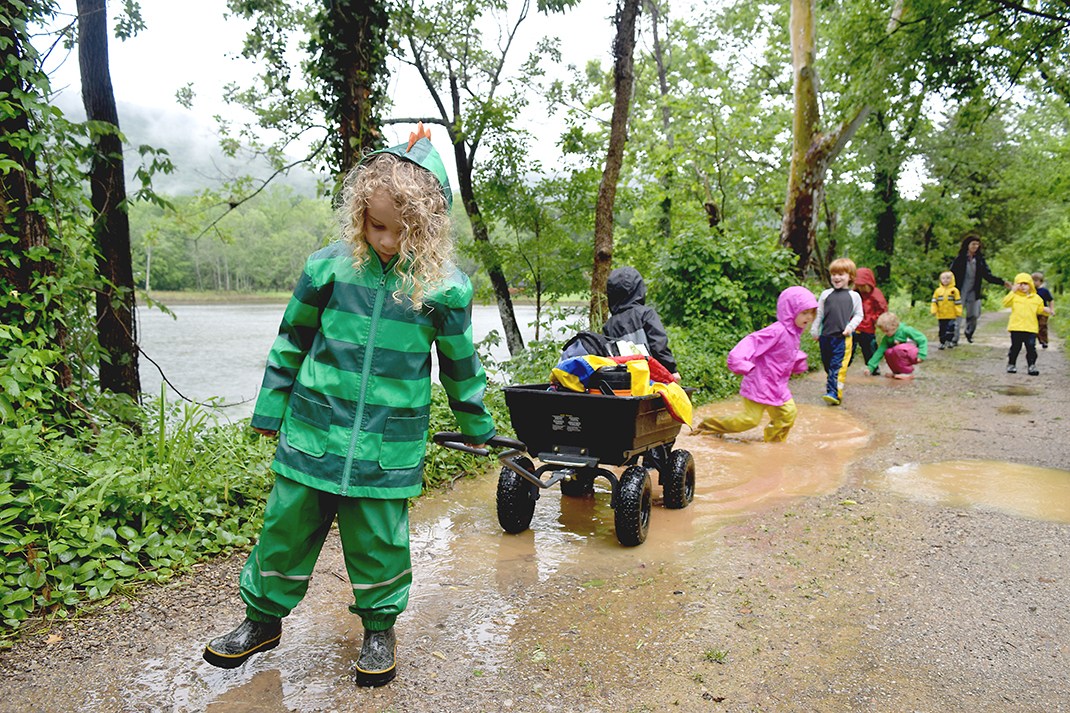
A dozen kindergartners, dressed in brightly colored rain slickers, totter along a gravel path pocked with rain puddles. Two boys splash into an ankle-deep pool and begin to kick the muddy water over the path’s steeply sloped embankment.
“We’re making a waterfall!” one boy shouts. Teacher Melanie Ferguson, who calls each of the students “friend”, stands to the side and watches.
Every weekday, students at Wauhatchie School in Lookout Valley make the quarter-mile walk from their classroom to the wooded lot where they spend three hours in unstructured, experiential play. Also called experiential learning, experiential play is the process of learning through exploration – rather than learning through instruction, the more traditional form of teaching.
This is the foundation of the forest kindergarten concept, a nature-based model of preschool education for children ages 3-6 pioneered in Scandinavia and adopted by a growing number of institutions around the world, including Wauhatchie School.
In didactic learning, as the traditional form of teaching is called, teachers actively guide lessons. In a forest kindergarten, the children are given space to make their own discoveries, which the teachers then use as teachable moments.