
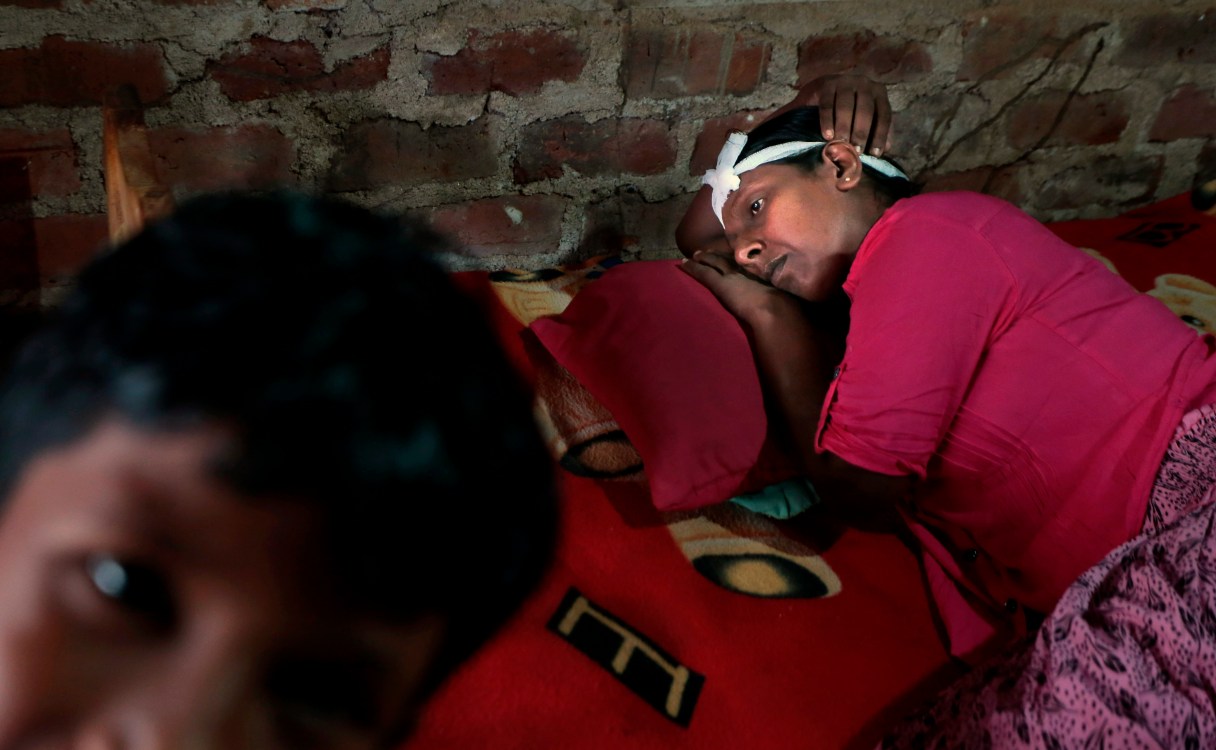
KONKETIYAWA, Sri Lanka (AP) – Karunawathie isn’t hungry for breakfast. She rarely is these days, but she forces herself to choke down a few bites of rice, dried fish and a simple coconut mix. The doctors say it’s better to have something in her stomach before the four-hour dialysis treatments.
She’s going for her second session of the week, dressed all in pink, right down to her flip-flops. Her fingers and toes are fat with fluid, and her spongy arms feel like soft water balloons. Since she can no longer pass liquids on her own, doctors have told her to drink only 500 milliliters a day – equal to less than a can and a half of soda.
As she walks unsteadily to the door, her two youngest children, 16 and 11, kneel before her and place their heads at her feet in a traditional show of respect.
V.G. Karunawathie is only 40 years old, but she is dying, and no one knows why. Her kidneys have stopped working, and now she’s kept alive by a pump that filters waste from her blood twice a week through a snorkel-like tube implanted into her neck.
The cause of her disease, which affects an estimated 70,000 to 400,000 people in Sri Lanka’s rice basket, has baffled doctors and researchers for two decades. Even the World Health Organization hasn’t been able to pinpoint what’s killing as many as 10 people a month in Karunawathie’s village – ravaging one house while sparing the next – as it creeps farther and farther into neighboring areas.