
Friday, November 13, 2026Nov 13

Crow war chief who walked ‘in 2 worlds’ dies at 102

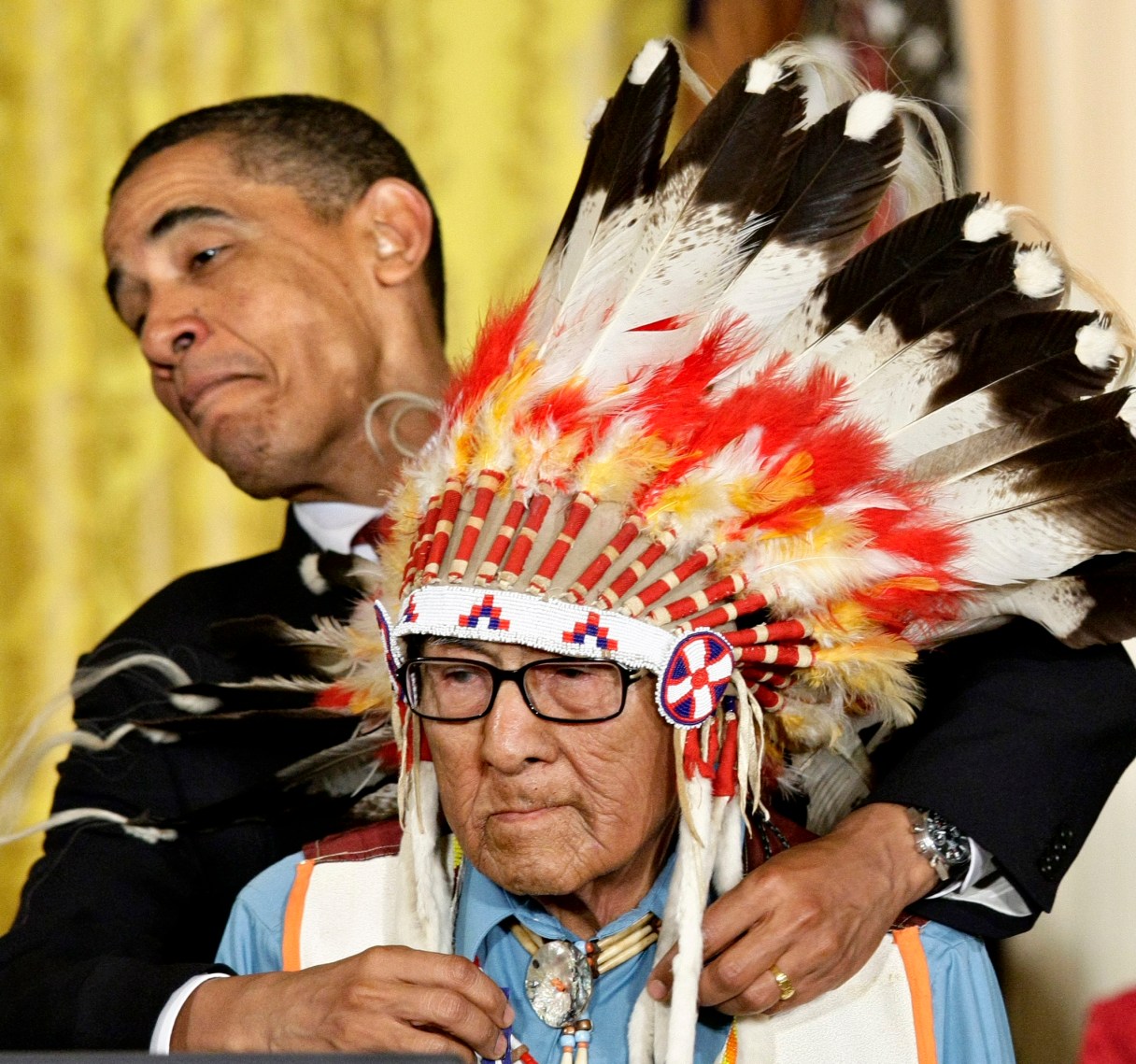
FILE - In this Aug. 12, 2009 file photo, President Barack Obama leans away to avoid the headdress as he presents the 2009 Presidential Medal of Freedom to Joseph Medicine Crow during ceremonies at the White House in Washington. Medicine Crow, the last surviving war chief for Montana's Crow Tribe, died Sunday, April 3, 2016 in a Billings hospice at age 102. Medicine Crow earned the title of war chief and a Bronze Star after stealing enemy horses and other exploits as a U.S. soldier in World War II.(AP Photo/J. Scott Applewhite, File)
FILE - In this Aug. 12, 2009 file photo, President Barack Obama leans away to avoid the headdress as he presents the 2009 Presidential Medal of Freedom to Joseph Medicine Crow during ceremonies at the White House in Washington. Medicine Crow, the last surviving war chief for Montana's Crow Tribe, died Sunday, April 3, 2016 in a Billings hospice at age 102. Medicine Crow earned the title of war chief and a Bronze Star after stealing enemy horses and other exploits as a U.S. soldier in World War II.(AP Photo/J. Scott Applewhite, File) FILE - In this Aug. 12, 2009 file photo, President Barack Obama leans away to avoid the headdress as he presents the 2009 Presidential Medal of Freedom to Joseph Medicine Crow during ceremonies at the White House in Washington. Medicine Crow, the last surviving war chief for Montana's Crow Tribe, died Sunday, April 3, 2016 in a Billings hospice at age 102. Medicine Crow earned the title of war chief and a Bronze Star after stealing enemy horses and other exploits as a U.S. soldier in World War II.(AP Photo/J. Scott Applewhite, File)

BILLINGS, Mont. (AP) – Joseph Medicine Crow walked in “two worlds” – white and Native American – and made his mark on each.

Medicine Crow, who died Sunday in a Billings hospice at the age of 102, grew up in a log home on Montana’s Crow Indian Reservation, hearing stories during his childhood from direct participants in the Battle of the Little Bighorn.

Decades later, he returned from World War II a hero in his own right for performing a series of daring deeds that made him his tribe’s last surviving war chief.

Medicine Crow went on to become a Native American historian who gained recognition in scholarly circles, even as he sought to live according to Crow tradition.

“I always told people, when you meet Joe Medicine Crow, you’re shaking hands with the 19th Century,” said Herman Viola, curator emeritus at the Smithsonian Institution’s National Museum of American Indians. “He really wanted to walk in both worlds, the white world and the Indian world, and he knew education was a key to success.”