
Monday, November 16, 2026Nov 16

Bankers at war: Portugal probe exposes crisis feud

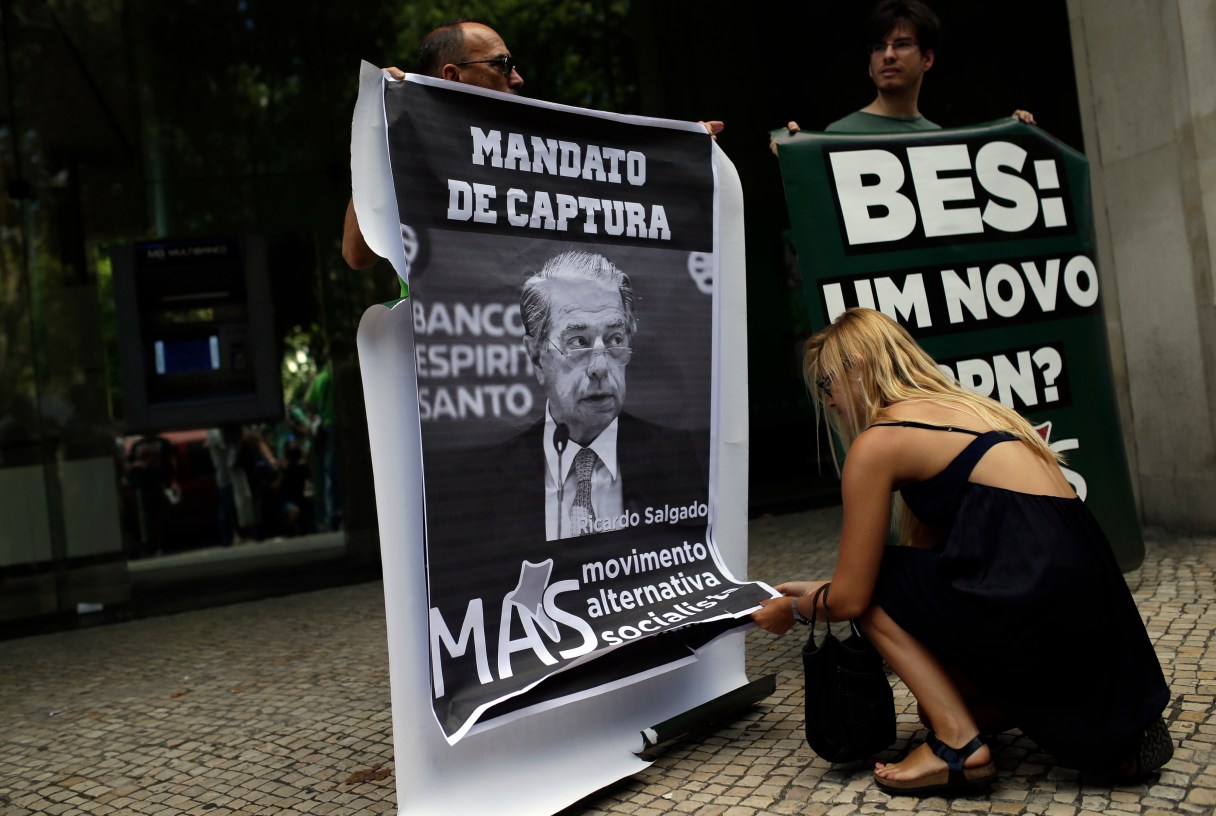
In this photo taken on Saturday, Aug. 9, 2014, a woman unrolls a poster with a photograph of Ricardo Salgado, former chief executive of Portuguese bank Banco Espirito Santo, recently renamed Banco Novo, during a small protest outside the bank's headquarters in Lisbon. The poster reads in Portuguese: "Arrest warrant". An investigation by Portugal’s Parliament into last summer's collapse _ and 4.9 billion euro ($6 billion) bailout _ of the country’s largest listed bank has turned into gripping television as members of the wealthy Espirito Santo banking dynasty wash their dirty laundry in public. (AP Photo/Francisco Seco)

LISBON, Portugal (AP) – Beware of bankers bearing a grudge.

An investigation by Portugal’s Parliament into last summer’s collapse – and 4.9 billion euro ($6 billion) bailout – of the country’s largest listed bank has turned into gripping television as members of the wealthy Espirito Santo banking dynasty wash their dirty laundry in public.

The finger-pointing involves alleged shady businesses, struggles for power, and murky dealings in Africa.

Regulators have already accused Banco Espirito Santo’s leadership of fraud, forgery and money-laundering in the run-up to its collapse in July.

Banco Espirito Santo’s demise reignited fears over Portugal, which is one of the eurozone’s most fragile economies and which needed to be bailed out in 2011. It also raised questions over other potential financial skeletons in Europe.