
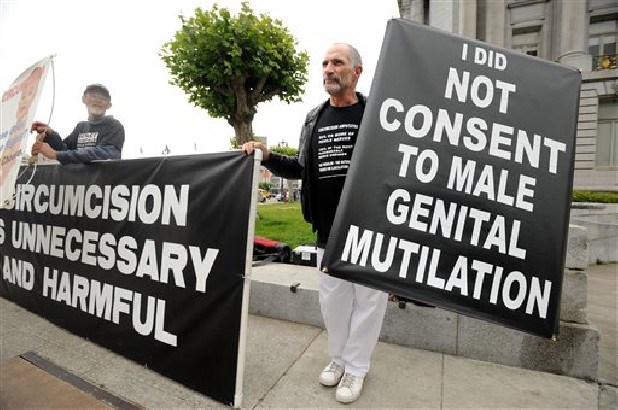
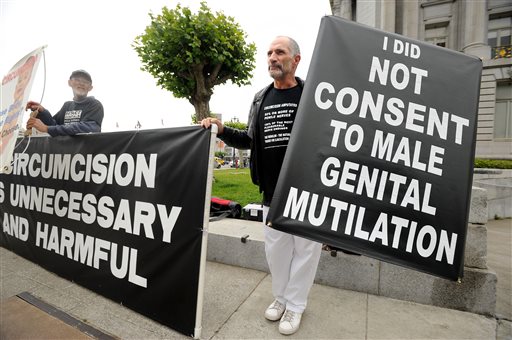
 In this July 28, 2011, file photo, anti-circumcision activists Frank McGinness, right, and Jeff Brown rally against circumcision with about 25 protesters outside a San Francisco courthouse.
NEW YORK – U.S. health officials on Tuesday released a draft of long-awaited federal guidelines on circumcision, saying medical evidence supports the procedure and health insurers should pay for it.
The Centers for Disease Control and Prevention guidelines stop short of telling parents to have their newborn sons circumcised. That is a personal decision that may involve religious or cultural preferences, said the CDC’s Dr. Jonathan Mermin.
But “the scientific evidence is clear that the benefits outweigh the risks,” added Mermin, who oversees the agency’s programs on HIV and other sexually transmitted diseases.
These are the first federal guidelines on circumcision, a brief medical procedure that involves cutting away the foreskin around the tip of the penis. Germs can grow underneath the foreskin, and CDC officials say the procedure can lower a male’s risk of sexually-transmitted diseases, penile cancer and even urinary tract infections.
The CDC started working on the guidelines about seven years ago, when a cluster of influential studies in Africa indicated circumcision might help stop spread of the AIDS virus.