
Monday, November 16, 2026Nov 16

Wall Street sees the economic pain, opts to look past it

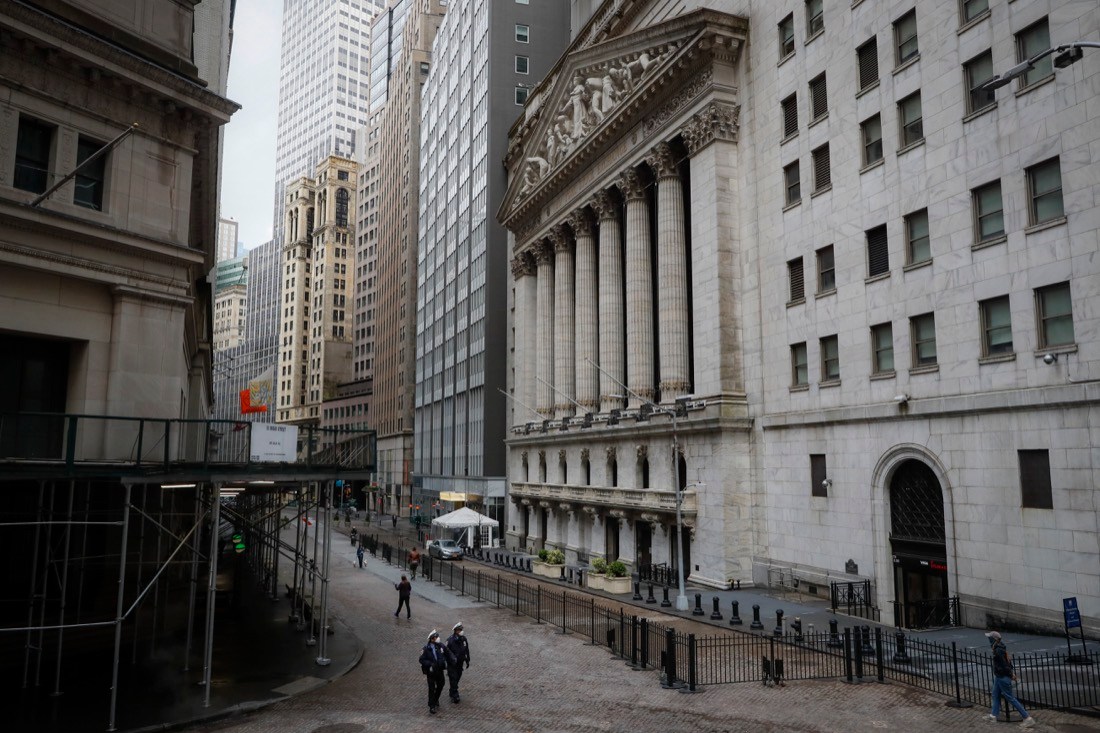
FILE - In a Friday, May 1, 2020 file photo, NYPD officers walk along a sparsely populated Wall Street, in the Manhattan borough of New York. The devastation rocking the economy becomes more clear by the week with reports continually showing how many million workers have lost their jobs due to the coronavirus outbreak. Wall Street sees that pain, but it already sent the U.S. stock market down by a third more than a month ago on anticipation of that. Now, it's looking further ahead and sees a future that's not as bad as this horrific present. That's why stocks just had their best month in a generation. Whether they're correct is still to be determined. (AP Photo/John Minchillo, File)

NEW YORK (AP) – Is Wall Street blind?

The global economy is in shambles, the coronavirus pandemic has killed more than 237,000 worldwide and 30 million Americans have lost their jobs as collateral damage in the fight against COVID-19, with the tallies all rising by the day.

Yet, the U.S stock market just rocketed to its best month in a generation.

While it’s most definitely wild, Wall Street is also a collection of investors who are continually looking ahead, setting prices for stocks at the moment based on where they expect corporate profits and the economy will be a quarter or two into the future.

From February into late March, investors sent the S&P 500 down by nearly 34%, anticipating that the number of jobless workers would explode and the economy would tumble into recession. Then in April, as gruesome economic figures confirmed those fears, investors instead focused on a few strands of optimism for the future.