
Monday, November 16, 2026Nov 16

NASA, UW team up to track rain, snow in soggy Washington

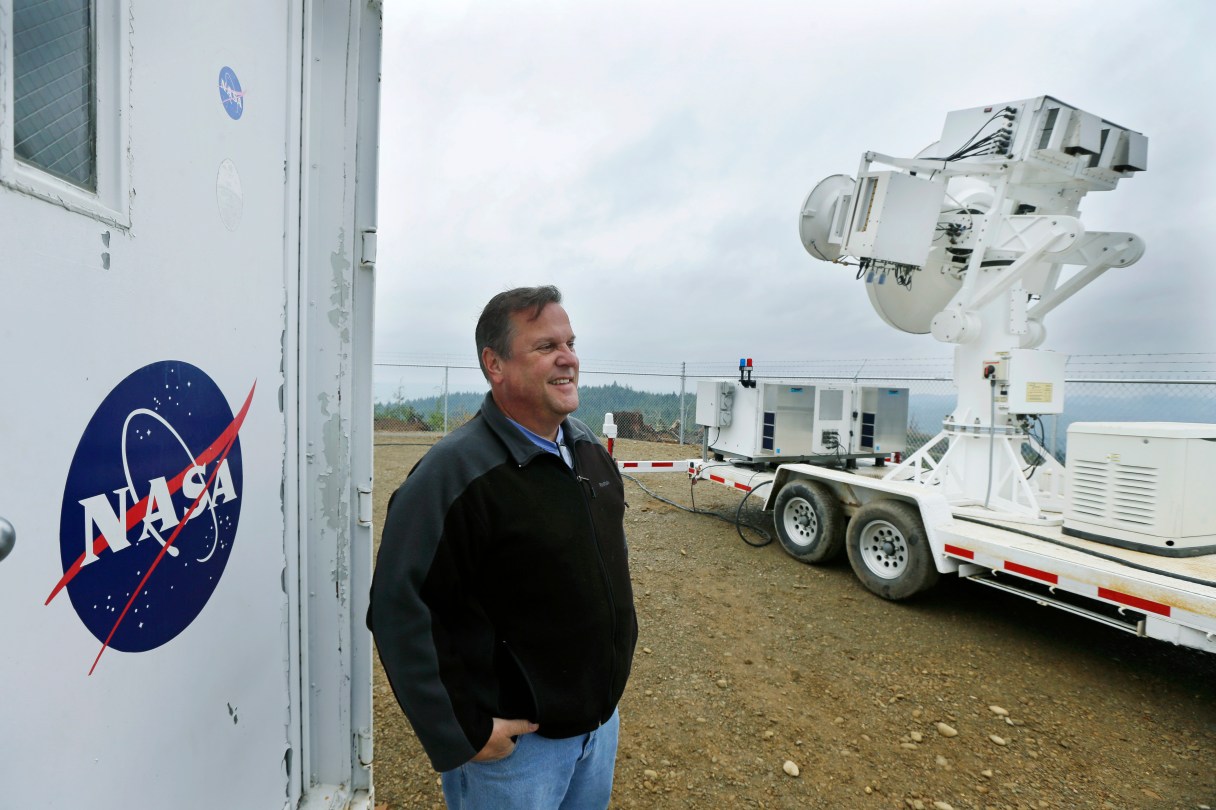
David Wolff, a research scientist with NASA, poses for a photo Friday, Nov. 6, 2015, next to one of the large radar instruments installed on a hilltop near Moclips, Wash. Led by NASA and hosted by the University of Washington, a team of meteorologists and scientists is fanning out across one of the wettest places in the country in November to measure raindrops and snowdrops and attempt to validate, on the ground, how well global satellites measure precipitation from space. (AP Photo/Ted S. Warren)

SEATTLE (AP) – Using everything from a customized DC-8 jetliner to four-inch rain gauges, scientists are fanning out across one of the soggiest places in the United States this month to measure raindrops and snowflakes like never before.

Led by NASA and the University of Washington, the field experiment on Washington’s Olympic Peninsula attempts to validate, on the ground, how well global satellites measure precipitation from space.

The project will collect detailed atmospheric data – right down to the size of raindrops – over the ocean, along the coast, in the foothills and the rugged Olympic Mountains.

Specifically, the scientists are making sure that remote measurements made by a group of satellites are accurate; those satellites are part of a joint mission of NASA and the Japan Aerospace Exploration Agency.